


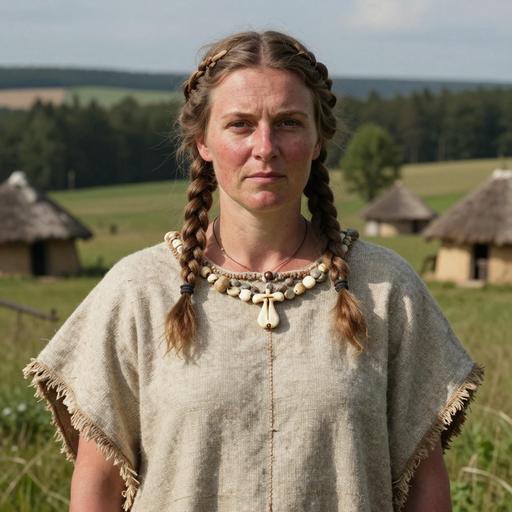
| Individual | Culture/Period | Date | Location | Action |
|---|---|---|---|---|
| European Neolithic individual, Poland | Brześć Kujawski Group, Poland | 4600 BCE | Oslonki, Poland | View |
| Indo-European individual, Poland | Early Bronze Age Poland | 2020 BCE | Gustorzyn, Poland | View |
| Indo-European individual, Poland | Corded Ware Culture, Poland | 2600 BCE | Pikutkowo, Poland | View |
| Indo-European individual, Poland | Corded Ware Culture, Poland | 2600 BCE | Pikutkowo, Poland | View |
| European Neolithic individual, Poland | Brześć Kujawski Group, Poland | 4335 BCE | Konary, Poland | View |
| Indo-European individual, Poland | Corded Ware Culture, Poland | 2600 BCE | Pikutkowo, Poland | View |
| Indo-European individual, Poland | Globular Amphora Culture, Poland | 3307 BCE | Brzesc Kujawski, Poland | View |
| Indo-European individual, Poland | Corded Ware Culture, Poland | 2571 BCE | Pikutkowo, Poland | View |
| European Neolithic individual, Poland | Funnel Beaker Culture, Poland | 3636 BCE | Pikutkowo, Poland | View |
| European Neolithic individual, Poland | Brześć Kujawski Group, Poland | 4600 BCE | Oslonki, Poland | View |
| European Neolithic individual, Poland | Brześć Kujawski Group, Poland | 4600 BCE | Konary, Poland | View |
| European Neolithic individual, Poland | Funnel Beaker Culture, Poland | 3632 BCE | Pikutkowo, Poland | View |
| European Neolithic individual, Poland | Brześć Kujawski Group, Poland | 4442 BCE | Brzesc Kujawski, Poland | View |
| European Neolithic individual, Poland | Brześć Kujawski Group, Poland | 4327 BCE | Oslonki, Poland | View |
| European Neolithic individual, Poland | Brześć Kujawski Group, Poland | 4251 BCE | Oslonki, Poland | View |
| European Neolithic individual, Poland | Funnel Beaker Culture, Poland | 3633 BCE | Pikutkowo, Poland | View |
| European Neolithic individual, Poland | Brześć Kujawski Group, Poland | 4233 BCE | Oslonki, Poland | View |
| Poland Eba individual, Poland | 2020 BCE | Gustorzyn, Poland | View | |
| Ceu Mn individual, Poland | 3632 BCE | Pikutkowo, Poland | View | |
| Anglian individual, Poland | 3636 BCE | Pikutkowo, Poland | View | |
| Ceu Mn individual, Poland | 3633 BCE | Pikutkowo, Poland | View | |
| Poland N individual, Poland | 4442 BCE | Brzesc Kujawski, Poland | View | |
| Poland N individual, Poland | 4600 BCE | Oslonki, Poland | View | |
| Poland N individual, Poland | 4335 BCE | Konary, Poland | View | |
| Poland N individual, Poland | 4600 BCE | Oslonki, Poland | View | |
| Poland N individual, Poland | 4251 BCE | Oslonki, Poland | View | |
| Poland N individual, Poland | 4327 BCE | Oslonki, Poland | View | |
| Poland N individual, Poland | 4600 BCE | Konary, Poland | View | |
| Globular Amphora individual, Poland | 3307 BCE | Brzesc Kujawski, Poland | View | |
| Poland N individual, Poland | 4233 BCE | Oslonki, Poland | View | |
| Corded Ware individual, Poland | 2571 BCE | Pikutkowo, Poland | View | |
| Corded Ware individual, Poland | 2600 BCE | Pikutkowo, Poland | View | |
| Corded Ware individual, Poland | 2600 BCE | Pikutkowo, Poland | View | |
| Corded Ware individual, Poland | 2600 BCE | Pikutkowo, Poland | View |
Page 1
| Individual | Culture/Period | Date | Location | Action |
|---|---|---|---|---|
| European Neolithic individual, Poland | Brześć Kujawski Group, Poland | 4600 BCE | Oslonki, Poland | View |
| European Neolithic individual, Poland | Brześć Kujawski Group, Poland | 4335 BCE | Konary, Poland | View |
| European Neolithic individual, Poland | Brześć Kujawski Group, Poland | 4600 BCE | Oslonki, Poland | View |
| European Neolithic individual, Poland | Brześć Kujawski Group, Poland | 4600 BCE | Konary, Poland | View |
| European Neolithic individual, Poland | Brześć Kujawski Group, Poland | 4442 BCE | Brzesc Kujawski, Poland | View |
| European Neolithic individual, Poland | Brześć Kujawski Group, Poland | 4327 BCE | Oslonki, Poland | View |
| European Neolithic individual, Poland | Brześć Kujawski Group, Poland | 4251 BCE | Oslonki, Poland | View |
| European Neolithic individual, Poland | Brześć Kujawski Group, Poland | 4233 BCE | Oslonki, Poland | View |
Page 1