A man buried in Spain in the era

Download PDF creates a visual, rasterized copy. Use Print for selectable text and better assistive-technology support.

Loading Report

Preparing your ancestry journey

Preparing the available report content...

Your report will open automatically.

Skip to main content
Reference library / Sample profile

A man buried in Spain in the era

Explore the recorded context, genetic comparisons and research behind this reference sample.

SpainCopper Age Iberia

A reference profile describes this sample. It does not establish a personal or family relationship.

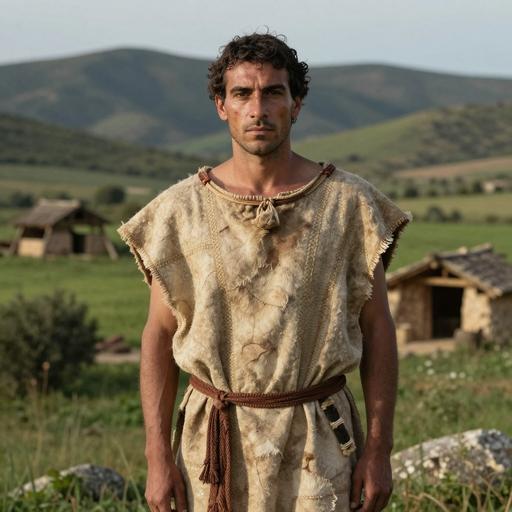
AI portrait reconstruction for A man buried in Spain in the  era
AI-generated artistic reconstruction, not a photograph of the individual.
Record

Sample details

Recorded details and available lineage markers.

Individual

Iberia Ca individual, Spain

Sample ID: por004

Date Range

3096 BCE - 2913 BCE

Cultural Period

Copper Age Iberia

Biological Sex

Male

mtDNA Haplogroup

K1-a

Y-DNA Haplogroup

I-P214

Social Role

Farmer (AI estimate, era-typical)

Geography

Location

Where this individual was discovered

Country Spain
Locality Atapuerca. El Portalón

A location map is not available for this record.

Chronology

Date range

When this individual lived in the broader context of human history

Iberia Ca individual, Spain 3096 BCE - 2913 BCE
Context

Historical context

Background information associated with the reference record.

Overview

Copper Age Iberia refers to phases in which copperworking became more widespread, without necessarily ending existing Neolithic lifeways. Across different parts of the peninsula, communities experimented with metal production while maintaining established subsistence strategies.

Region & Environment

Iberia’s environmental diversity—fertile valleys, uplands, and coastal areas—supported mixed farming and herding and influenced settlement placement. Access to copper ores depended on local geology, and the procurement and movement of metal resources helped shape regional connections.

Historical Context

Copper Age developments are historically associated with the gradual integration of early metal use into everyday technologies and into specialized craft economies. Exchange of copper goods or related prestige items likely connected communities locally and, in some areas, with broader Mediterranean influences.

Populations & Lifeways

Populations largely continued agricultural and pastoral practices established earlier, supported by domesticated plants and animals. Social organization is difficult to reconstruct in detail, but the emergence of metal objects in some contexts suggests that craft knowledge and material access were not evenly distributed.

Archaeology & Material Culture

Archaeologically, Copper Age assemblages commonly include:

  • Copper-based tools and ornaments, often in limited quantities compared with later periods
  • Stone tools that remain important for cutting, grinding, and daily tasks
  • Pottery and domestic refuse reflecting continued settlement-based life Burial practices can show regional variation, including differences in grave construction, grave goods, and the visibility of metal items in funerary contexts.

Culture & Society

Metal objects could function as status markers, gift items, or ritual components, complementing older forms of social display. Craft specialization—at least at certain nodes—would have involved learning metalworking processes and organizing procurement and distribution.

Legacy & Transition

The Copper Age set the stage for later Bronze Age metallurgy by expanding experience in smelting, casting, and forming copper objects. Subsequent transitions are detectable archaeologically through changes in artifact types, increasing quantities and diversity of metal goods, and evolving burial and settlement patterns.

Analysis

Genetic comparisons

These comparisons show genetic similarity, not identity or origin. The populations listed are those whose genomes show statistical alignment to this ancient individual.

Similarity reflects shared history, not shared identity. These are analytical comparisons, not claims about who this person was.

Modern Genetic Admixture

This analysis compares the DNA profile with present-day reference populations, showing statistical similarity to modern reference populations from different regions. The excavation site records where this individual was found, not a fixed modern genetic identity.

Europe 95.2%
Southern European 95.2%
Iberian 54.7%
Sardinian 34.0%
Italian 6.5%
Africa 3.5%
North African 3.5%
North African 3.5%
Asia 0.7%
Northern West Asian 0.7%
Cypriot 0.7%
Oceania 0.6%
Melanesian 0.6%
Papuan 0.6%

Closest Modern Populations

These are the modern populations showing the closest statistical alignment to A man buried in Spain in the era, ranked by genetic distance. Lower distance values indicate closer statistical similarity. Cross-region similarity can reflect shared ancestry, population movement, continuity, or later admixture.

1
Sardinian
3.4320
2
French Corsica
5.3642
3
Spanish La Rioja
5.3824
4
Spanish Castilla La Mancha
5.6923
5
Spanish Castello
5.7542
6
Spanish Pirineu
5.7701
7
Spanish Aragon
5.8006
8
Spanish Cantabria
5.8274
9
Spanish Menorca
5.8301
10
Spanish Navarra
5.8311
Context

Related Samples

This individual exists within a broader network of ancient samples. No ancient genome stands alone.

Individual Culture/Period Date Location Action
Iberian Chalcolithic individual, Spain Chalcolithic Spain 3265 BCE Atapuerca. El Portalón, Spain View
Iberian Chalcolithic individual, Spain Chalcolithic Spain 2900 BCE Atapuerca. El Portalón, Spain View
Western European Neolithic individual, Spain Early Neolithic Spain 5299 BCE Andalusia. Murciélagos de Zuheros, Spain View
Iberian Chalcolithic individual, Spain Chalcolithic Spain 3011 BCE Atapuerca. El Portalón, Spain View
Iberian individual, Spain Bronze Age Spain 1600 BCE La Rioja. Cueva de los Lagos, Spain View
Iberian Chalcolithic individual, Spain Chalcolithic Spain 3336 BCE Atapuerca. El Portalón, Spain View
Prehistoric Iberian individual, Spain Late Neolithic Spain 3765 BCE Andalusia. Cueva de los Cuarenta, Spain View
Iberian individual, Spain Bronze Age Spain 2100 BCE Andalusia. Priego de Córdoba, Spain View
Prehistoric Iberian individual, Spain Late Neolithic Spain 3779 BCE Basque country. San Quílez, Spain View
Iberian Chalcolithic individual, Spain Chalcolithic Spain 3096 BCE Atapuerca. El Portalón, Spain View
Western European Neolithic individual, Spain Early Neolithic Spain 5214 BCE Atapuerca. El Portalón, Spain View
Iberia Ca individual, Spain 2900 BCE Atapuerca. El Portalón, Spain View
Iberia En individual, Spain 5214 BCE Atapuerca. El Portalón, Spain View
Iberia Ca individual, Spain 3265 BCE Atapuerca. El Portalón, Spain View
Chalcolithic individual, Spain 3011 BCE Atapuerca. El Portalón, Spain View
Iberia Ln individual, Spain 3765 BCE Andalusia. Cueva de los Cuarenta, Spain View
Iberia Ba individual, Spain 1600 BCE La Rioja. Cueva de los Lagos, Spain View
Iberia N individual, Spain 5299 BCE Andalusia. Murciélagos de Zuheros, Spain View
Iberia Ia individual, Spain 2100 BCE Andalusia. Priego de Córdoba, Spain View
Iberia Ca individual, Spain 3336 BCE Atapuerca. El Portalón, Spain View
Iberia Ca individual, Spain 3096 BCE Atapuerca. El Portalón, Spain View
Iberia Ln individual, Spain 3779 BCE Basque country. San Quílez, Spain View
Page 1
Individual Culture/Period Date Location Action
Iberia Ca individual, Portugal 3350 BCE Lisbon. Torres Vedras. Cabeço da Arruda I, Portugal View
Iberia Ca individual, Spain 2900 BCE Burgos. Atapuerca. El Mirador Cave, Spain View
Iberia Ca individual, Spain 2121 BCE Granada. Monachil, Spain View
Iberia Ca individual, Portugal 3350 BCE Lisbon. Torres Vedras. Cabeço da Arruda I, Portugal View
Iberia Ca individual, Portugal 2500 BCE Cova da Moura, Portugal View
Iberia Ca individual, Portugal 3011 BCE Monte Canelas 1, Portugal View
Iberia Ca individual, Turkey 6221 BCE Northwest Anatolia. Marmara. Barcın, Turkey View
Iberia Ca individual, Spain 3516 BCE El Portalon Cave. Sierra de Atapuerca, Spain View
Iberia Ca individual, Spain 3345 BCE El Portalon Cave. Sierra de Atapuerca, Spain View
Iberia Ca individual, Spain 3008 BCE El Portalon Cave. Sierra de Atapuerca, Spain View
Iberia Ca individual, Spain 2291 BCE El Portalon Cave. Sierra de Atapuerca, Spain View
Iberia Ca individual, Spain 2900 BCE Madrid. Humanejos, Spain View
Iberia Ca individual, Spain 2025 BCE Madrid. San Fernando de Henares. Camino de las Yeseras, Spain View
Iberia Ca individual, Spain 2900 BCE Andalusia. Córdoba. Lucena. Sima del Ángel, Spain View
Iberia Ca individual, Spain 2900 BCE Atapuerca. El Portalón, Spain View
Iberia Ca individual, Spain 3265 BCE Atapuerca. El Portalón, Spain View
Iberia Ca individual, Spain 3336 BCE Atapuerca. El Portalón, Spain View
Iberia Ca individual, Spain 3096 BCE Atapuerca. El Portalón, Spain View
Iberia Ca individual, Spain 3096 BCE Basque Country. Alava. Alto de la Huesera, Spain View
Page 1
Sources

References

Scientific publications and genetic data that inform this profile.

G25 Coordinates

These coordinates represent a position in genetic space, a tool for comparison, not a conclusion. You can use these to perform custom admixture analysis in G25 Studio.

por004,0.1203718,0.16030572,0.03186334,-0.0298291,0.05726728,-0.01565048,-0.0018266,0.00619528,0.03693444,0.06347798,-0.00545762,0.0144812,-0.02558128,-0.012729,-0.00477604,0.00373496,0.00482194,-0.00082862,-0.00097022,-0.00320682,0.00186818,0.0052855,-0.0120218,-0.01781902,0.00410015
Continue in G25 Studio
Use code for 30% off • Expires Nov 16