A woman buried in South Korea in the Copper Age era

Download PDF creates a visual, rasterized copy. Use Print for selectable text and better assistive-technology support.

Loading Report

Preparing your ancestry journey

Preparing the available report content...

Your report will open automatically.

Skip to main content
Reference library / Sample profile

A woman buried in South Korea in the Copper Age era

Explore the recorded context, genetic comparisons and research behind this reference sample.

South KoreaThe Changhang Culture of Korea

A reference profile describes this sample. It does not establish a personal or family relationship.

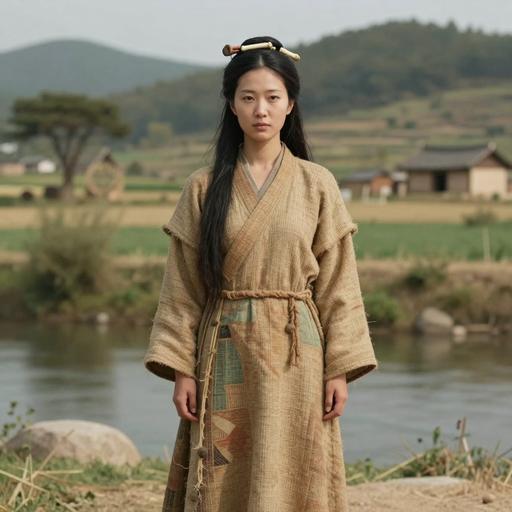
AI portrait reconstruction for A woman buried in South Korea in the Copper Age era
AI-generated artistic reconstruction, not a photograph of the individual.
Record

Sample details

Recorded details and available lineage markers.

Individual

Republicof Korea Changhang individual, South Korea

Sample ID: GDI002

Date Range

4696 BCE - 4505 BCE

Cultural Period

The Changhang Culture of Korea

Biological Sex

Female

mtDNA Haplogroup

Not available

Y-DNA Haplogroup

Not available

Social Role

Farmer (AI estimate, era-typical)

Geography

Location

Where this individual was discovered

Country South Korea
Locality Changhang
Chronology

Date range

When this individual lived in the broader context of human history

Republicof Korea Changhang individual, South Korea 4696 BCE - 4505 BCE
Context

Historical context

Background information associated with the reference record.

The Changhang Culture, a lesser-known but fascinating aspect of Korea's extensive historical tapestry, is often overshadowed by more prominently studied cultures such as the Gojoseon or the subsequent Three Kingdoms period. Situated in the broader spectrum of East Asian history, the Changhang Culture represents a significant period that contributes to the understanding of Korea’s prehistoric cultural developments. While specific documentation on the Changhang Culture remains sparse compared to more established cultures, a synthesis of archaeological findings and historical analyses allows us to piece together a comprehensive picture.

Historical Context

The Changhang Culture is understood to have thrived during the prehistoric era of the Korean Peninsula. This period is marked by the transition from the Neolithic Age into the Bronze Age, roughly spanning from around 2000 BCE to 800 BCE. This was a time of significant transformation, characterized by the gradual shift in human lifestyle from nomadic, hunter-gatherer communities to more settled agricultural societies.

Geographical Setting

The cultural remains associated with Changhang have been found in various parts of the Korean Peninsula, particularly in areas that provide strategic advantages such as fertile plains, river basins, and coastal regions. These locations facilitated agricultural production, fishing, and trade, activities that were integral to the culture’s development.

Social and Political Structure

The social structure of the Changhang Culture was likely organized around clan or tribal models, typical of many Neolithic and early Bronze Age societies. Hierarchical differentiation was possibly based on roles within agricultural production, craftsmanship, and emerging leadership positions. Although there is limited direct evidence of complex political structures, the presence of coordinated community activities suggests a level of social organization indicative of communal decision-making processes.

Economic Activities

Agriculture formed the backbone of the Changhang economy, with rice and millet considered staple crops. The introduction and cultivation of rice mark a significant development, suggesting advanced knowledge of irrigation and crop management. Supplementary economic activities included hunting, fishing, and gathering, which provided dietary diversity and supported population sustainability during less productive agricultural seasons.

Artifacts and Material Culture

Archaeological excavations have uncovered a range of artifacts that provide insight into the cultural and technological developments of the Changhang people. Pottery from this era, often characterized by comb-patterned designs, serves not only as a utilitarian commodity but also as a form of artistic expression. Additionally, tools and weapons made from stone and early metal alloy exemplify the technological advancements and resource utilization within the culture.

Religion and Beliefs

While concrete evidence of religious practices specific to the Changhang Culture is limited, it is likely that spiritual beliefs were closely tied to nature and agricultural cycles, as seen in other contemporary East Asian cultures. Rituals related to crop fertility, ancestor worship, and possibly shamanistic practices could have played a role in the community's spiritual life.

Interaction with Neighboring Cultures

The Changhang Culture, similar to other ancient Korean cultures, likely engaged in trade and interaction with neighboring regions, including those in present-day China and Japan. These interactions facilitated cultural exchange, particularly in the realms of technology, agriculture, and social organization.

Legacy and Significance

The Changhang Culture’s legacy lies in its contribution to the foundation of Korean civilization. It represents a critical evolutionary stage in Korea, bridging the gap between prehistoric lifestyles and the more organized states of later periods. Understanding this culture helps elucidate the origins of later cultural developments and underscores the complex tapestry of human societies in prehistoric Korea.

In summary, while the Changhang Culture might not be as well-documented or renowned as later Korean historical periods, its role in laying the foundations of Korean society is undeniably crucial. Ongoing archaeological research and interdisciplinary studies continue to shed light on this fascinating era, enhancing our comprehension of ancient Korea and its place within the broader East Asian context.

Analysis

Genetic comparisons

These comparisons show genetic similarity, not identity or origin. The populations listed are those whose genomes show statistical alignment to this ancient individual.
Similarity reflects shared history, not shared identity. These are analytical comparisons, not claims about who this person was.

Modern Genetic Admixture

This analysis compares the DNA profile with present-day reference populations, showing statistical similarity to modern reference populations from different regions. The excavation site records where this individual was found, not a fixed modern genetic identity.

Asia 75.4%
Japanese & Korean 59.8%
Japanese 59.8%
Chinese & Southeast Asian 15.7%
Chinese 15.7%
Europe 20.8%
Northwestern European 13.6%
Northwestern European 10.5%
Finnish 3.1%
Southern European 7.2%
Balkan 6.7%
Africa 2.4%
North African 1.2%
Egyptian 1.2%
African Hunter-Gatherer 1.2%
America 1.4%
America 1.4%
Native American 1.4%

Closest Modern Populations

These are the modern populations showing the closest statistical alignment to A woman buried in South Korea in the Copper Age era, ranked by genetic distance. Lower distance values indicate closer statistical similarity. Cross-region similarity can reflect shared ancestry, population movement, continuity, or later admixture.

1
Dongxiang
5.9104
2
Salar
6.4829
3
Dungan
6.6012
4
Baoan
7.4709
5
Yuku
7.8115
6
Hui
8.1128
7
Tibetan Gannan
8.6634
8
Bonan
8.6780
9
Hui Guizhou
9.4694
10
Tu
9.6988
Context

Related Samples

This individual exists within a broader network of ancient samples. No ancient genome stands alone.

Individual Culture/Period Date Location Action
Republicof Korea individual, South Korea Ancient Korea 6,300-3,000 BCE Ando, South Korea View
Republicof Korea Taejungni individual, South Korea Iron Age Korea 768-542 BCE Taejungni, South Korea View
Republicof Korea Changhang individual, South Korea The Changhang Culture of Korea 4,696-4,505 BCE Changhang, South Korea View
Republicof Korea Changhang individual, South Korea The Changhang Culture of Korea 4,706-4,542 BCE Changhang, South Korea View
Nagabaka Historic individual, Japan Historical Japan 900-1 BCE Nagabaka, Japan View
Nagabaka individual, Japan Nagabaka 2800BP 900-1 BCE Nagabaka, Japan View
Nagabaka individual, Japan Bronze Age Japan 100 BCE-50 CE Nagabaka, Japan View
Nagabaka individual, Japan Nagabaka 2800BP 796-560 BCE Nagabaka, Japan View
Nagabaka individual, Japan Nagabaka 2800BP 900-1 BCE Nagabaka, Japan View
Nagabaka individual, Japan Nagabaka 2800BP 821-794 BCE Nagabaka, Japan View
Republicof Korea Yondaedo-1 individual, South Korea Yondaedo Culture 1, Korea 5,500-4,500 BCE Yŏndaedo, South Korea View
Republicof Korea Yondaedo-2 individual, South Korea Yondaedo Culture 2, Korea 5,500-4,500 BCE Yŏndaedo, South Korea View
Republicof Korea Yokchido individual, South Korea Bronze Age Korea 2,500-1,500 BCE Yokchido, South Korea View
Yayoi individual, Japan The Yayoi Period 200-100 BCE Kuma−Nishioda, Japan View
Page 1
Individual Culture/Period Date Location Action
Republicof Korea Changhang individual, South Korea The Changhang Culture of Korea 4,696-4,505 BCE Changhang, South Korea View
Republicof Korea Changhang individual, South Korea The Changhang Culture of Korea 4,706-4,542 BCE Changhang, South Korea View
Page 1
Sources

References

Scientific publications and genetic data that inform this profile.

G25 Coordinates

These coordinates represent a position in genetic space, a tool for comparison, not a conclusion. You can use these to perform custom admixture analysis in G25 Studio.

GDI002,0.0367653,-0.32375582,0.01560662,-0.03431948,0.04514502,0.01831384,-0.0043273,-0.00842768,-0.00485052,0.00038988,-0.0473689,-0.00287862,0.00516926,-0.00922052,-0.00269246,-0.00319462,-0.0001307,-0.00037684,-0.00066306,-0.0050439,0.01301258,-0.00426134,0.0062989,0.00377754,-0.01742762
Continue in G25 Studio

Our analyses use reference samples for comparison. A sample’s place, period and source help explain how to interpret a match.

Use code for 35% off • Expires Nov 30