Menu
Store
Blog
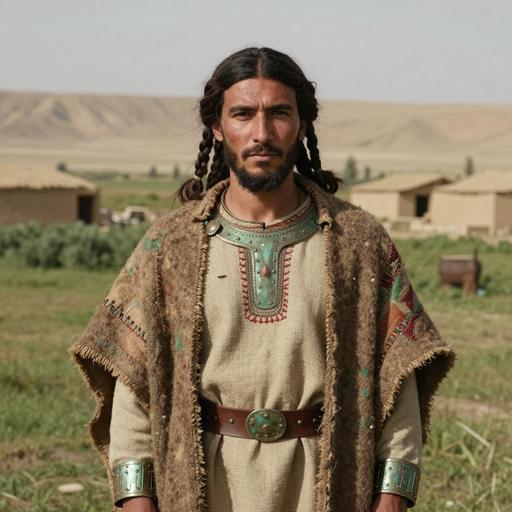
Portrait reconstruction of I4255
Ancient Individual

A man buried in Uzbekistan in the Bronze Age era

I4255
1200 BCE - 1000 BCE
Male
Bronze Age Kashkarchi
Uzbekistan
Scroll to begin
Chapter I

Identity

The biological and cultural markers that define this ancient individual

Sample ID

I4255

Date Range

1200 BCE - 1000 BCE

Biological Sex

Male

mtDNA Haplogroup

N1a1a1a1

Y-DNA Haplogroup

R-Z93

Cultural Period

Bronze Age Kashkarchi

Chapter II

Place

Where this individual was discovered

Country Uzbekistan
Locality Ferghana. Burial Kashkarchi
Coordinates 40.3772, 71.8550
Chapter III

Time

When this individual lived in the broader context of human history

I4255 1200 BCE - 1000 BCE
Chapter IV

Story

The narrative of this ancient life

The Bronze Age Kashkarchi culture, situated in the expansive and diverse region of Central Asia, is a fascinating chapter in the history of ancient civilizations. This era, which roughly spans from the late 3rd to the early 2nd millennium BCE, is characterized by significant advancements in metallurgy, burgeoning trade routes, and the development of complex societal structures.

Geographical Context

The Kashkarchi culture thrived in what is now modern-day Uzbekistan, within the greater context of Central Asian steppes and deserts. The region's geography, with its rolling hills, river valleys, and proximity to the vast Kyzylkum Desert, played a crucial role in shaping the lifestyle and development of its inhabitants. This area served as a natural corridor for the movement of people, goods, and ideas, situated between the powerful civilizations of Mesopotamia to the west and the emerging cultures of the Indus Valley and China to the east.

Societal Structure and Economy

The societal structure of the Kashkarchi culture was likely comprised of tribal communities led by chieftains or local leaders. These communities were semi-nomadic, with a strong reliance on both pastoralism and agriculture, facilitated by the region's diverse ecosystems. The cultivation of grains and legumes, alongside livestock rearing (including sheep, goats, and cattle), formed the backbone of their economy.

The advent of bronze metallurgy marked a significant technological leap for the Kashkarchi people, allowing for more efficient farming tools and weapons. This development, coupled with their strategic geographic position, placed the Kashkarchi in an advantageous position for trade. They engaged in the exchange of goods such as textiles, pottery, and metal artifacts with neighboring cultures, fostering robust economic and cultural interactions.

Cultural and Technological Developments

The Kashkarchi culture is noted for its advancements in metallurgy, particularly the production of bronze tools and ornaments. This metallurgical expertise not only enhanced agricultural productivity but also contributed to the development of intricate art and jewelry-making traditions, indicating a sophisticated appreciation of aesthetics.

Pottery from this era, often decorated with geometric patterns and occasionally anthropomorphic designs, reflects both everyday utility and ceremonial significance. The craftsmanship of these items suggests the presence of skilled artisans and a society that valued both function and form in its material culture.

Intricately woven textiles and clothing, likely produced from local wool and plant fibers, also highlight the Kashkarchi's innovation in textile production—a testament to their adaptation to the climatic conditions of the region.

Religious and Ritualistic Practices

The religious beliefs and practices of the Kashkarchi people, while not extensively documented, can be inferred from archaeological findings. Burial practices, including the construction of kurgans (burial mounds), indicate a belief in an afterlife and the reverence of ancestral figures. Grave goods, often comprised of pottery, tools, and ornaments, suggest that they placed importance on equipping the deceased for the journey beyond.

Artifacts depicting possible deities or spiritual symbols imply the existence of a rudimentary pantheon or animistic practices that centered around natural elements and celestial bodies.

Legacy and Influence

The Kashkarchi culture, part of the broader Bronze Age tapestry of Central Asia, contributed significantly to the cultural and technological landscape of the region. Their legacy is observed in the subsequent cultural developments in Central Asia, as elements of their societal structure, technological innovations, and artistic expressions were absorbed and adapted by succeeding cultures.

Over time, as trade routes evolved into the famed Silk Road, the traditions initially cultivated by the Kashkarchi helped set the stage for centuries of cross-cultural interactions, ultimately shaping the historical trajectory of Central Asia as a hub of trade, culture, and innovation.

In summary, the Bronze Age Kashkarchi culture of Central Asia represents a pivotal era of transformation and connectivity, marked by technological advancement, rich material culture, and significant contributions to the region's historical and cultural continuum.

Chapter V

Genetics

The genetic ancestry of this ancient individual

Ancient Genetic Admixture

This analysis compares the DNA profile of I4255 with ancient reference populations, showing the genetic composition in terms of prehistoric ancestral groups.

Western Steppe Pastoralists 41.1%
European Hunter-Gatherers 32.7%
Neolithic Farmers 19.7%
Ancient Asians 6.5%

Modern Genetic Admixture

This analysis compares the DNA profile with present-day reference populations, showing what percentage of genetic makeup resembles modern populations from different regions.

Europe 79.5%
Northwestern European 49.4%
English 27.5%
Northwestern European 12.2%
Finnish 6.2%
Scandinavian 3.4%
Eastern European 30.1%
Asia 20.6%
Northern West Asian 10.4%
Caucasian 10.4%
Central Asian, Northern Indian & Pakistani 10.2%
Pakistan 10.2%

Closest Modern Populations

These are the modern populations showing the closest statistical alignment to A man buried in Uzbekistan in the Bronze Age era, ranked by genetic distance. Lower distance values indicate closer statistical similarity.

1
Moksha
5.0213
2
Mordovian
5.2939
3
Erzya
5.3597
4
Moldovan O
5.4914
5
Russian Kostroma
5.7178
6
Russian Ryazan
5.7418
7
Russian Krasnoborsky
6.1153
8
Ukrainian Zakarpattia
6.1288
9
Ukrainian Dnipro
6.1563
10
Russian Kursk
6.1780
Chapter VI

Context

Other ancient individuals connected to this sample

Sources

References

Scientific publications and genetic data

Scientific Publication

The formation of human populations in South and Central Asia

Authors Narasimhan VM, Patterson N, Moorjani P
Abstract

By sequencing 523 ancient humans, we show that the primary source of ancestry in modern South Asians is a prehistoric genetic gradient between people related to early hunter-gatherers of Iran and Southeast Asia. After the Indus Valley Civilization's decline, its people mixed with individuals in the southeast to form one of the two main ancestral populations of South Asia, whose direct descendants live in southern India. Simultaneously, they mixed with descendants of Steppe pastoralists who, starting around 4000 years ago, spread via Central Asia to form the other main ancestral population. The Steppe ancestry in South Asia has the same profile as that in Bronze Age Eastern Europe, tracking a movement of people that affected both regions and that likely spread the distinctive features shared between Indo-Iranian and Balto-Slavic languages.

G25 Coordinates

The G25 coordinates for sample I4255 can be used for detailed admixture analysis in our G25 Studio tool.

I4255,0.12096584,0.09308036,0.03989816,0.0596428,0.00916274,0.02705958,0.0074991,0.0096542,-0.00865842,-0.02325584,-0.00209192,-0.00055158,0.0049843,-0.00220726,0.00633092,0.00016478,-0.0065887,-0.00132408,-0.00148172,-0.00405478,0.00144566,0.0004388,-0.00317042,0.00744232,-0.00137583
Analyze in G25 Studio
Use code for 40% off Expires Feb 26