Menu
Store
Blog
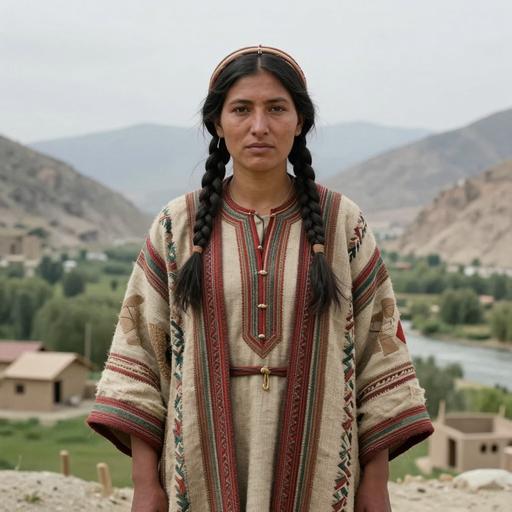
Portrait reconstruction of I8218
Ancient Individual

A woman buried in Pakistan in the Late Iron Age era

I8218
47 BCE - 62 CE
Female
Aligrama Iron Age Site in Swat Valley, Pakistan
Pakistan
Scroll to begin
Chapter I

Identity

The biological and cultural markers that define this ancient individual

Sample ID

I8218

Date Range

47 BCE - 62 CE

Biological Sex

Female

mtDNA Haplogroup

W6

Cultural Period

Aligrama Iron Age Site in Swat Valley, Pakistan

Chapter II

Place

Where this individual was discovered

Country Pakistan
Locality Swat Valley. Aligrama
Coordinates 34.8049, 72.3182
Chapter III

Time

When this individual lived in the broader context of human history

I8218 47 BCE - 62 CE
Chapter IV

Story

The narrative of this ancient life

The Aligrama site, nestled in the picturesque Swat Valley of Pakistan, represents a critical link in the historical narrative of the region, bridging the transition between the late Bronze Age and the Iron Age. The Swat Valley, historically known as Udyana, has been a crucial interlinking region between Central Asia and the Indian subcontinent, facilitating cultural exchanges and showcasing a unique blend of influences.

Archaeological Significance

Aligrama is an Iron Age burial site that has offered a wealth of information regarding the cultural and social practices of the inhabitants. The site has yielded various artifacts, including pottery, iron objects, and grave goods indicating a complex societal structure and a sophisticated level of technological advancement for the time. The site’s excavation has unearthed evidence of continued human settlement and activity stretching across multiple centuries, highlighting its persistent significance in regional dynamics.

Cultural Context

  1. Chronological Placement: The Aligrama site occupies a crucial era in South Asian history, postdating the Indus Valley Civilization and predating the firm establishment of Achaemenid control in the region. This period is frequently referred to as the early Vedic period in the Indian subcontinent.

  2. Material Culture: The artifacts found at Aligrama include terracotta figurines, ornamental beads, iron tools, and distinctive pottery designs which reflect both utilitarian and ritualistic functions. The pottery often features intricate designs that suggest aesthetic sensibilities and possible symbolic meanings.

  3. Iron Technology: Distinctive iron objects indicate advancements in metallurgy, marking a technological shift from the Bronze Age. Iron plowshares, swords, and domestic tools suggest a society adapting to and mastering iron use for agriculture as well as warfare.

  4. Burial Practices: The inhabitants of Aligrama practiced elaborate burial customs, as evidenced by the rich assemblage of grave goods including jewelry, weaponry, and pottery, hinting at beliefs in an afterlife or the importance of status in death.

Societal Structure

  1. Social Hierarchies: Based on the variance in grave goods, it is inferred that the society had a hierarchical structure with distinctions in social status. The more ornate and abundant the goods, the higher the individual's status seemed to be.

  2. Economic Activities: Evidence suggests a mixed economy of agriculture and trade. The fertile lands of the Swat Valley would have supported intensive farming, while the strategic location would have facilitated trade with neighboring regions.

  3. Cultural Interactions: The position of Swat Valley at the crossroads of South and Central Asia fostered a melting pot of cultural influences, particularly visible in the syncretic style of artifacts and architectural remnants.

Religious and Ritual Aspects

  1. Spiritual Beliefs: The presence of articulated ritual objects points to a polytheistic belief system with potential deities or spirits important to daily life and the afterlife.

  2. Iconography and Art: Art found in the form of carvings and figurines often depicts anthropomorphic figures, animals, and geometric patterns, potentially indicative of myths, religious narratives, or protective totems.

Continuing Legacy

The discoveries at Aligrama have enriched modern understanding of early Iron Age cultures in the region and their relevance to the evolution of later historical periods in South Asia. They highlight a period of transition, innovation, and adaptation, playing a pivotal role in shaping regional identities and cultural practices that would influence the trajectory of South Asian history.

Aligrama serves as a testament to the importance of the Swat Valley as both a center of settlement and a cultural corridor influencing subsequent historical developments in the broader subcontinental and Central Asian context.

Chapter V

Genetics

The genetic ancestry of this ancient individual

Ancient Genetic Admixture

This analysis compares the DNA profile of I8218 with ancient reference populations, showing the genetic composition in terms of prehistoric ancestral groups.

Neolithic Farmers 46.3%
Ancient Asians 34.8%
Western Steppe Pastoralists 12.6%
European Hunter-Gatherers 6.3%

Modern Genetic Admixture

This analysis compares the DNA profile with present-day reference populations, showing what percentage of genetic makeup resembles modern populations from different regions.

Asia 99.6%
Central Asian, Northern Indian & Pakistani 69.1%
Indian 54.4%
Pakistan 14.8%
Northern West Asian 30.5%
Caucasian 30.5%

Closest Modern Populations

These are the modern populations showing the closest statistical alignment to A woman buried in Pakistan in the Late Iron Age era, ranked by genetic distance. Lower distance values indicate closer statistical similarity.

1
Khatri
1.9490
2
Kohistani
2.0660
3
Jat Punjab Muslim
2.2519
4
Jat Punjab Sikh
2.3541
5
Punjabi Sikh India
2.3959
6
Arain
2.4416
7
Pashtun Pakistan
2.4697
8
Kamboj
2.4912
9
Arora
2.4995
10
Awan
2.5802
Chapter VI

Context

Other ancient individuals connected to this sample

Sources

References

Scientific publications and genetic data

Scientific Publication

The formation of human populations in South and Central Asia

Authors Narasimhan VM, Patterson N, Moorjani P
Abstract

By sequencing 523 ancient humans, we show that the primary source of ancestry in modern South Asians is a prehistoric genetic gradient between people related to early hunter-gatherers of Iran and Southeast Asia. After the Indus Valley Civilization's decline, its people mixed with individuals in the southeast to form one of the two main ancestral populations of South Asia, whose direct descendants live in southern India. Simultaneously, they mixed with descendants of Steppe pastoralists who, starting around 4000 years ago, spread via Central Asia to form the other main ancestral population. The Steppe ancestry in South Asia has the same profile as that in Bronze Age Eastern Europe, tracking a movement of people that affected both regions and that likely spread the distinctive features shared between Indo-Iranian and Balto-Slavic languages.

G25 Coordinates

The G25 coordinates for sample I8218 can be used for detailed admixture analysis in our G25 Studio tool.

I8218,0.0734827,0.0043637,-0.0972075,0.07546246,-0.078608,0.04443678,0.00531642,0.00557798,-0.01273612,-0.01770664,-0.00794612,-0.0002841,-0.00357322,-0.00855034,0.01182028,0.00768446,-0.00776918,-0.00215842,-0.00185152,-0.0121795,-0.00597018,-0.00258666,-0.00020186,-0.0001402,-0.00414252
Analyze in G25 Studio
Use code for 40% off Expires Feb 26