Menu
Store
Blog
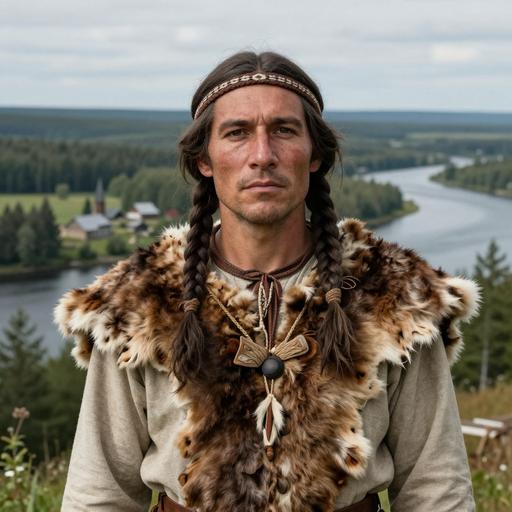
Portrait reconstruction of MARC1492
Ancient Individual

A man buried in Canada in the Pre-Columbian North America era

MARC1492
1231 CE - 1295 CE
Male
Canada 700 Years Ago
Canada
Scroll to begin
Chapter I

Identity

The biological and cultural markers that define this ancient individual

Sample ID

MARC1492

Date Range

1231 CE - 1295 CE

Biological Sex

Male

mtDNA Haplogroup

A2-a

Y-DNA Haplogroup

Not available

Cultural Period

Canada 700 Years Ago

Chapter II

Place

Where this individual was discovered

Country Canada
Locality Old Mission Point. Restigouche River. Atholville. prehistory Tjigog. New Brunswick
Chapter III

Time

When this individual lived in the broader context of human history

MARC1492 1231 CE - 1295 CE
Chapter IV

Story

The narrative of this ancient life

Seven hundred years ago, the region of present-day Eastern Canada, known as the Eastern Woodlands, was a vibrant and diverse area inhabited by various Indigenous cultures. This period, around the 14th century CE, was part of the Late Woodland period, a time characterized by the development of complex societies, agriculture, trade networks, and rich cultural traditions.

Geography and Environment

The Eastern Woodlands region primarily includes the Great Lakes, the St. Lawrence River basin, and the Atlantic coastline. The geography consists of dense forests, abundant waterways, and fertile land, providing a lush environment that sustained a wide array of wildlife and plant species. The climate varied from the temperate zones near the coast to more continental conditions inland, influencing the lifestyle and subsistence strategies of the indigenous peoples.

Societies and Culture

The Eastern Woodlands was home to diverse indigenous groups, including the ancestors of the Iroquoian-speaking and Algonquian-speaking peoples. Notable among them were the Haudenosaunee (Iroquois) Confederacy, which included nations like the Mohawk, Oneida, Onondaga, Cayuga, and Seneca, as well as the Wabanaki Confederacy, which included the Mi’kmaq, Maliseet, Passamaquoddy, Abenaki, and Penobscot peoples, among others.

Social Structure

These societies were often organized into complex kinship networks and clans, typically matrilineal, meaning descent and inheritance were passed through the mother’s line. The longhouse was a common architectural form, representing extended family living and communal life. Villages were usually strategically located near water sources and areas suitable for agriculture.

Political Systems

The Iroquois are particularly noted for their sophisticated system of governance, which influenced democratic practices later adopted in European settler governments. The Great Law of Peace was a constitution that established democratic principles, decision-making through consensus, and balance of power among different nations within the confederacy.

Economy and Trade

Agriculture

Agriculture was a cornerstone of sustenance for many groups in the Eastern Woodlands. The \Three Sisters" – maize, beans, and squash – were staple crops cultivated together in a symbiotic planting method. This intercropping system maximized yield and maintain soil fertility.

Hunting and Gathering

While agriculture was important, hunting and gathering also played a vital role in the economy. The lush forests and waterways provided ample resources for hunting deer, bear, and fowl, as well as fishing and gathering edible plants, fruits, and nuts.

Trade Networks

Trade was robust in the Eastern Woodlands, with extensive networks stretching far beyond local territories. Goods such as flint, copper tools, furs, shells, and ceremonial objects traveled vast distances. The waterways like the Great Lakes and the St. Lawrence were crucial trade routes facilitating cultural exchange and economic interactions.

Spirituality and Art

Spirituality was a central aspect of life, deeply connected to nature and the land. Spiritual beliefs varied widely but often included animism, the belief that all living and inanimate entities have spirits. Ceremonies and rituals, including those related to agricultural cycles and hunting success, were integral.

Artistic expression found form in pottery, beadwork, wood carving, and intricate textiles. The creation of wampum belts, made from shells, was not only an art form but also instrumental in storytelling, record-keeping, and treaty-making.

Challenges and Adaptation

Around this time, climate changes, such as the Medieval Warm Period, likely led to shifts in agricultural and settlement patterns. Societies had to adapt to various challenges, including resource scarcity, territorial disputes, and the need for forming alliances, sometimes through warfare or diplomacy.

Conclusion

The Eastern Woodlands of 700 years ago was a dynamic tapestry of cultures with sophisticated social structures, advanced agricultural practices, and intricate trade networks. Their rich cultural heritage and innovations in governance continue to influence the socio-political landscape today. Understanding these societies gives us valuable insights into the resilience and adaptability of human cultures in diverse environments."

Chapter V

Genetics

The genetic ancestry of this ancient individual

Ancient Genetic Admixture

This analysis compares the DNA profile of MARC1492 with ancient reference populations, showing the genetic composition in terms of prehistoric ancestral groups.

Ancient Native Americans 55.4%
Ancient Asians 34.1%
Western Steppe Pastoralists 5.5%
Neolithic Farmers 5.1%

Modern Genetic Admixture

This analysis compares the DNA profile with present-day reference populations, showing what percentage of genetic makeup resembles modern populations from different regions.

America 69.5%
America 69.5%
Native American 69.5%
Asia 26.9%
Northern Asian 25.8%
Siberian 17.4%
Mongolian 8.4%
Chinese & Southeast Asian 1.1%
Indonesian Khmer Thai Myanma 0.7%
Europe 3.0%
Northwestern European 3.0%
Finnish 3.0%
Africa 0.7%
Congolese & Southern East African 0.7%
South East African 0.7%

Closest Modern Populations

These are the modern populations showing the closest statistical alignment to A man buried in Canada in the Pre-Columbian North America era, ranked by genetic distance. Lower distance values indicate closer statistical similarity.

1
Amerindian North
4.5885
2
Chipewyan
6.5572
Chapter VI

Context

Other ancient individuals connected to this sample

Sources

References

Scientific publications and genetic data

Scientific Publication

POPULATION GENETICS. Genomic evidence for the Pleistocene and recent population history of Native Americans

Authors Raghavan M, Steinrücken M, Harris K
Abstract

How and when the Americas were populated remains contentious. Using ancient and modern genome-wide data, we found that the ancestors of all present-day Native Americans, including Athabascans and Amerindians, entered the Americas as a single migration wave from Siberia no earlier than 23 thousand years ago (ka) and after no more than an 8000-year isolation period in Beringia. After their arrival to the Americas, ancestral Native Americans diversified into two basal genetic branches around 13 ka, one that is now dispersed across North and South America and the other restricted to North America. Subsequent gene flow resulted in some Native Americans sharing ancestry with present-day East Asians (including Siberians) and, more distantly, Australo-Melanesians. Putative "Paleoamerican" relict populations, including the historical Mexican Pericúes and South American Fuego-Patagonians, are not directly related to modern Australo-Melanesians as suggested by the Paleoamerican Model.

G25 Coordinates

The G25 coordinates for sample MARC1492 can be used for detailed admixture analysis in our G25 Studio tool.

MARC1492,0.05761102,-0.30653916,0.10828654,0.0734325,-0.10238622,-0.01793316,-0.21899782,-0.25761932,-0.00707724,-0.01114446,0.00472474,-0.00020248,-0.00100596,0.01508596,-0.00840456,-0.00281864,0.00216356,0.00752924,0.00789956,0.00198684,0.00471084,-0.00339358,-0.00182966,0.00254884,0.00370102
Analyze in G25 Studio
Use code for 40% off Expires Feb 27