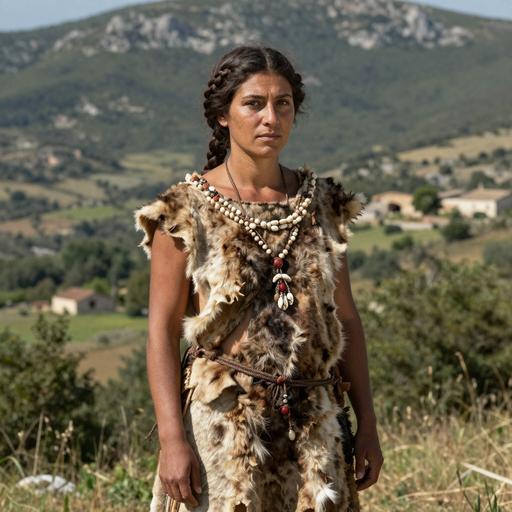
The Southern Italy Hunter-Gatherer culture, part of the broader Mediterranean Hunter-Gatherers, represents one of the fascinating prehistoric epochs in Italy’s rich history. This era is primarily characterized by the lifestyle and adaptations of the early humans who inhabited the regions of Southern Italy during the Mesolithic period, roughly from around 10,000 to 5,000 BCE.
Geographic and Environmental Context
Southern Italy during the era of hunter-gatherers was vastly different from what we see today. The region consisted of a mosaic of environments, including coastal areas, dense forests, and mountains, which significantly influenced the livelihoods of these early inhabitants. The end of the last Ice Age brought about climatic shifts that led to the gradual warming of the region, facilitating diverse flora and fauna, which the hunter-gatherers effectively exploited.
Subsistence and Lifestyle
The Southern Italy Hunter-Gatherers were highly mobile, relying on hunting, fishing, and foraging. Their diet consisted predominantly of small and large game such as deer and wild boar, supplemented by a variety of plant foods, nuts, and fruits, as well as aquatic resources from the Mediterranean Sea. The abundance of marine resources meant that these communities were probably excellent fishers, exploiting species like shellfish and small coastal fish.
Tools and Technology
The technological toolkit of the Southern Italy Hunter-Gatherers included a variety of stone tools, such as microliths, blades, and burins, which were used for hunting, processing animal hides, and crafting other tools. Flint was commonly used due to its abundance and utility in creating sharp-edged implements. Additionally, evidence of bone and antler tools suggests a sophisticated approach to tool-making, allowing for more efficient hunting and food processing practices.
Social Organization and Culture
The social structures of these hunter-gatherers were likely based on small, kin-based groups that moved seasonally within defined territories to exploit different resources. The transitory nature of these groups means they had less emphasis on accumulating material possessions but placed significant importance on knowledge transfer and community bonds.
Ceremonial and artistic expressions are evidenced through various forms such as primitive carvings and cave paintings, found in sites like the Grotto of Paglicci in Apulia, suggesting the development of symbolic thought and possibly spiritual practices. These artworks not only illustrate daily life and natural surroundings but also hint at the complex social and cultural frameworks guiding these early societies.
Interaction with Environment
The Southern Italy Hunter-Gatherers were highly adept at adapting to their geographical context, using their deep understanding of the local environment to best harness its resources. This includes sustainable practices and efficient use of natural tools and materials, which hint at an intricate relationship with their surroundings.
Transition and Legacy
This hunter-gatherer culture eventually transitioned with the advent of agriculture, influenced by the influx of Neolithic farming communities from the Eastern Mediterranean. This transition was gradual and involved the integration of farming practices into their traditional lifestyle, ultimately leading to significant social and economic transformations.
The legacy of the Southern Italy Hunter-Gatherers is integral to understanding the broader narrative of prehistoric human development in the Mediterranean. These early inhabitants laid the foundational aspects of adaptive ingenuity and cultural complexity that would be built upon by subsequent civilizations in the region. The archaeological findings from this period continue to provide valuable insights into the resilience and adaptability of human societies in the face of climatic and environmental changes.