Menu
Currency
Main
Store
Blog

Loading Report

Preparing your ancestry journey

Connecting to ancient matches...

Preparing your report

Skip to main content
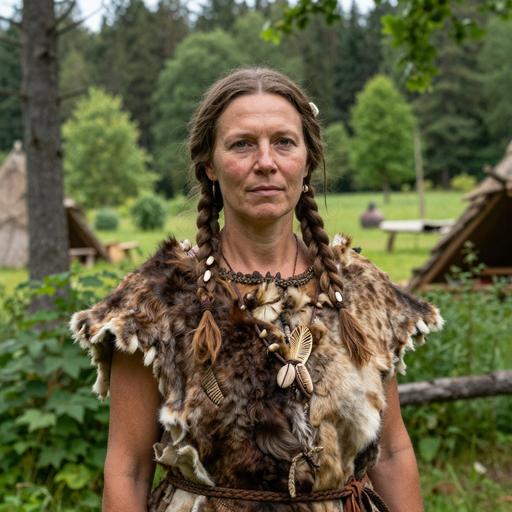
Portrait reconstruction of A woman buried in Germany in the Mesolithic era
Ancient Individual

A woman buried in Germany in the Mesolithic era

A woman buried in Germany during the Ofnet Caves, Germany

A fragment of the ancient world, preserved across millennia in strands of DNA.

Ofnet
6472 BCE - 6091 BCE
Female
Germany
Scroll to begin
Chapter I

Identity

The biological and cultural markers that define this ancient individual

Sample ID

Ofnet

Date Range

6472 BCE - 6091 BCE

Cultural Period

Ofnet Caves, Germany

Biological Sex

Female

mtDNA Haplogroup

U5b1d1

Y-DNA Haplogroup

N/A (Female)

Chapter II

Place

Where this individual was discovered

Country Germany
Locality Ofnet
Coordinates 48.4900, 10.2700
Chapter III

Time

When this individual lived in the broader context of human history

Ofnet 6472 BCE - 6091 BCE
Chapter IV

Story

The narrative of this ancient life

The Ofnet Caves are an archaeological site located in Bavaria, southern Germany, and they provide significant insight into the culture and lifestyle of European hunter-gatherers during the Mesolithic period, approximately 8,000 years ago. The findings from these caves, especially the discovery of burial sites, have shed light on social structures, cultural practices, and the environment of the people living in Europe at the time.

Geographical Setting

The Ofnet Caves are situated in the Swabian Jura, a region characterized by rolling hills, limestone rocks, and dense forests, with a rich biodiversity that provided ample resources for hunter-gatherer communities. The caves are part of a karst landscape, created by the dissolution of soluble rocks, which provided natural shelters and spaces for habitation.

Archaeological Discoveries

The most significant archaeological finding at the Ofnet Caves is the discovery of two mass burial sites, often referred to as the \Ofnet skull nests," which contained the remains of 33 individuals, primarily skulls. The positioning of the skulls, carefully arranged in what appeared to be a circular fashion and facing west, suggests a ritualistic or symbolic significance. Many of the skulls bore signs of violence, with evidence of blunt force trauma, which has intrigued archaeologists and led to various hypotheses about the nature of these deaths, including warfare, ritual sacrifice, or a catastrophic event.

Cultural Insights

  1. Burial Practices: The Ofnet skull nests are indicative of complex burial rituals and a possible belief in an afterlife or spiritual realm. The careful arrangement and treatment of the dead suggest a structured social practice with symbolic meanings, possibly related to ancestor worship or shamanistic rituals.

  2. Social Structure: The differentiation in skull treatment could imply a societal hierarchy or differing statuses within the group. Various levels of violence present on the skulls could point toward internal conflict, warfare, or ritualistic sacrifice among groups or tribes.

  3. Artistic Expression and Symbolism: Items found alongside the burials, such as ochre and possible grave goods, hint at artistic expression and symbolism in everyday life and death rituals. Ochre, a natural earth pigment, was often used in prehistoric times for body and object decoration, indicating its potential role in ritual activities.

Lifestyle and Subsistence

The Ofnet Caves' inhabitants were likely part of mobile hunter-gatherer groups who exploited seasonal resources. The Swabian Jura's diverse environment would have provided a range of food sources, including wild game, fish, fruits, nuts, and roots.

  1. Hunting and Gathering: The presence of animal bones suggests that hunting was a primary food source, with evidence pointing toward the hunting of large game using tools and weapons crafted from stone, wood, and bone.

  2. Tool Technology: Stone tools found in the area depict a high level of craftsmanship and technical skill. These tools were crucial for daily survival tasks, including hunting, processing food, and crafting.

  3. Seasonal Movements: As hunter-gatherers, the groups associated with the Ofnet Caves likely moved with the seasons to follow food availability, utilizing a wide range of ecological niches. The caves themselves may have served as temporary shelters during certain periods of their movement cycles.

Environmental Context

During the Mesolithic, the landscape of Europe was undergoing significant changes. The end of the last Ice Age resulted in warmer climates, altering the flora and fauna and transforming the hunter-gatherer economy. The Swabian Jura, with its rich resources, would have been an attractive area for human settlement and activity.

Significance

The Ofnet Caves provide a rich tapestry of insights into the life of Mesolithic European hunter-gatherers, illustrating a complex society with structured social practices, ritualistic behavior, and a deep connection with the environment. Understanding these aspects contributes significantly to our historical comprehension of human societal development and cultural diversity during prehistoric times. The site continues to be a focal point for archaeological research, offering opportunities to explore prehistoric human behavior, migration patterns, and interactions with the environment."

Context

Related Samples

This individual exists within a broader network of ancient samples. No ancient genome stands alone.

Sample ID Culture/Period Date Location Action
Rochedane Rochedane Site, France 11207 BCE Rochedane, France View
Kostenki12 Kostenki 12 Site, Russia 31300 BCE Kostenki, Russia View
Vestonice16 Vestonice 16 Site, Czech Republic 28500 BCE Dolni Vestonice, Czech Republic View
Kostenki14 Kostenki 14 Site, Russia 37426 BCE Kostenki, Russia View
Pavlov1 Pavlov 1 Site, Czech Republic 29300 BCE Dolni Vestonice, Czech Republic View
Muierii2 Peștera Muierii Site, Romania 32228 BCE Muierii 2, Romania View
Vestonice13 Vestonice 13 Site, Czech Republic 29200 BCE Dolni Vestonice, Czech Republic View
Vestonice15 Vestonice 15 Site, Czech Republic 29200 BCE Dolni Vestonice, Czech Republic View
Vestonice43 Vestonice 43 Site, Czech Republic 28500 BCE Dolni Vestonice, Czech Republic View
Ostuni2 Ostuni 2 Hunter-Gatherer, Southern Italy 27546 BCE Apulia. Ostuni, Italy View
Ostuni1 Ostuni 1 Hunter-Gatherer, Southern Italy 25860 BCE Apulia. Ostuni, Italy View
Vestonice14 Vestonice 14 Site, Czech Republic 29200 BCE Dolni Vestonice, Czech Republic View
ElMiron El Mirón Cave, Spain 16898 BCE El Miron, Spain View
I1577 Krems-Wachtberg 3 Site, Austria 29500 BCE Krems-Wachtberg, Austria View
AfontovaGora3 Afontova Gora 3 Site, Russia 16257 BCE Afontova Gora, Russia View
Cioclovina1 Cioclovina Cave, Romania 31343 BCE Cioclovina, Romania View
Villabruna Villabruna Hunter-Gatherer, Northern Italy 12268 BCE Veneto. Villabruna, Italy View
Paglicci133 Paglicci 133 Hunter-Gatherer, Southern Italy 33150 BCE Apulia. Paglicci, Italy View
Continenza Southern Italy Hunter-Gatherer 9300 BCE Abruzzo. Grotta de Continenza, Italy View
Paglicci108 Paglicci 108 Hunter-Gatherer, Southern Italy 26700 BCE Apulia. Paglicci, Italy View
HohleFels49 Hohle Fels 49 Site, Germany 13771 BCE Swabian Jura. Baden-Wurttemberg. Hohle Fels. Ach Valley, Germany View
Burkhardtshohle Burkhardtshohle Cave, Germany 13127 BCE Swabian Jura. Baden-Wurttemberg. Burkhardtshöhle. Westerheim, Germany View
Bockstein Bockstein Cave, Germany 6450 BCE Swabian Jura. Baden-Wurttemberg. Bockstein-Höhle. Lone valley, Germany View
Brillenhohle Brillenhohle Cave, Germany 13167 BCE Swabian Jura. Baden-Wurttemberg. Brillenhöhle. Ach Valley, Germany View
HohleFels79 Hohle Fels 79 Site, Germany 13101 BCE Swabian Jura. Baden-Wurttemberg. Hohle Fels. Ach Valley, Germany View
Ofnet Ofnet Caves, Germany 6472 BCE Ofnet, Germany View
Ranchot88 Ranchot 88 Site, France 8290 BCE Ranchot, France View
Chaudardes1 Chaudardes Site, France 6400 BCE Chaudardes, France View
BerryAuBac Berry-au-Bac Site, France 5368 BCE Berry Au Bac, France View
Rigney1 Rigney 1 Site, France 13696 BCE Rigney, France View
Iboussieres39 Iboussieres 39 Site, France 9992 BCE Aven des Iboussières à Malataverne. Rhône-Alpes, France View
LesCloseaux13 Les Closeaux 13 Site, France 8282 BCE Les Closeaux, France View
GoyetQ116-1 Upper Paleolithic Goyet Cave Q116-1, Belgium 33678 BCE Troisieme caverne of Goyet cave, Belgium View
GoyetQ376-19 Upper Paleolithic Goyet Cave Q376-19, Belgium 25771 BCE Troisieme caverne of Goyet cave, Belgium View
GoyetQ53-1 Upper Paleolithic Goyet Cave Q53-1, Belgium 26440 BCE Troisieme caverne of Goyet cave, Belgium View
GoyetQ56-16 Upper Paleolithic Goyet Cave Q56-16, Belgium 24847 BCE Troisieme caverne of Goyet cave, Belgium View
Paglicci108 26700 BCE Apulia. Paglicci, Italy View
GoyetQ53-1 26440 BCE Troisieme caverne of Goyet cave, Belgium View
GoyetQ56-16 24847 BCE Troisieme caverne of Goyet cave, Belgium View
Rigney1 13696 BCE Rigney, France View
Burkhardtshohle 13127 BCE Swabian Jura. Baden-Wurttemberg. Burkhardtshöhle. Westerheim, Germany View
Iboussieres39 9992 BCE Aven des Iboussières à Malataverne. Rhône-Alpes, France View
Continenza 9300 BCE Abruzzo. Grotta de Continenza, Italy View
AfontovaGora3 16257 BCE Afontova Gora, Russia View
GoyetQ-2 13305 BCE Troisieme caverne of Goyet cave, Belgium View
GoyetQ116-1 33678 BCE Troisieme caverne of Goyet cave, Belgium View
Ofnet 6472 BCE Ofnet, Germany View
LesCloseaux13 8282 BCE Les Closeaux, France View
HohleFels79 13101 BCE Swabian Jura. Baden-Wurttemberg. Hohle Fels. Ach Valley, Germany View
Cioclovina1 31343 BCE Cioclovina, Romania View
Brillenhohle 13167 BCE Swabian Jura. Baden-Wurttemberg. Brillenhöhle. Ach Valley, Germany View
Bockstein 6450 BCE Swabian Jura. Baden-Wurttemberg. Bockstein-Höhle. Lone valley, Germany View
GoyetQ376-19 25771 BCE Troisieme caverne of Goyet cave, Belgium View
HohleFels49 13771 BCE Swabian Jura. Baden-Wurttemberg. Hohle Fels. Ach Valley, Germany View
Falkenstein 7472 BCE Swabian Jura. Baden-Wurttemberg. Falkenstein-Höhle, Germany View
Chaudardes1 6400 BCE Chaudardes, France View
Ranchot88 8290 BCE Ranchot, France View
Falkenstein 7472 BCE Swabian Jura. Baden-Wurttemberg. Falkenstein-Höhle, Germany View
BerryAuBac 5368 BCE Berry Au Bac, France View
GoyetQ116-1 33678 BCE Troisieme caverne of Goyet cave, Belgium View
Paglicci133 33150 BCE Apulia. Paglicci, Italy View
Rochedane 11207 BCE Rochedane, France View
I0061 7050 BCE Karelia. Yuzhnyy Oleni Ostrov, Russia View
Villabruna 12268 BCE Veneto. Villabruna, Italy View
Sample ID Culture/Period Date Location Action
Ofnet Ofnet Caves, Germany 6472 BCE Ofnet, Germany View
Sources

References

Scientific publications and genetic data that inform this profile.

Scientific Publication

The genetic history of Ice Age Europe

Authors Fu Q, Posth C, Hajdinjak M, Petr M, Mallick S et al.
Abstract

Modern humans arrived in Europe ~45,000 years ago, but little is known about their genetic composition before the start of farming ~8,500 years ago. Here we analyse genome-wide data from 51 Eurasians from ~45,000-7,000 years ago. Over this time, the proportion of Neanderthal DNA decreased from 3-6% to around 2%, consistent with natural selection against Neanderthal variants in modern humans. Whereas there is no evidence of the earliest modern humans in Europe contributing to the genetic composition of present-day Europeans, all individuals between ~37,000 and ~14,000 years ago descended from a single founder population which forms part of the ancestry of present-day Europeans. An ~35,000-year-old individual from northwest Europe represents an early branch of this founder population which was then displaced across a broad region, before reappearing in southwest Europe at the height of the last Ice Age ~19,000 years ago. During the major warming period after ~14,000 years ago, a genetic component related to present-day Near Easterners became widespread in Europe. These results document how population turnover and migration have been recurring themes of European prehistory.

Use code for 25% off Expires Jul 12