Menu
Currency
Main
Store
Blog

Loading Report

Preparing your ancestry journey

Connecting to ancient matches...

Preparing your report

Skip to main content
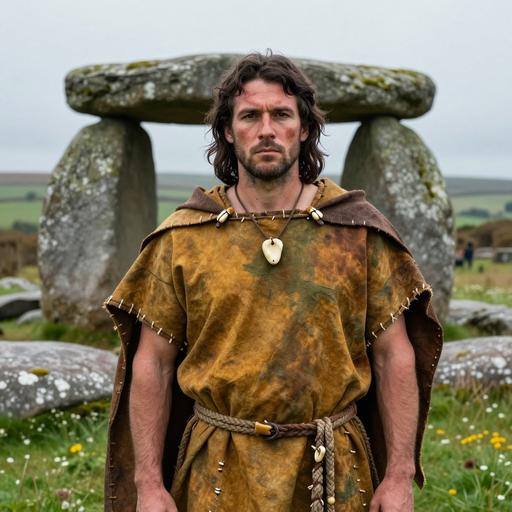
Portrait reconstruction of A man buried in Ireland in the Neolithic era
Ancient Individual

A man buried in Ireland in the Neolithic era

A man buried in Ireland during the Early Neolithic Ireland

A fragment of the ancient world, preserved across millennia in strands of DNA.

PN107
3932 BCE - 3653 BCE
Male
Ireland
Scroll to begin
Chapter I

Identity

The biological and cultural markers that define this ancient individual

Sample ID

PN107

Date Range

3932 BCE - 3653 BCE

Cultural Period

Early Neolithic Ireland

Biological Sex

Male

mtDNA Haplogroup

U4a2f*

Y-DNA Haplogroup

I2a1b1a1a1

Chapter II

Place

Where this individual was discovered

Country Ireland
Locality Ireland. Clare. Poulnabrone
Coordinates 53.0487, -9.1400
Chapter III

Time

When this individual lived in the broader context of human history

PN107 3932 BCE - 3653 BCE
Chapter IV

Story

The narrative of this ancient life

Early Neolithic Ireland, spanning approximately from 4000 to 2500 BCE, marks a transformative period in the history of Ireland as it transitions from a society of hunter-gatherers to one of sedentary agriculturalists. This era, preceding the well-documented Celtic culture by several millennia, is characterized by significant socio-economic, technological, and cultural developments that laid the groundwork for future societies.

Settlement and Architecture

Early Neolithic communities in Ireland began establishing permanent or semi-permanent settlements, a departure from the nomadic lifestyle of their Mesolithic predecessors. These settlements were typically small and consisted of a handful of dwellings. Excavations have revealed evidence of simple, rectangular, and occasionally circular timber houses. The walls of these dwellings were often constructed using wattle and daub, and the roofs were likely thatched with reeds or other plant materials.

Agriculture and Livelihood

The advent of agriculture was the pivotal change during this era. Early Neolithic people introduced domesticated plants and animals to Ireland, likely through migration and cultural exchange with continental Europe. They cultivated crops such as wheat and barley and domesticated animals like cattle, sheep, and pigs. This agricultural base provided a more reliable food source, allowing populations to grow and societies to stabilize.

Alongside farming, they continued to engage in hunting and fishing, supplementing their diets with wild resources. The integration of agriculture had profound effects, leading to more complex societal structures and increased manipulation of the landscape, such as forest clearance for farming and pasture.

Tools and Technology

Neolithic communities saw advancements in tool-making techniques. Stone tools, particularly those made from flint and other durable materials, became increasingly sophisticated. Axes, adzes, and arrowheads were commonly used and have been found in significant quantities at various archaeological sites. The establishment of polished stone tool production indicates not only practical utility but also potential social significance, possibly linked to trade or status within communities.

Megalithic Monuments

One of the most remarkable cultural developments of Early Neolithic Ireland is the construction of megalithic monuments. These structures, which include dolmens, passage tombs, and court cairns, are among the most visually striking and enduring legacies of the people of this era. Notable examples include Newgrange, Knowth, and Dowth in the Boyne Valley.

The construction of these monuments required considerable communal effort and suggests a high degree of social organization. Their purposes were likely multifaceted, serving as tombs, ceremonial sites, and social gathering places. The alignment of some structures with astronomical events indicates advanced knowledge of the solar and lunar cycles, hinting at their role in ritual or calendrical functions.

Society and Culture

While specific details about the social organization of Early Neolithic communities remain speculative, the construction of monuments and the development of farming suggest increasingly complex social structures. There may have been emerging social hierarchies, with kinship groups or clans possessing different roles and statuses within the community.

They likely had rich oral traditions, storytelling, and possibly early forms of spiritual or religious beliefs tied to natural phenomena and the seasons. The presence of burial practices and the construction of tombs also indicate a belief in an afterlife or reverence for ancestors.

Conclusion

Although not Celtic in the cultural sense, Early Neolithic Ireland was a foundational period that significantly shaped the island's prehistoric landscape. The developments in agriculture, settlement, toolmaking, and social organization laid the groundwork for the complex societies that would follow, including the Iron Age Celts. The enigmatic megalithic structures remain as testament to the ingenuity and communal spirit of these early inhabitants, continuing to captivate and inspire to this day.

Context

Related Samples

This individual exists within a broader network of ancient samples. No ancient genome stands alone.

Sample ID Culture/Period Date Location Action
ANN1 Middle Neolithic Ireland 3637 BCE Ireland. Limerick. Annagh, Ireland View
ANN2 Middle Neolithic Ireland 3707 BCE Ireland. Limerick. Annagh, Ireland View
ARD2 Middle Neolithic Ireland 3599 BCE Ireland. Tipperary. Ardcrony, Ireland View
ASH1 Middle Neolithic Ireland 3640 BCE Ireland. Tipperary. Ashleypark, Ireland View
ASH3 Early to Middle Neolithic Ireland 3764 BCE Ireland. Tipperary. Ashleypark, Ireland View
BG72 Middle Neolithic Ireland 3633 BCE Ireland. Carlow. Baunogenasraid, Ireland View
CAK530 Late Neolithic Ireland 2884 BCE Ireland. Sligo. Carrowkeel, Ireland View
CAK531 Late Neolithic Ireland 2883 BCE Ireland. Sligo. Carrowkeel, Ireland View
CAK532 Late Neolithic Ireland 3013 BCE Ireland. Sligo. Carrowkeel, Ireland View
CAK533 Late Neolithic Ireland 3087 BCE Ireland. Sligo. Carrowkeel, Ireland View
CAK534 Neolithic Ireland 3100 BCE Ireland. Sligo. Carrowkeel, Ireland View
CAK68 Late Neolithic Ireland 2834 BCE Ireland. Sligo. Carrowkeel, Ireland View
CH448 Middle Neolithic Ireland 3646 BCE Ireland. Cavan. Cohaw, Ireland View
GNM1007 Middle Neolithic Ireland 3513 BCE Ireland. Mayo. Glennamong, Ireland View
GNM1076 Middle Neolithic Ireland 3366 BCE Ireland. Mayo. Glennamong, Ireland View
JP14 Middle Neolithic Ireland 3702 BCE Ireland. Kilkenny. Jerpoint West, Ireland View
KGH6 Mesolithic Ireland 4797 BCE Ireland. Limerick. Killuragh, Ireland View
MB6 Middle Neolithic Ireland 3494 BCE Ireland. Down. Millin Bay. Keentagh Td., Ireland View
NG10 Middle Neolithic Ireland 3339 BCE Ireland. Meath. Newgrange. Main Chamber, Ireland View
NGZ1 Middle Neolithic Ireland 3322 BCE Ireland. Meath. Site Z. Newgrange, Ireland View
PB1327 Middle Neolithic Ireland 3626 BCE Ireland. Clare. Parknabinnia, Ireland View
PB1794 Middle Neolithic Ireland 3642 BCE Ireland. Clare. Parknabinnia, Ireland View
PB186 Middle Neolithic Ireland 3516 BCE Ireland. Clare. Parknabinnia, Ireland View
PB2031 Middle Neolithic Ireland 3628 BCE Ireland. Clare. Parknabinnia, Ireland View
PB357 Early to Middle Neolithic Ireland 3654 BCE Ireland. Clare. Parknabinnia, Ireland View
PB443 Middle Neolithic Ireland 3634 BCE Ireland. Clare. Parknabinnia, Ireland View
PB581 Middle Neolithic Ireland 3625 BCE Ireland. Clare. Parknabinnia, Ireland View
PB672 Middle Neolithic Ireland 3628 BCE Ireland. Clare. Parknabinnia, Ireland View
PB675 Middle Neolithic Ireland 3362 BCE Ireland. Clare. Parknabinnia, Ireland View
PB754 Middle Neolithic Ireland 3523 BCE Ireland. Clare. Parknabinnia, Ireland View
PB768 Middle Neolithic Ireland 3639 BCE Ireland. Clare. Parknabinnia, Ireland View
PN02 Early to Middle Neolithic Ireland 3706 BCE Ireland. Clare. Poulnabrone, Ireland View
PN03 Middle Neolithic Ireland 3633 BCE Ireland. Clare. Poulnabrone, Ireland View
PN04 Early Neolithic Ireland 3946 BCE Ireland. Clare. Poulnabrone, Ireland View
PN05 Early Neolithic Ireland 3944 BCE Ireland. Clare. Poulnabrone, Ireland View
PN06 Middle Neolithic Ireland 3633 BCE Ireland. Clare. Poulnabrone, Ireland View
PN07 Middle Neolithic Ireland 3623 BCE Ireland. Clare. Poulnabrone, Ireland View
PN107 Early Neolithic Ireland 3932 BCE Ireland. Clare. Poulnabrone, Ireland View
PN10_PN113 Early Neolithic Ireland 3945 BCE Ireland. Clare. Poulnabrone, Ireland View
PN112 Early to Middle Neolithic Ireland 3704 BCE Ireland. Clare. Poulnabrone, Ireland View
PN12 Middle Neolithic Ireland 3523 BCE Ireland. Clare. Poulnabrone, Ireland View
PN13 Early to Middle Neolithic Ireland 3708 BCE Ireland. Clare. Poulnabrone, Ireland View
PN16 Middle Neolithic Ireland 3630 BCE Ireland. Clare. Poulnabrone, Ireland View
SRA62 Mesolithic Ireland 4226 BCE Ireland. Leitrim. Sramore, Ireland View
Sample ID Culture/Period Date Location Action
PN04 Early Neolithic Ireland 3946 BCE Ireland. Clare. Poulnabrone, Ireland View
PN05 Early Neolithic Ireland 3944 BCE Ireland. Clare. Poulnabrone, Ireland View
PN107 Early Neolithic Ireland 3932 BCE Ireland. Clare. Poulnabrone, Ireland View
PN10_PN113 Early Neolithic Ireland 3945 BCE Ireland. Clare. Poulnabrone, Ireland View
Sources

References

Scientific publications and genetic data that inform this profile.

Scientific Publication

A dynastic elite in monumental Neolithic society

Authors Cassidy LM, Maoldúin RÓ, Kador T, Lynch A, Jones C et al.
Abstract

The nature and distribution of political power in Europe during the Neolithic era remains poorly understood1. During this period, many societies began to invest heavily in building monuments, which suggests an increase in social organization. The scale and sophistication of megalithic architecture along the Atlantic seaboard, culminating in the great passage tomb complexes, is particularly impressive2. Although co-operative ideology has often been emphasised as a driver of megalith construction1, the human expenditure required to erect the largest monuments has led some researchers to emphasize hierarchy3-of which the most extreme case is a small elite marshalling the labour of the masses. Here we present evidence that a social stratum of this type was established during the Neolithic period in Ireland. We sampled 44 whole genomes, among which we identify the adult son of a first-degree incestuous union from remains that were discovered within the most elaborate recess of the Newgrange passage tomb. Socially sanctioned matings of this nature are very rare, and are documented almost exclusively among politico-religious elites4-specifically within polygynous and patrilineal royal families that are headed by god-kings5,6. We identify relatives of this individual within two other major complexes of passage tombs 150 km to the west of Newgrange, as well as dietary differences and fine-scale haplotypic structure (which is unprecedented in resolution for a prehistoric population) between passage tomb samples and the larger dataset, which together imply hierarchy. This elite emerged against a backdrop of rapid maritime colonization that displaced a unique Mesolithic isolate population, although we also detected rare Irish hunter-gatherer introgression within the Neolithic population.

Use code for 25% off Expires Jul 12