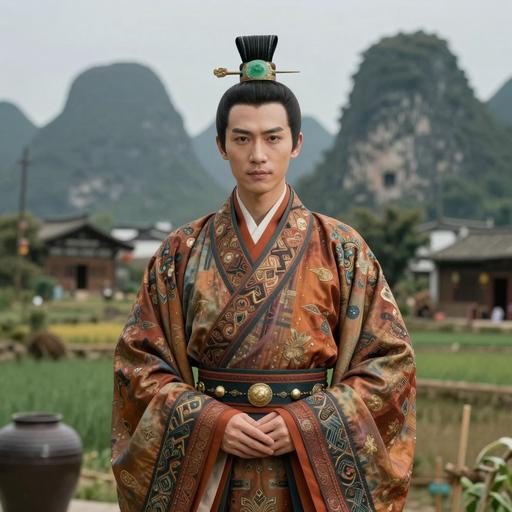
Overview
The Qinchang Period China refers to a regional phase within ancient Chinese pre-imperial development, often discussed through characteristic archaeological assemblages rather than through a single, uniform political history. Across this broad time span, communities adjusted to shifts in settlement scale, craft production, and regional exchange.
Region & Environment
The term “China” here points to the central and east Asian cultural world of China’s river valleys and adjacent uplands. Such landscapes supported mixed farming strategies on alluvial plains, while surrounding hills and terraces provided additional resources such as timber, stone, and grazing land. Environmental variability—between wetter lowlands and drier margins—shaped where durable settlements and field systems could expand.
Historical Context
In the wider archaeological framework of the late 2nd millennium BCE, societies were moving through phases of increasing social differentiation and more extensive long-distance interaction. Rather than a single empire with uniform administration, patterns of authority appear often at regional scales, with elites supported by control of key production, storage, and exchange networks. Over time, these dynamics laid groundwork for later states.
Populations & Lifeways
Populations were largely rural, with communities centered on farming and household-based craftwork. Diet likely combined cultivated grains with managed animal resources and foraged supplements, with seasonal mobility limited to practical needs such as pasture use or resource gathering. Social differences are suggested archaeologically by variation in housing space, burial treatment, and access to prestige goods, though the degree of hierarchy varies by locality.
Archaeology & Material Culture
Archaeological signatures associated with Qinchang cultural contexts are typically recognized through pottery styles, site organization, and craft traditions. Assemblages can include everyday ceramic wares alongside more formal or decorated vessels used in feasting, household display, or ritual settings. Evidence of metallurgy and specialized production—where present—points to growing craft specialization, even if the scale and timing differ across regions. Regional exchange is often inferred from similarities in object forms and materials.
Culture & Society
Cultural life likely mixed household traditions with locally organized ceremonies, where pottery, controlled feasting practices, and interment customs could mark group identity. Social organization probably ranged from kin-based village networks to broader elite influence, expressed through differential access to goods, labor, and burial investment. Overlapping local traditions would have made “culture” at any single site a blend of inherited practices and local adaptation.
Legacy & Transition
The Qinchang Period is best understood as part of a longer transition toward more complex, state-like organization in ancient China. Archaeological trends—greater craft specialization, clearer material distinctions between social roles, and expanded interaction—help explain how later dynastic periods could build on earlier regional foundations. As traditions changed, new configurations of authority and production emerged, linking communities to wider networks that would become more prominent in subsequent centuries.