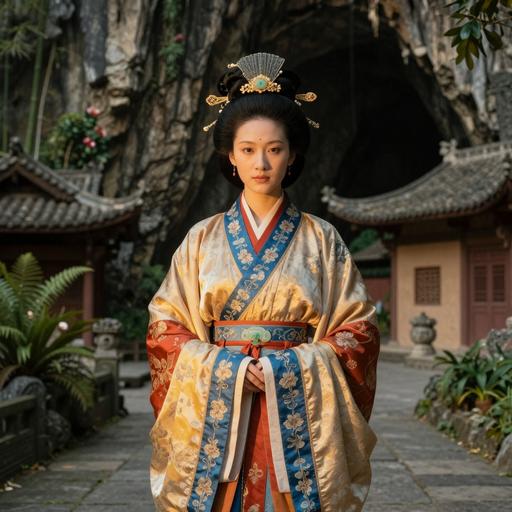
The region of Guangxi, now a provincial-level region of China, has always been significant due to its diverse ethnic makeup and strategic location. During the Sui (581-618 CE) and Tang (618-907 CE) dynasties, Guangxi was a frontier area that connected the central Chinese heartlands with the indigenous cultures of Southeast Asia. The Sui and Tang eras are fundamental periods in Chinese history, known for their strong central governments, cultural flourishing, and expansionist policies, and Guangxi played an interesting role during these times.
Sui Dynasty (581-618 CE) and Guangxi
During the Sui Dynasty, China was reunified after a prolonged period of disunion and fragmentation. The Sui rulers, particularly Emperor Yang Jian (Emperor Wen of Sui), implemented policies to consolidate power, expand infrastructure, and centralize the government. Guangxi, at the time, was considered a remote frontier area inhabited largely by non-Han ethnic groups, including the Zhuang and Dong, and was not a focus of direct administrative control.
However, the Sui Dynasty's emphasis on building infrastructure, such as canals and roads, impacted Guangxi by facilitating greater movement and integration across China's vast territories. Although Guangxi was not directly controlled, these infrastructural developments laid the groundwork for increased interaction between the Han Chinese and the indigenous populations. The Grand Canal, begun during the Sui era, though not directly affecting Guangxi, exemplifies the dynasty's effort to integrate distant regions.
Tang Dynasty (618-907 CE) and Guangxi
The Tang Dynasty, following the Sui, is noted as one of China's most prosperous and culturally rich periods. Under Tang rule, China saw unprecedented developments in art, literature, and commerce, and the era is often considered a golden age of Chinese civilization.
Economic and Cultural Influence
During the Tang Dynasty, Guangxi began to play a more active role in the political and economic landscape of China. The region became a crucial part of the Maritime Silk Road, serving as a vital link between China and Southeast Asia for trade. Ports along the Guangxi coastline facilitated the exchange of goods, ideas, and culture between China and other regions, introducing new commodities and cultural influences to the Chinese Empire.
Administrative and Military Significance
Administratively, the Tang government sought to exert more control over peripheral regions, including Guangxi, often establishing military garrisons and using the region as a buffer against southern non-Han tribes and kingdoms. This involved efforts to integrate indigenous tribes into the empire, both through military campaigns and socio-political alliances. The famed Tang poet, Liu Zongyuan, was exiled to the city of Liuzhou in Guangxi, where he chronicled various aspects of life in the southern frontier, providing valuable insights into the region's cultural and social conditions.
Ethnic Integration and Conflicts
Guangxi's diverse ethnic composition posed challenges and opportunities for the Tang rulers. While policies often sought to sinicize the local populations, there was also resistance and conflict, necessitating Tang military expeditions to quell rebellions and secure control. The interaction between Han Chinese and local ethnic groups led to a blending of cultural practices over time, contributing to Guangxi's rich cultural heritage.
Religion and Culture
Buddhism, which flourished during the Tang Dynasty, also reached Guangxi, with temples and Buddhist communities established in various locations. The spread of Buddhism, alongside Daoism and indigenous beliefs, created a diverse religious landscape that characterized the era. Traditional Chinese art, calligraphy, and architecture began to mix with local traditions, creating unique cultural expressions in the region.
Legacy of the Sui-Tang Era in Guangxi
The Sui and Tang dynasties left a lasting impact on Guangxi, establishing patterns of integration and diversity that continue to characterize the region today. The developments in trade, infrastructure, and culture during these periods set the stage for Guangxi to evolve into a region that, while part of the broader Chinese culture, retains a distinct identity influenced by its ethnic diversity and unique historical trajectory.
Overall, the era of the China Guangxi Shenxian Sui-Tang period exemplifies a dynamic time of change, integration, and cultural flourishing in one of China's most diverse and strategically important regions.