Oaxaca Today: Threads of Living Heritage

Download PDF creates a visual, rasterized copy. Use Print for selectable text and better assistive-technology support.

Skip to main content
Civilization Spotlight

Oaxaca Today: Threads of Living Heritage

A modern snapshot from villages and valleys in Oaxaca linking material culture with DNA

2000 CE
Oaxaca, Mexico (multiple towns)

The Story

Modern Mexican communities in Oaxaca—sampled in 2000—preserve living traditions tied to deep Indigenous roots. Archaeology and genetics together reveal continuity, admixture, and local difference across towns like Tamazulapan and Teotitlán del Valle.

Time Period

2000 CE (Modern)

Region

Oaxaca, Mexico (multiple towns)

Common Y-DNA

Not reported / varied in modern populations

Common mtDNA

Not reported / varied in modern populations

Timeline

2000 CE

Modern genetic sampling across Oaxaca

Seventy-three individuals sampled from multiple Oaxaca towns provide a contemporary genetic snapshot linked to local archaeological contexts.

Origins & Emergence

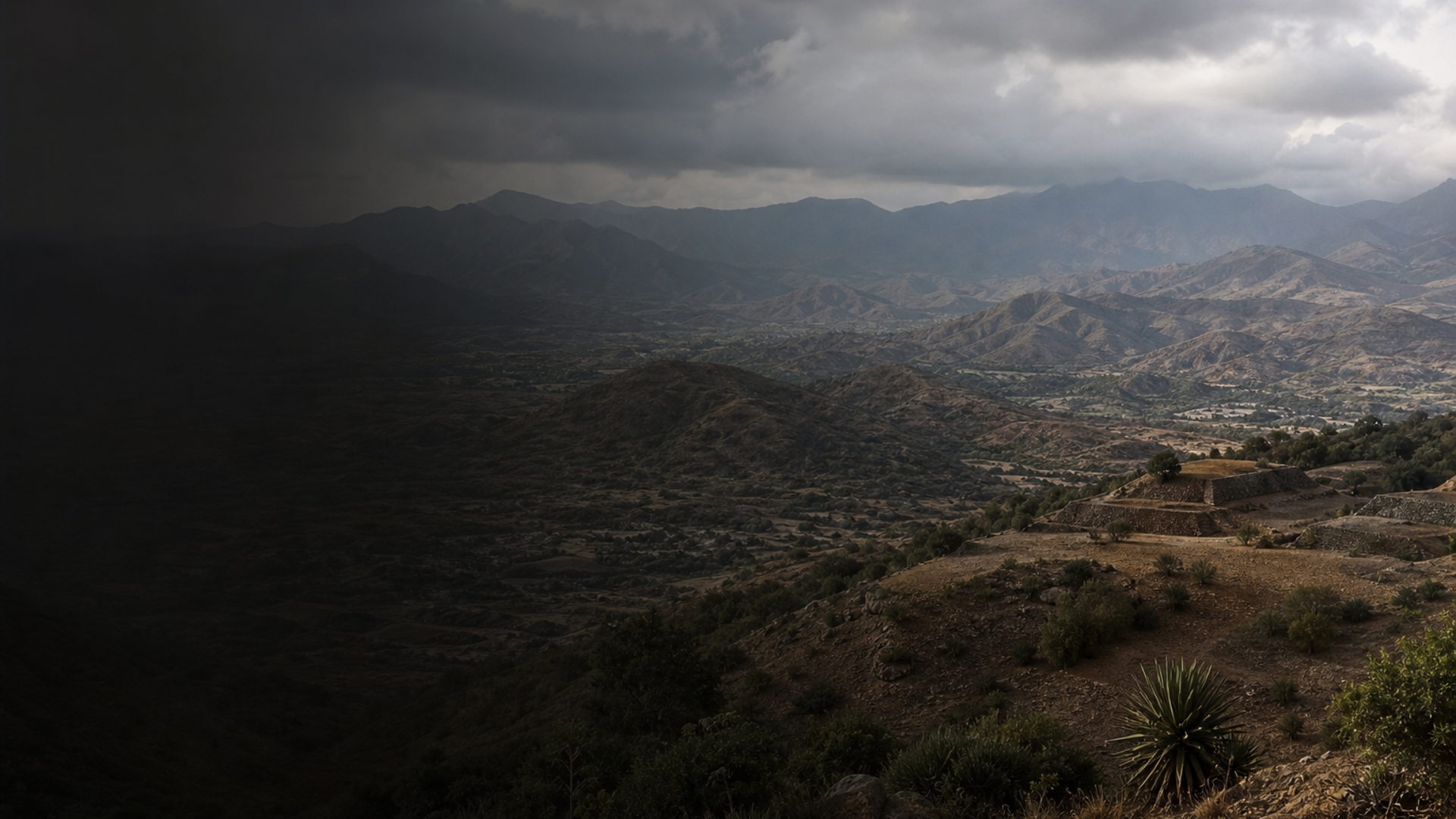
The landscapes of Oaxaca are palimpsests: deep canyons, cultivated terraces, and village plazas where ancient practices continue into the present day. Archaeological data indicates long-term occupation across this part of southern Mexico, and the towns sampled for this modern study—San Juan Guelavia, Tamazulapan, San Andrés Nuxiño, Santa Ana del Valle, Teotitlán del Valle and others—sit within cultural worlds shaped by Zapotec, Mixtec and Mixe histories. Modern communities in these towns maintain languages, artisanal skills and agricultural cycles that archaeologists use to trace cultural continuity through ceramics, architecture, and landscape management.

The 73 modern samples collected in 2000 provide a snapshot of living populations whose material culture still echoes pre-Columbian patterns: woven textiles, ceremonial calendrical practices, and milpa agriculture. Limited evidence from integrated archaeological–ethnographic studies suggests that while forms and functions persist, social change—especially since the colonial era—has layered new practices and identities onto older ones. Where archaeological sequences are deep, biological continuity is plausible; however, archaeological indicators alone cannot specify recent genealogical relationships without genetic context. Combining both lines of evidence helps reconstruct how ancient lifeways transformed into the everyday practices observed today.

  • Modern communities sampled are located across Oaxaca valley and highlands
  • Material culture shows links to Zapotec, Mixtec and Mixe traditions
  • Archaeology plus ethnography suggest long-term cultural continuity

Daily Life & Society

In the plazas and domestic compounds of Oaxaca, daily life is cinematic: morning markets swell with maize, chilies and woven cloth; terraces of maize and bean milpas ripple down hillsides; elders mend textiles while children tend animals. Archaeological evidence—continuity in pottery forms, grinding stones, and irrigation features—indicates that many subsistence practices visible today have deep antecedents. Ethnographic observation in towns such as Teotitlán del Valle and San Juan Guelavia documents specialized craft production (notably weaving and dyeing), cooperative labor systems, and ritual calendars that shape agricultural cycles.

Urban-rural links and seasonal mobility are part of social life. Ceremonial houses, ephemeral shrines, and communal work parties all leave material traces that archaeologists can compare with present-day practices. However, modern life also bears the imprint of colonial and post-colonial transformation: Catholic rituals overlay indigenous cosmologies, and market economies alter craft production and land use. These layers are visible archaeologically—mixed assemblages, mission-era architecture, and shifting settlement patterns—reminding us that daily life today is both ancient and newly forged.

  • Milpa agriculture, weaving and market trade are central to daily life
  • Archaeological traces support continuity alongside colonial-era change

Genetic Profile

Seventy-three modern individuals sampled across multiple localities in Oaxaca provide a moderate-sized dataset for exploring recent ancestry. Genetic data from modern Mexican populations typically reflect layered ancestry: Indigenous American lineages, European contributions after 1500 CE, and African input through colonial-era movements. Archaeogenetic approaches compare skeletal and material contexts with DNA to test hypotheses of continuity, migration, and admixture.

For this Modern_Mexico dataset, specific Y-DNA and mtDNA haplogroup assignments are not reported in the provided metadata, so interpretations must be cautious. Nevertheless, the geographic clustering of samples (Tamazulapan, Mixe communities, Teotitlán del Valle, etc.) allows population-structure analyses that can reveal local differentiation, maternal versus paternal lineage patterns, and the extent of gene flow between neighboring towns. Because the sample count is substantial relative to many archaeological studies, statistical patterns of admixture and relatedness can be detected, yet sampling bias (who was sampled, family relationships, and modern demographic change) can influence results. Integrating oral histories, archaeological contexts, and genetic analyses produces the most robust narratives: archaeological continuity observed in craft and settlement can be tested against genetic continuity, and instances of recent admixture can be temporally anchored by historic records and material clues.

  • 73 modern samples enable analyses of local population structure and admixture
  • Specific haplogroup data not provided here; conclusions remain provisional

Legacy & Modern Connections

The living communities of Oaxaca are carriers of both tangible and intangible heritage. Archaeology documents the long arc of occupation—terraces, pottery styles, weaving traditions—while genetics offers another dimension: the biological ties that link present inhabitants to their past and to each other. For people using DNA ancestry services, results often confirm a complex tapestry: Indigenous roots predominant in maternal lines, varying levels of European and African ancestry in autosomal profiles, and local patterns of kinship that correspond to village histories.

It is essential to communicate findings with humility and community engagement. Genetic snapshots from 2000 CE reflect recent histories and should be contextualized alongside oral traditions, colonial records, and archaeological sequences. When scientists collaborate with communities, genetic and material evidence together enrich narratives of resilience, adaptation, and cultural continuity.

  • Modern genetic results are most meaningful when combined with archaeology and oral history
  • Community engagement and ethical communication are crucial for interpretation

AI Assistant

AI Assistant by DNAGENICS

Unlock this feature
Ask questions about the Oaxaca Today: Threads of Living Heritage culture. Our AI assistant can explain genetic findings, historical context, archaeological evidence, and modern connections.
Sample AI Analysis

The Oaxaca Today: Threads of Living Heritage culture represents a fascinating chapter in human history...

Genetic analysis reveals connections to earlier populations while showing evidence of unique adaptations and cultural innovations. The ancient DNA samples provide insights into migration patterns, social structures, and the biological relationships between ancient populations.

This is a preview of the AI analysis. Unlock the full AI Assistant to explore detailed insights about:

  • Genetic composition and ancestry
  • Migration patterns and origins
  • Daily life and cultural practices
  • Modern genetic legacy
Use code for 30% off • Expires Nov 14




