A man buried in Chile in the Ancient South America era

Download PDF creates a visual, rasterized copy. Use Print for selectable text and better assistive-technology support.

Loading Report

Preparing your ancestry journey

Preparing the available report content...

Your report will open automatically.

Skip to main content
Reference library / Sample profile

A man buried in Chile in the Ancient South America era

Explore the recorded context, genetic comparisons and research behind this reference sample.

ChileLate Archaic Chinchorro Culture, Chile

A reference profile describes this sample. It does not establish a personal or family relationship.

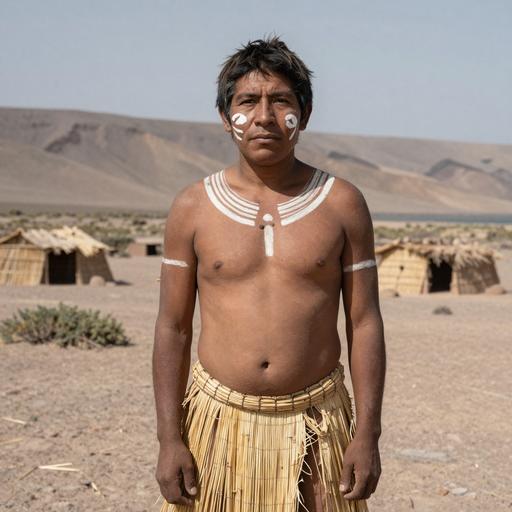
AI portrait reconstruction for A man buried in Chile in the Ancient South America era
AI-generated artistic reconstruction, not a photograph of the individual.
Record

Sample details

Recorded details and available lineage markers.

Individual

Andean Civilizations individual, Chile

Sample ID: Chinchorroi15

Date Range

4354 BCE - 4180 BCE

Cultural Period

Late Archaic Chinchorro Culture, Chile

Biological Sex

Male

mtDNA Haplogroup

A2

Y-DNA Haplogroup

CT-M168

Social Role

Gatherer (AI estimate, era-typical)

Geography

Location

Where this individual was discovered

Country Chile
Locality Arica. Maderas. Enco C2
Chronology

Date range

When this individual lived in the broader context of human history

Andean Civilizations individual, Chile 4354 BCE - 4180 BCE
Context

Historical context

Background information associated with the reference record.

Region & Environment

Chinchorro communities lived along the arid to semi-arid coast of northern Chile, where the Pacific environment supported dependable marine foods. Coastal fog, upwelling, and resource-rich shorelines created conditions for sustained harvesting even where inland agriculture was limited.

Historical Context

Across the Late Archaic, long-term coastal foraging and fishing traditions persisted and intensified, supporting communities with deep time depth in the same regions. Rather than a single centralized state, Chinchorro is characterized by enduring local practices that reflect shared coastal lifeways over millennia.

Populations & Lifeways

Populations relied heavily on marine procurement, including fishing and gathering of shellfish and other coastal resources. Settlement patterns would have involved repeated use of coastal areas and flexible movement aligned with resource availability. Crafting activities connected to daily subsistence and preservation of tools and materials were central to routine life.

Archaeology & Material Culture

Chinchorro material culture is most strongly recognized through mortuary practices recorded in coastal archaeological sites. Assemblages may include artifacts and features associated with fishing and processing activities, as well as the varied material used in treatment of the dead. Stone, shell, bone, and organic components typically reflect coastal technologies suited to fishing and shore-based work.

Culture & Society

The persistence and elaboration of mortuary treatment indicate that social memory and community identity were important, and that specialized labor and materials were mobilized for funerary rites. Daily life likely combined cooperative coastal work with flexible household strategies, while shared norms could be reinforced through ritual practices and inter-community contact along the shore.

Legacy & Transition

Over time, coastal traditions in northern Chile continued to evolve as environmental knowledge, technology, and regional networks changed. Later periods brought different ceramic and agricultural developments in nearby areas, but the Chinchorro record remains a major reference point for understanding early complex social behavior in coastal South America.

Analysis

Genetic comparisons

These comparisons show genetic similarity, not identity or origin. The populations listed are those whose genomes show statistical alignment to this ancient individual.

Similarity reflects shared history, not shared identity. These are analytical comparisons, not claims about who this person was.

Modern Genetic Admixture

This analysis compares the DNA profile with present-day reference populations, showing statistical similarity to modern reference populations from different regions. The excavation site records where this individual was found, not a fixed modern genetic identity.

America 39.5%
America 39.5%
Native American 39.5%
Africa 33.6%
North African 33.6%
Egyptian 33.6%
Asia 16.9%
Central Asian, Northern Indian & Pakistani 16.9%
Indian 16.9%
Europe 10.1%
Northwestern European 10.1%
Scandinavian 10.1%

Closest Modern Populations

These are the modern populations showing the closest statistical alignment to A man buried in Chile in the Ancient South America era, ranked by genetic distance. Lower distance values indicate closer statistical similarity. Cross-region similarity can reflect shared ancestry, population movement, continuity, or later admixture.

1
Cree
13.5772
2
Tlingit
15.9737
3
Greenlander West
17.4211
4
Greenlander East
21.0835
5
Uzbek
23.4605
6
Turkmen
23.6371
7
Bashkir
23.7261
8
Tatar Crimean Steppe
23.8209
9
Hazara O
23.8826
10
Tatar Siberian
23.9904
Context

Related Samples

This individual exists within a broader network of ancient samples. No ancient genome stands alone.

Individual Culture/Period Date Location Action
Medieval individual, Mexico Pre-Columbian Mexico 4000 BCE Sierra Tarahumara, Mexico View
Mesoamerican Civilizations individual, Mexico Pre-Columbian Mexico 4000 BCE Sierra Tarahumara, Mexico View
Andean Civilizations individual, Chile Late Archaic Chinchorro Culture, Chile 4354 BCE Arica. Maderas. Enco C2, Chile View
Northwest Coast Cultures individual, Canada Canada 6,500 Years Ago 4678 BCE Lucy Islands. British Columbia. Chatham Sound, Canada View
Eastern Woodlands individual, Canada Canada 700 Years Ago 1231 CE Old Mission Point. Restigouche River. Atholville. prehistory Tjigog. New Brunswick, Canada View
Pre-Columbian Indigenous Cultures individual, Brazil Hunter-Gatherer Enoque, Brazil 1681 BCE Toca do Enoque Cave. Serra da Capivara. Piaui, Brazil View
America North Ancient individual, Canada 4678 BCE Lucy Islands. British Columbia. Chatham Sound, Canada View
America South Ancient individual, Chile 4354 BCE Arica. Maderas. Enco C2, Chile View
America South Pre Columbian individual, Brazil 1681 BCE Toca do Enoque Cave. Serra da Capivara. Piaui, Brazil View
America Central Pre Columbian individual, Mexico 4000 BCE Sierra Tarahumara, Mexico View
America North Recent individual, Canada 1231 CE Old Mission Point. Restigouche River. Atholville. prehistory Tjigog. New Brunswick, Canada View
Page 1
Individual Culture/Period Date Location Action
Andean Civilizations individual, Chile Late Archaic Chinchorro Culture, Chile 4354 BCE Arica. Maderas. Enco C2, Chile View
Page 1
Sources

References

Scientific publications and genetic data that inform this profile.

G25 Coordinates

These coordinates represent a position in genetic space, a tool for comparison, not a conclusion. You can use these to perform custom admixture analysis in G25 Studio.

Chinchorroi15,0.04870772,-0.07995752,0.04467606,0.0344194,-0.05499696,-0.0034565,-0.13413492,-0.16391332,-0.01393128,-0.0168457,-0.0023826,0.00380688,-0.01378242,0.01327386,0.00515538,-0.01282092,0.00140256,0.0007903,0.00075544,0.00662592,0.00206394,0.00653728,-0.00215736,-0.006985,-0.0032235
Continue in G25 Studio
Use code for 30% off • Expires Nov 16