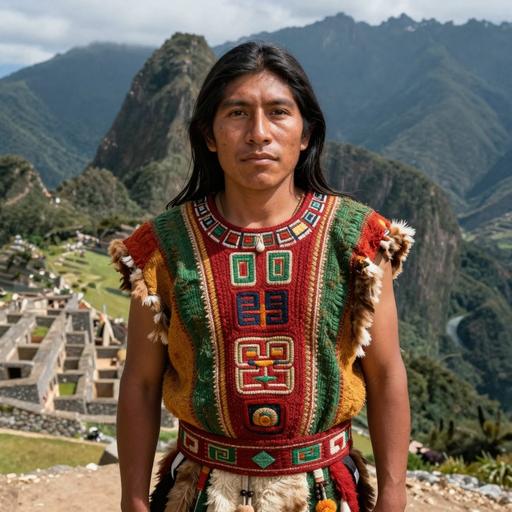
A man buried in Mexico in the Pre-Columbian Central America era

Download PDF creates a visual, rasterized copy. Use Print for selectable text and better assistive-technology support.

Loading Report

Preparing your ancestry journey

Preparing the available report content...

Your report will open automatically.

Skip to main content
Reference library / Sample profile

A man buried in Mexico in the Pre-Columbian Central America era

Explore the recorded context, genetic comparisons and research behind this reference sample.

MexicoPre-Columbian Mexico

A reference profile describes this sample. It does not establish a personal or family relationship.

AI portrait reconstruction for A man buried in Mexico in the Pre-Columbian Central America era
AI-generated artistic reconstruction, not a photograph of the individual.
Record

Sample details

Recorded details and available lineage markers.

Individual

Mesoamerican Civilizations individual, Mexico

Sample ID: MOM6

Date Range

4000 BCE - 1500 CE

Cultural Period

Pre-Columbian Mexico

Biological Sex

Male

mtDNA Haplogroup

C1b

Y-DNA Haplogroup

Q-CTS10359

Social Role

Farmer (AI estimate, era-typical)

Geography

Location

Where this individual was discovered

Country Mexico
Locality Sierra Tarahumara
Chronology

Date range

When this individual lived in the broader context of human history

Mesoamerican Civilizations individual, Mexico 4000 BCE - 1500 CE
Context

Historical context

Background information associated with the reference record.

Region & Environment

Central Mexico includes highlands with rugged valleys and plateaus, plus interconnected river basins and trade corridors. Volcanic landscapes and fertile valley soils supported intensive cultivation, while uplands provided routes for movement and the seasonal grazing or foraging resources used by rural communities.

Historical Context

Pre-Columbian history in Central Mexico is best approached as a long sequence of regional developments rather than a single uniform story. Over millennia, agrarian lifeways intensified, craft production expanded, and many areas formed competing and cooperating polities. By the Late Postclassic period, large states with tribute systems and specialized craft networks emerged; their expansion coincided with wider Mesoamerican interactions.

Populations & Lifeways

Populations were largely sedentary agriculturalists supplemented by hunting, fishing in suitable local settings, and the collection of wild resources. Communities ranged from villages and hamlets to urban centers with dense labor organization. Subsistence relied on staple crops associated with Mesoamerica (including maize-based agriculture), with additional foods varying by micro-region and elevation.

Archaeology & Material Culture

Archaeological evidence includes settlement patterns, temples and plazas, platform mounds, residential compounds, and extensive ceramic traditions. Material culture often shows local stylistic preferences alongside shared Mesoamerican iconographic and technological practices. Common artifact categories include ceramics used in everyday cooking and storage, obsidian tools and blades sourced or distributed through exchange networks, shell and stone ornaments, figurines, and craft debris from specialized production.

Culture & Society

Social organization was frequently stratified, with differences in access to land, labor obligations, and prestige goods. Public architecture and ritual objects indicate that ceremony and political authority were closely linked. Long-distance exchange helped circulate raw materials (notably obsidian) and decorative styles, supporting craft specialization and interregional alliances or rivalries.

Legacy & Transition

The transition at the beginning of the sixteenth century CE brought sustained contact and then colonial transformation. Many indigenous urban traditions were disrupted, though some practices, languages, and community structures persisted and reshaped under new conditions. The archaeological record remains central to understanding how Central Mexican societies developed over time, including the rise of large states and the networks that sustained them.

Analysis

Genetic comparisons

These comparisons show genetic similarity, not identity or origin. The populations listed are those whose genomes show statistical alignment to this ancient individual.

Similarity reflects shared history, not shared identity. These are analytical comparisons, not claims about who this person was.

Modern Genetic Admixture

This analysis compares the DNA profile with present-day reference populations, showing statistical similarity to modern reference populations from different regions. The excavation site records where this individual was found, not a fixed modern genetic identity.

America 87.9%
America 87.9%
Native American 87.9%
Asia 7.8%
Chinese & Southeast Asian 7.2%
Chinese 7.2%
Northern Asian 0.5%
Siberian 0.5%
Africa 4.3%
West African 4.3%
Ghanaian, Liberian, Sierra Leonean 4.3%

Closest Modern Populations

These are the modern populations showing the closest statistical alignment to A man buried in Mexico in the Pre-Columbian Central America era, ranked by genetic distance. Lower distance values indicate closer statistical similarity. Cross-region similarity can reflect shared ancestry, population movement, continuity, or later admixture.

1
Pima
2.8649
2
Huichol
3.0562
3
Mixe
3.0793
4
Mayan
3.4614
5
Zapotec
3.4711
6
Mixtec
3.4967
7
Nahua
3.6970
8
Cachi
3.7318
9
Bolivian Lapaz
4.1877
10
Colla
4.4957
Context

Related Samples

This individual exists within a broader network of ancient samples. No ancient genome stands alone.

Individual Culture/Period Date Location Action
Medieval individual, Mexico Pre-Columbian Mexico 4000 BCE Sierra Tarahumara, Mexico View
Mesoamerican Civilizations individual, Mexico Pre-Columbian Mexico 4000 BCE Sierra Tarahumara, Mexico View
Andean Civilizations individual, Chile Late Archaic Chinchorro Culture, Chile 4354 BCE Arica. Maderas. Enco C2, Chile View
Northwest Coast Cultures individual, Canada Canada 6,500 Years Ago 4678 BCE Lucy Islands. British Columbia. Chatham Sound, Canada View
Eastern Woodlands individual, Canada Canada 700 Years Ago 1231 CE Old Mission Point. Restigouche River. Atholville. prehistory Tjigog. New Brunswick, Canada View
Pre-Columbian Indigenous Cultures individual, Brazil Hunter-Gatherer Enoque, Brazil 1681 BCE Toca do Enoque Cave. Serra da Capivara. Piaui, Brazil View
America North Ancient individual, Canada 4678 BCE Lucy Islands. British Columbia. Chatham Sound, Canada View
America South Ancient individual, Chile 4354 BCE Arica. Maderas. Enco C2, Chile View
America South Pre Columbian individual, Brazil 1681 BCE Toca do Enoque Cave. Serra da Capivara. Piaui, Brazil View
America Central Pre Columbian individual, Mexico 4000 BCE Sierra Tarahumara, Mexico View
America North Recent individual, Canada 1231 CE Old Mission Point. Restigouche River. Atholville. prehistory Tjigog. New Brunswick, Canada View
Page 1
Individual Culture/Period Date Location Action
Medieval individual, Mexico Pre-Columbian Mexico 4000 BCE Sierra Tarahumara, Mexico View
Mesoamerican Civilizations individual, Mexico Pre-Columbian Mexico 4000 BCE Sierra Tarahumara, Mexico View
Page 1
Sources

References

Scientific publications and genetic data that inform this profile.

G25 Coordinates

These coordinates represent a position in genetic space, a tool for comparison, not a conclusion. You can use these to perform custom admixture analysis in G25 Studio.

MOM6,0.04529648,-0.31943968,0.10671654,0.09837952,-0.1114356,-0.02546624,-0.27967592,-0.32710656,-0.01302584,-0.0140225,0.00452778,-0.00025028,-0.00182208,0.02361734,-0.00616956,-0.00172748,0.00575932,0.00379246,0.00286738,-0.00086688,0.00290668,0.0041187,-0.00188664,-0.00424508,-0.00408343
Continue in G25 Studio
Use code for 30% off • Expires Nov 16