Menu
Store
Blog
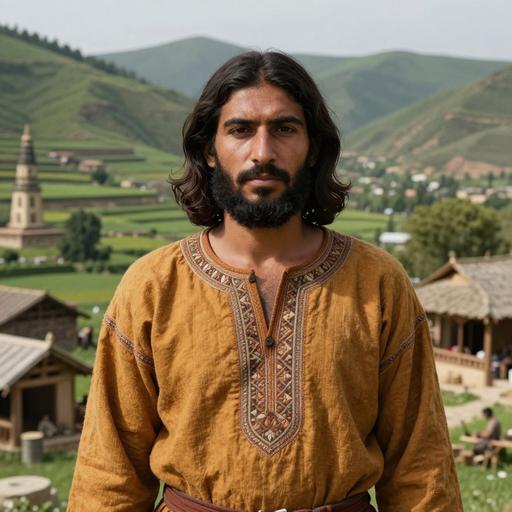
Portrait reconstruction of I1808
Ancient Individual

A man buried in Pakistan in the Medieval era

I1808
706 CE - 945 CE
Male
Medieval Parwak
Pakistan
Scroll to begin
Chapter I

Identity

The biological and cultural markers that define this ancient individual

Sample ID

I1808

Date Range

706 CE - 945 CE

Biological Sex

Male

mtDNA Haplogroup

J1b1

Y-DNA Haplogroup

J-M102

Cultural Period

Medieval Parwak

Chapter II

Place

Where this individual was discovered

Country Pakistan
Locality Swat Valley. Parwak
Coordinates 36.2802, 72.4147
Chapter III

Time

When this individual lived in the broader context of human history

I1808 706 CE - 945 CE
Chapter IV

Story

The narrative of this ancient life

Medieval Parwak was a period marked by the flourishing of a unique and complex society characterized by a confluence of various cultural, economic, and political elements. This era saw the rise of powerful feudal lords who governed vast territories, often waging wars to expand their dominions. Castles and fortifications dotted the landscape, serving both as symbols of authority and as defensive structures against invaders. The social hierarchy was strictly defined, with the nobility enjoying privileges and the serfs toiling the land.

The economy of Medieval Parwak thrived on agriculture, benefiting from innovations such as the three-field system and improved plowing techniques. Trade routes expanded, facilitating the exchange of goods like spices, textiles, and metals, which contributed to the growing wealth of mercantile classes. Guilds emerged, regulating crafts and trades, ensuring quality control, and providing support to their members.

Religious institutions wielded significant influence, with monasteries and churches being centers of learning, charity, and spiritual guidance. Monastic scribes preserved and copied texts, while the clergy played a crucial role in both educating the populace and reconciling conflicts. Pilgrimages and religious festivals were vital aspects of societal life, reinforcing communal identity and devotion.

Art and architecture flourished, with Gothic cathedrals and structures adorned with intricate carvings and stained glass windows. Literature and music, deeply intertwined with religious themes, saw notable developments. The troubadours and minstrels captivated audiences with their tales of chivalry and heroism.

Medieval Parwak was a dynamic epoch, enriched by its intricate feudal relationships, vibrant economy, religious fervor, and cultural achievements, all of which laid the foundational stones for the future progression of the region.

Chapter V

Genetics

The genetic ancestry of this ancient individual

Ancient Genetic Admixture

This analysis compares the DNA profile of I1808 with ancient reference populations, showing the genetic composition in terms of prehistoric ancestral groups.

Neolithic Farmers 34.5%
Ancient Asians 23.1%
Western Steppe Pastoralists 20.9%
European Hunter-Gatherers 17.8%
Ancient Oceanians 3.7%

Modern Genetic Admixture

This analysis compares the DNA profile with present-day reference populations, showing what percentage of genetic makeup resembles modern populations from different regions.

Asia 85.2%
Central Asian, Northern Indian & Pakistani 59.9%
Pakistan 40.2%
Indian 14.8%
Central Asian 4.8%
Northern West Asian 23.7%
Caucasian 21.8%
Anatolian 1.9%
Chinese & Southeast Asian 1.7%
Chinese 1.7%
Europe 9.6%
Northwestern European 7.9%
English 5.7%
Northwestern European 2.2%
Eastern European 1.5%
America 5.1%
America 5.1%
Native American 5.1%

Closest Modern Populations

These are the modern populations showing the closest statistical alignment to A man buried in Pakistan in the Medieval era, ranked by genetic distance. Lower distance values indicate closer statistical similarity.

1
Pamiri Ishkashim
3.7374
2
Pashtun Afghanistan North
4.0924
3
Pamiri Wakhi
4.1826
4
Pamiri Badakhshan
4.2930
5
Tajik Afghanistan
4.3580
6
Pashtun Afghanistan Northeast
4.3828
7
Pashtun Pakistan Khattak Nowshera
4.4384
8
Pashtun Uthmankhel
4.5737
9
Kho
4.6052
10
Pashtun Pakistan Bettani
4.6163
Chapter VI

Context

Other ancient individuals connected to this sample

Sources

References

Scientific publications and genetic data

Scientific Publication

The formation of human populations in South and Central Asia

Authors Narasimhan VM, Patterson N, Moorjani P
Abstract

By sequencing 523 ancient humans, we show that the primary source of ancestry in modern South Asians is a prehistoric genetic gradient between people related to early hunter-gatherers of Iran and Southeast Asia. After the Indus Valley Civilization's decline, its people mixed with individuals in the southeast to form one of the two main ancestral populations of South Asia, whose direct descendants live in southern India. Simultaneously, they mixed with descendants of Steppe pastoralists who, starting around 4000 years ago, spread via Central Asia to form the other main ancestral population. The Steppe ancestry in South Asia has the same profile as that in Bronze Age Eastern Europe, tracking a movement of people that affected both regions and that likely spread the distinctive features shared between Indo-Iranian and Balto-Slavic languages.

G25 Coordinates

The G25 coordinates for sample I1808 can be used for detailed admixture analysis in our G25 Studio tool.

I1808,0.09023932,0.03002084,-0.05496502,0.05425068,-0.0435805,0.03444432,-0.00851728,-0.01006938,-0.01358366,-0.0119,-0.00279004,0.00240484,-0.0081296,-0.00084102,0.00903446,0.0027479,0.00397012,-0.0003269,0.00309558,0.00114894,-0.00261822,-0.0004858,0.0009243,-0.00107378,-0.00058367
Analyze in G25 Studio
Use code for 40% off Expires Feb 26