Menu
Store
Blog
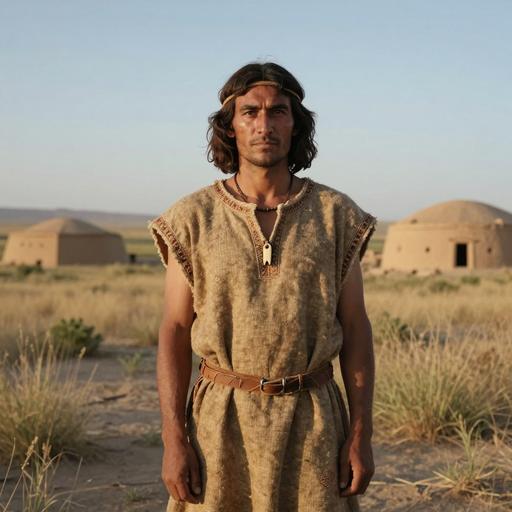
Portrait reconstruction of I4085
Ancient Individual

A man buried in Turkmenistan in the Copper Age era

I4085
4000 BCE - 3000 BCE
Male
Chalcolithic Tepe Anau
Turkmenistan
Scroll to begin
Chapter I

Identity

The biological and cultural markers that define this ancient individual

Sample ID

I4085

Date Range

4000 BCE - 3000 BCE

Biological Sex

Male

mtDNA Haplogroup

H13a2a

Y-DNA Haplogroup

R-V1180

Cultural Period

Chalcolithic Tepe Anau

Chapter II

Place

Where this individual was discovered

Country Turkmenistan
Locality Turkestan. Tepe Anau
Coordinates 37.8720, 58.2250
Chapter III

Time

When this individual lived in the broader context of human history

I4085 4000 BCE - 3000 BCE
Chapter IV

Story

The narrative of this ancient life

The Chalcolithic period at Tepe Anau, a significant archaeological site in Turkmenistan, represents a fascinating chapter in the broader tapestry of Ancient Near Eastern Civilization. Situated near the modern city of Ashgabat in the fertile foothills of the Kopet Dag mountains, Tepe Anau offers critical insights into early human societal development during the Chalcolithic era, which spans roughly from 4500 to 3000 BCE in this region.

Geographical and Environmental Context

Tepe Anau is strategically located in an area that was conducive to early agricultural practices, benefiting from the fertile loess soils and sufficient water supply from nearby streams and the annual snowmelt from surrounding mountains. This favorable environment supported agriculture and livestock rearing, allowing the inhabitants to establish one of the earliest forms of sedentary settlements in Central Asia.

Cultural and Technological Aspects

The Chalcolithic period, also known as the Copper Age, marks a significant technological and cultural transition. At Tepe Anau, this era witnessed the gradual integration of copper tools alongside the use of stone tools. While stone tools remained predominant, the appearance of copper artifacts indicates an evolving technological prowess and engagement in metallurgical practices.

Pottery from this period is particularly notable for its technological and artistic developments. The ceramics from Anau feature intricate painted designs, with dominant motifs including geometric patterns and abstract representations of animals and nature. These designs not only reveal aesthetic sensibilities but also possibly indicate cultural and symbolic expressions meaningful to the inhabitants.

Economy and Subsistence

The Chalcolithic economy at Tepe Anau was primarily agrarian, supported by the cultivation of barley, wheat, and legumes. Archaeobotanical evidence suggests the practice of mixed farming, with agriculture complemented by animal husbandry. Sheep, goats, and cattle were important livestock, providing meat, milk, wool, and labor.

Trade and exchange networks are evidenced by the presence of non-local materials such as obsidian and exotic stones that are not native to the immediate region. This suggests that Tepe Anau was part of a broader exchange system involving Central Asia and possibly reaching into regions that are today Iran and Afghanistan.

Social Organization

The settlement patterns at Tepe Anau imply a relatively complex and organized society. The architectural remains indicate a community-oriented living, with multi-roomed structures constructed from mud-brick. These dwellings provide evidence of communal activities as well as domestic life, pointing towards a socially stratified society with emerging hierarchies possibly linked to wealth accumulation, specialized production, or religious roles.

Religious and Ideological Beliefs

While direct evidence of religious practices at Tepe Anau is limited, the presence of symbolic motifs and decorative pottery may reflect spiritual or ritualistic beliefs. The discovery of various figurines, possibly representing deities or ancestors, suggests the inhabitants practiced some form of idol worship or ancestor veneration. Such practices likely played a role in community cohesion and identity.

Conclusion

The Chalcolithic settlement of Tepe Anau serves as an essential locus for understanding the early development of human societies in Central Asia and their connections to the wider Ancient Near Eastern world. This period was characterized by technological innovation, particularly in metallurgy and pottery, alongside developments in agricultural and social organization. As such, Tepe Anau reflects the transformative forces of the Chalcolithic era, highlighting the adaptive strategies and cultural dynamism of its inhabitants in response to both local environmental conditions and broader regional interactions.

Chapter V

Genetics

The genetic ancestry of this ancient individual

Ancient Genetic Admixture

This analysis compares the DNA profile of I4085 with ancient reference populations, showing the genetic composition in terms of prehistoric ancestral groups.

Neolithic Farmers 68.3%
Ancient Asians 15.2%
Western Steppe Pastoralists 9.1%
European Hunter-Gatherers 7.5%

Modern Genetic Admixture

This analysis compares the DNA profile with present-day reference populations, showing what percentage of genetic makeup resembles modern populations from different regions.

Asia 100.0%
Central Asian, Northern Indian & Pakistani 60.7%
Pakistan 45.7%
Indian 15.0%
Northern West Asian 39.3%
Caucasian 23.2%
Mesopotamian 16.1%

Closest Modern Populations

These are the modern populations showing the closest statistical alignment to A man buried in Turkmenistan in the Copper Age era, ranked by genetic distance. Lower distance values indicate closer statistical similarity.

1
Karachay
5.4562
2
North Ossetian
5.4974
3
Iranian Mazandarani O
5.5487
4
Azerbaijani Dagestan
5.6070
5
Ossetian
5.8004
6
Abazin
5.8288
7
Iranian Persian Khorasan
5.8386
8
Kumyk
5.8562
9
Tat Dagestan Nyugdi
5.8831
10
Tat Azerbaijan
5.9017
Chapter VI

Context

Other ancient individuals connected to this sample

Sources

References

Scientific publications and genetic data

Scientific Publication

The formation of human populations in South and Central Asia

Authors Narasimhan VM, Patterson N, Moorjani P
Abstract

By sequencing 523 ancient humans, we show that the primary source of ancestry in modern South Asians is a prehistoric genetic gradient between people related to early hunter-gatherers of Iran and Southeast Asia. After the Indus Valley Civilization's decline, its people mixed with individuals in the southeast to form one of the two main ancestral populations of South Asia, whose direct descendants live in southern India. Simultaneously, they mixed with descendants of Steppe pastoralists who, starting around 4000 years ago, spread via Central Asia to form the other main ancestral population. The Steppe ancestry in South Asia has the same profile as that in Bronze Age Eastern Europe, tracking a movement of people that affected both regions and that likely spread the distinctive features shared between Indo-Iranian and Balto-Slavic languages.

G25 Coordinates

The G25 coordinates for sample I4085 can be used for detailed admixture analysis in our G25 Studio tool.

I4085,0.09550292,0.07724088,-0.07128284,-0.00819328,-0.05490088,0.00459732,0.00918686,-0.00264896,-0.0445635,-0.0205395,-0.00430958,0.00601616,-0.01617578,0.0046984,0.00802734,-0.01417654,0.01603542,-0.00518366,-0.00703918,0.01167136,0.01064584,-0.00056028,0.00700868,-0.0067336,-0.00599397
Analyze in G25 Studio
Use code for 40% off Expires Feb 26