Menu
Store
Blog
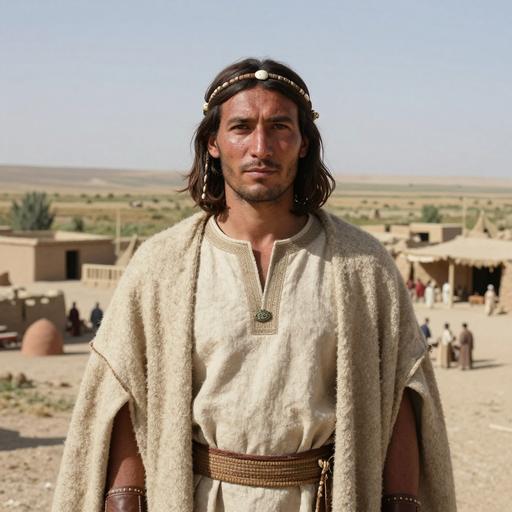
Portrait reconstruction of I4156
Ancient Individual

A man buried in Uzbekistan in the Bronze Age era

I4156
1600 BCE - 1300 BCE
Male
Bronze Age Bustan
Uzbekistan
Scroll to begin
Chapter I

Identity

The biological and cultural markers that define this ancient individual

Sample ID

I4156

Date Range

1600 BCE - 1300 BCE

Biological Sex

Male

mtDNA Haplogroup

H2a2a

Y-DNA Haplogroup

G-Z6552

Cultural Period

Bronze Age Bustan

Chapter II

Place

Where this individual was discovered

Country Uzbekistan
Locality Bustan
Coordinates 37.6667, 67.0000
Chapter III

Time

When this individual lived in the broader context of human history

I4156 1600 BCE - 1300 BCE
Chapter IV

Story

The narrative of this ancient life

The Bronze Age Bustan culture is a fascinating and integral part of Central Asian history. This era marks a significant period in the development of civilization in the region, characterized by advancements in metallurgy, trade, agriculture, and societal organization. The Bustan culture, located in what is now modern Uzbekistan, played a vital role in shaping the cultural and technological landscape of Central Asia.

Geographic and Environmental Context

The Bustan culture emerged in the fertile regions near the Amu Darya (Oxus River) in present-day Uzbekistan. This area, with its rich alluvial soils, provided an ideal setting for agriculture, which was the backbone of the Bustan economy. The climate was relatively arid, requiring early innovations in irrigation and water management to support crop cultivation. The riverine environment enabled the Bustan culture to flourish, becoming a hub of activity and interaction with neighboring regions.

Economic and Technological Developments

One of the hallmarks of the Bustan culture during the Bronze Age was its advancement in metallurgy. The discovery of copper and the subsequent development of bronze (an alloy of copper and tin) revolutionized tools, weapons, and ornaments. These advancements allowed for improved agricultural implements and contributed to increased productivity and surplus production.

Trade was another cornerstone of the Bustan economy. Situated along emerging trade routes, they exchanged goods with neighboring cultures, including those in modern-day Iran, Afghanistan, and the Indus Valley. Bustan artisans produced a range of crafted goods such as pottery, textiles, and metalwork, which were highly valued in trade networks. The presence of foreign artifacts in Bustan archaeological sites indicates extensive trade connections and cultural exchange.

Social and Cultural Aspects

The Bustan culture was marked by a complex social structure. With the development of agriculture and the resultant surplus, social stratification became more pronounced. The society likely consisted of farmers, artisans, traders, and a ruling elite, possibly overseen by tribal leaders or early forms of kingship.

Religious beliefs and practices are evidenced by burial sites and artifacts. The Bustan people practiced elaborate burial rituals, which often included the interment of valuable goods, suggesting a belief in an afterlife. Religious or ceremonial structures, although not as grand as those found in other contemporary civilizations, played an essential role in community life.

Architectural and Urban Developments

The Bustan culture demonstrates several notable architectural achievements. Settlements comprised mud-brick structures that provided protection from the elements and were often arranged in complex, planned layouts. Evidence of fortifications indicates a need for defense, likely due to competition over resources or trade routes.

Larger Bustan settlements exhibited early forms of urban planning, with designated areas for different societal functions. Public spaces, such as communal storage areas or meeting grounds, highlight the importance of community interaction and governance.

Legacy and Influence

The Bustan culture significantly influenced subsequent Central Asian cultures and civilizations. The technological advancements in metallurgy, agriculture, and urban planning laid the groundwork for future societies in the region. Moreover, the Bustan culture's position along trade routes facilitated the diffusion of ideas, goods, and technologies across Central Asia and beyond.

In summary, the Bronze Age Bustan culture of Central Asia represents a period of great innovation and cultural development. Its legacy is reflected in the enduring connections between the peoples of Central Asia and their contributions to broader regional and global histories. The Bustan culture, with its intricate social structures, technological prowess, and strategic geographic location, played a pivotal role in shaping the trajectory of civilization in Central Asia.

Chapter V

Genetics

The genetic ancestry of this ancient individual

Ancient Genetic Admixture

This analysis compares the DNA profile of I4156 with ancient reference populations, showing the genetic composition in terms of prehistoric ancestral groups.

Neolithic Farmers 78.2%
Ancient Asians 10.5%
European Hunter-Gatherers 5.7%
Ancient Native Americans 5.7%

Modern Genetic Admixture

This analysis compares the DNA profile with present-day reference populations, showing what percentage of genetic makeup resembles modern populations from different regions.

Asia 100.0%
Northern West Asian 56.9%
Mesopotamian 39.2%
Caucasian 17.7%
Central Asian, Northern Indian & Pakistani 43.1%
Pakistan 41.4%
Indian 1.8%

Closest Modern Populations

These are the modern populations showing the closest statistical alignment to A man buried in Uzbekistan in the Bronze Age era, ranked by genetic distance. Lower distance values indicate closer statistical similarity.

1
Kumyk
5.0425
2
Azerbaijani Dagestan
5.0591
3
Tat Dagestan Dzhalgan
5.0772
4
Karachay
5.1521
5
North Ossetian
5.2367
6
Iranian Persian Khorasan
5.2516
7
Chechen
5.3486
8
Ingushian
5.4217
9
Iranian Mazandarani O
5.5482
10
Tat Azerbaijan
5.5512
Chapter VI

Context

Other ancient individuals connected to this sample

Sources

References

Scientific publications and genetic data

Scientific Publication

The formation of human populations in South and Central Asia

Authors Narasimhan VM, Patterson N, Moorjani P
Abstract

By sequencing 523 ancient humans, we show that the primary source of ancestry in modern South Asians is a prehistoric genetic gradient between people related to early hunter-gatherers of Iran and Southeast Asia. After the Indus Valley Civilization's decline, its people mixed with individuals in the southeast to form one of the two main ancestral populations of South Asia, whose direct descendants live in southern India. Simultaneously, they mixed with descendants of Steppe pastoralists who, starting around 4000 years ago, spread via Central Asia to form the other main ancestral population. The Steppe ancestry in South Asia has the same profile as that in Bronze Age Eastern Europe, tracking a movement of people that affected both regions and that likely spread the distinctive features shared between Indo-Iranian and Balto-Slavic languages.

G25 Coordinates

The G25 coordinates for sample I4156 can be used for detailed admixture analysis in our G25 Studio tool.

I4156,0.09704174,0.07825566,-0.06038064,0.00178424,-0.05865894,0.0094098,0.01003402,-0.00198796,-0.04884286,-0.02881332,-0.0052543,0.00416374,-0.0137405,-0.00059836,0.01141224,-0.00840056,0.0085917,-0.00611928,-0.00760536,0.00544984,0.00460066,-0.00129766,0.00482912,-0.00597014,-0.00573452
Analyze in G25 Studio
Use code for 40% off Expires Feb 26