Menu
Store
Blog
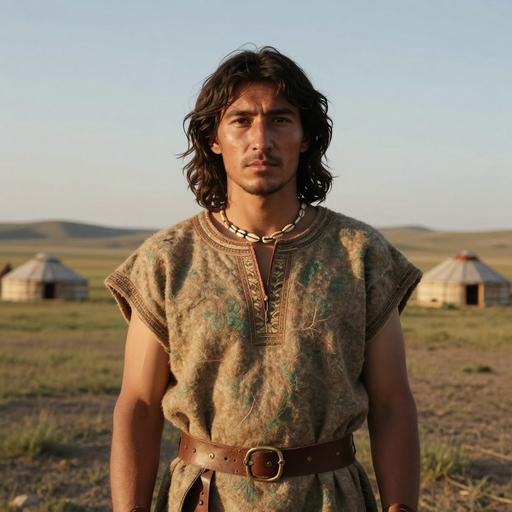
Portrait reconstruction of I4784
Ancient Individual

A man buried in Kazakhstan in the Middle Late Bronze Age era

I4784
1613 BCE - 1508 BCE
Male
Mid-Late Bronze Kyzlbulak
Kazakhstan
Scroll to begin
Chapter I

Identity

The biological and cultural markers that define this ancient individual

Sample ID

I4784

Date Range

1613 BCE - 1508 BCE

Biological Sex

Male

mtDNA Haplogroup

G2a1*

Y-DNA Haplogroup

Q-BZ4911

Cultural Period

Mid-Late Bronze Kyzlbulak

Chapter II

Place

Where this individual was discovered

Country Kazakhstan
Locality Kyzyl Bulak 1
Coordinates 43.2466, 77.8138
Chapter III

Time

When this individual lived in the broader context of human history

I4784 1613 BCE - 1508 BCE
Chapter IV

Story

The narrative of this ancient life

The Mid-Late Bronze Age Kyzlbulak phase of the Andronovo Culture represents a fascinating and intricate period in the prehistoric era of Central Asia, specifically within the region that is modern-day Kazakhstan. This time frame spans approximately from 1500 to 1000 BCE and is notable for the social, economic, and technological advancements that defined the region.

Geographic and Environmental Context

The Kyzlbulak phase occurred in what is now Kazakhstan, characterized by its vast steppes, semi-arid regions, and proximity to the Altai Mountains. The geographical setting played a crucial role in shaping the lifestyle and economic activities of the inhabitants. The landscape, with its diverse terrain, provided resources such as abundant pastures for livestock and raw materials like copper and tin, crucial for bronze production.

Cultural and Social Structure

The Mid-Late Bronze Kyzlbulak communities were part of the larger Andronovo cultural complex, which spanned a significant area of Central Asia. These societies were predominantly pastoral, with some degree of agriculture, and were characterized by their mobility. The social structure appears to have been hierarchical, with evidence suggesting the presence of elite classes, possibly warrior chieftains, who exerted control over resources and trade.

Burial practices provide insights into their social stratification. Typically, grave goods included weapons, ornaments, and pottery, indicating the status and wealth of the individuals. The kurgan (burial mound) style was prevalent, signifying the importance of funerary practices in their culture.

Economy and Technology

Economically, the Kyzlbulak phase was defined by a mixed economy of pastoralism and metallurgy. Cattle, sheep, goats, and horses were central to their subsistence and economy. The Andronovo people are credited with one of the early uses of the chariot, which not only facilitated transportation and warfare but also symbolized social status.

Metallurgy was a significant aspect of the Kyzlbulak phase. The communities skillfully extracted and alloyed tin and copper to produce bronze, a material integral to their tools, weapons, and ornaments. This metallurgical expertise indicates sophisticated knowledge of smelting processes and trade networks, as tin resources were not locally abundant and had to be sourced from other regions.

Art and Pottery

Artistic expression in the Kyzlbulak phase was primarily manifested through pottery, which exhibited intricate designs and patterns specific to the Andronovo culture. The pottery was typically handmade and decorated with geometric motifs, such as zigzags and crosshatches, created using cord impressions and incised techniques.

Trade and Interaction

Trade networks during this time were extensive, facilitated by their pastoral nomadic lifestyle. The Kyzlbulak people interacted with neighboring cultures, contributing to the exchange of goods, technologies, and ideas. These interactions are evident in the shared metallurgical practices and pottery styles found across different regions influenced by the Andronovo Culture.

Legacy and Influence

The legacy of the Mid-Late Bronze Kyzlbulak phase is significant in the broader context of Central Asian prehistory. It represents a period of technological maturation and cultural fluorescence. This era set the stage for subsequent cultural developments in the region and influenced later nomadic societies, noted for their martial prowess and horse culture, which have been integral to the history of the Eurasian steppes.

In conclusion, the Mid-Late Bronze Kyzlbulak phase of the Andronovo Culture encapsulates an era of dynamic interactions between humans and their environment, technological advancements, and complex social structures that laid foundational elements for future cultural evolutions in Central Asia.

Chapter V

Genetics

The genetic ancestry of this ancient individual

Ancient Genetic Admixture

This analysis compares the DNA profile of I4784 with ancient reference populations, showing the genetic composition in terms of prehistoric ancestral groups.

Western Steppe Pastoralists 39.2%
Neolithic Farmers 23.0%
European Hunter-Gatherers 22.0%
Ancient Asians 15.9%

Modern Genetic Admixture

This analysis compares the DNA profile with present-day reference populations, showing what percentage of genetic makeup resembles modern populations from different regions.

Europe 53.3%
Northwestern European 30.6%
English 17.4%
Finnish 13.2%
Eastern European 22.8%
Asia 42.8%
Central Asian, Northern Indian & Pakistani 23.5%
Pakistan 23.5%
Northern West Asian 19.3%
Caucasian 19.3%
America 3.9%
America 3.9%
Native American 3.9%

Closest Modern Populations

These are the modern populations showing the closest statistical alignment to A man buried in Kazakhstan in the Middle Late Bronze Age era, ranked by genetic distance. Lower distance values indicate closer statistical similarity.

1
Pamiri Rushan
4.9929
2
Pamiri Shugnan
5.6262
3
Tajik Yaghnobi
5.7694
4
Pamiri Badakhshan
6.5073
5
Tajik Tajikistan Kulob
6.5165
6
Tajik Tajikistan Hisor
6.9025
7
Tajik Tajikistan Ayni
6.9101
8
Pamiri Ishkashim
7.0890
9
Tatar Kazan
7.7685
10
Tatar Mishar
7.8656
Chapter VI

Context

Other ancient individuals connected to this sample

Sources

References

Scientific publications and genetic data

Scientific Publication

The formation of human populations in South and Central Asia

Authors Narasimhan VM, Patterson N, Moorjani P
Abstract

By sequencing 523 ancient humans, we show that the primary source of ancestry in modern South Asians is a prehistoric genetic gradient between people related to early hunter-gatherers of Iran and Southeast Asia. After the Indus Valley Civilization's decline, its people mixed with individuals in the southeast to form one of the two main ancestral populations of South Asia, whose direct descendants live in southern India. Simultaneously, they mixed with descendants of Steppe pastoralists who, starting around 4000 years ago, spread via Central Asia to form the other main ancestral population. The Steppe ancestry in South Asia has the same profile as that in Bronze Age Eastern Europe, tracking a movement of people that affected both regions and that likely spread the distinctive features shared between Indo-Iranian and Balto-Slavic languages.

G25 Coordinates

The G25 coordinates for sample I4784 can be used for detailed admixture analysis in our G25 Studio tool.

I4784,0.10489566,0.0500431,0.00744782,0.04648734,-0.02706148,0.01824614,0.0029914,-0.00073248,-0.02141414,-0.02623158,0.0013847,-0.00182108,0.00041848,-0.00835026,0.00438298,-0.00282062,-0.01161244,-0.00070272,-0.00582446,-0.01021448,-0.00288902,0.00302712,-0.00534712,0.00692508,-0.00274811
Analyze in G25 Studio
Use code for 40% off Expires Feb 26