Menu
Store
Blog
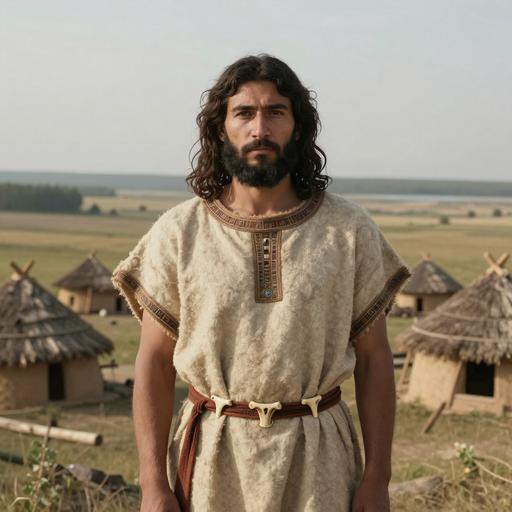
Portrait reconstruction of I6047
Ancient Individual

A man buried in Russia in the Late Bronze Age era

I6047
1386 BCE - 1212 BCE
Male
Late Bronze Priobrazhenka
Russia
Scroll to begin
Chapter I

Identity

The biological and cultural markers that define this ancient individual

Sample ID

I6047

Date Range

1386 BCE - 1212 BCE

Biological Sex

Male

mtDNA Haplogroup

R1b

Y-DNA Haplogroup

R-Z93

Cultural Period

Late Bronze Priobrazhenka

Chapter II

Place

Where this individual was discovered

Country Russia
Locality Priobrazhenka 3
Coordinates 55.5100, 77.0500
Chapter III

Time

When this individual lived in the broader context of human history

I6047 1386 BCE - 1212 BCE
Chapter IV

Story

The narrative of this ancient life

The Late Bronze Priobrazhenka culture of the Eurasian Steppe is an intriguing, yet under-researched cultural horizon which emerged during the latter half of the Bronze Age, approximately between 1600 and 1200 BCE. Located in the vast expanses of the Eurasian Steppe, this culture is an integral part of the greater continuum of steppe cultures which adapted to and thrived in the challenging environments of Central Asia.

Geography and Environment

The Eurasian Steppe is a vast grassland that stretches from Eastern Europe through Central Asia to Mongolia. The Late Bronze Priobrazhenka culture developed in the western part of this area, likely influenced by neighboring cultures and geographic factors. The environment is characterized by flat, open grasslands with a continental climate, marked by hot summers and cold, harsh winters. These conditions played a significant role in shaping the lifestyle, economy, and social organization of the Priobrazhenka people.

Economy and Subsistence

The basis of the Priobrazhenka economy was pastoralism, with sheep, cattle, and horses playing central roles. This culture likely practiced transhumance, moving their herds seasonally to optimize grazing. Horses not only provided mobility and a strategic advantage in warfare but were also integral to trade and communication with neighboring cultures. The Priobrazhenka people might have engaged in some agriculture, mainly focused on hardy crops that could withstand the steppe's climatic extremes, although their primary subsistence was pastoral.

Material Culture

Priobrazhenka material culture is distinguished by its distinctive pottery, metallurgy, and evidence of well-developed crafts. Pottery from this culture typically features geometric patterns and is often found in domestic and ritual contexts. The use of bronze was prevalent, with metalworking skills evident in the production of weapons, tools, and ornaments. Items such as daggers, axes, and intricate jewelry highlight the metallurgical sophistication of this culture, which indicates a degree of specialization and possibly trade networks for acquiring raw materials.

Social Structure

The social structure of the Late Bronze Priobrazhenka is not fully understood, but evidence suggests a hierarchical society with emerging social stratification. Burial practices, such as kurgans (burial mounds), provide insights into social ranking, with more elaborate graves indicating higher status individuals. These burial sites often contain personal items like weapons, pottery, and ornaments, suggesting beliefs in an afterlife where such items would be needed.

Religion and Beliefs

The Priobrazhenka culture likely practiced a form of animism or shamanism, common among steppe cultures. The spiritual life of this culture is primarily known through its burial practices and artifacts, which suggest a belief in an afterlife. Ritual items, animal remains, and symbolic decorations found in burial sites indicate the importance of religious rituals and the reverence of ancestors and natural forces.

Interactions and Influences

The Late Bronze Priobrazhenka culture did not exist in isolation. It interacted with neighboring cultures, which led to a blend of influences visible in its material culture and technological advancements. Contacts with cultures such as the Andronovo or Srubnaya facilitated exchanges of ideas and goods, with the Priobrazhenka culture contributing to the transfer of nomadic pastoral lifeways across the steppe.

Legacy and Conclusion

The Late Bronze Priobrazhenka culture represents a dynamic chapter in the history of the Eurasian Steppe. It exemplifies the adaptability of human societies to challenging environments and highlights the role of pastoral nomadism in the development of social complexity on the steppe. Through continued archaeological research, this culture's influences on subsequent steppe societies and their contributions to the broader tapestry of ancient Eurasian civilizations become ever more clear.

Chapter V

Genetics

The genetic ancestry of this ancient individual

Ancient Genetic Admixture

This analysis compares the DNA profile of I6047 with ancient reference populations, showing the genetic composition in terms of prehistoric ancestral groups.

Western Steppe Pastoralists 43.6%
European Hunter-Gatherers 22.8%
Ancient Asians 17.1%
Neolithic Farmers 12.5%
Ancient Native Americans 4.0%

Modern Genetic Admixture

This analysis compares the DNA profile with present-day reference populations, showing what percentage of genetic makeup resembles modern populations from different regions.

Europe 73.2%
Eastern European 39.6%
Northwestern European 33.6%
English 15.0%
Scandinavian 14.1%
Finnish 4.5%
Asia 17.3%
Central Asian, Northern Indian & Pakistani 12.3%
Indian 7.3%
Central Asian 3.8%
Pakistan 1.2%
Northern Asian 3.8%
Siberian 3.8%
Northern West Asian 1.3%
Caucasian 1.3%
America 7.6%
America 7.6%
Native American 7.6%
Africa 2.0%
West African 2.0%
Ghanaian, Liberian, Sierra Leonean 2.0%

Closest Modern Populations

These are the modern populations showing the closest statistical alignment to A man buried in Russia in the Late Bronze Age era, ranked by genetic distance. Lower distance values indicate closer statistical similarity.

1
Tatar Kazan
4.5670
2
Tatar Mishar
5.3299
3
Besermyan
5.6610
4
Komi A
5.8953
5
Russian Leshukonsky
7.2417
6
Udmurt
7.3172
7
Saami Kola
7.6820
8
Chuvash
7.9063
9
Tatar Lipka
7.9905
10
Russian Pinezhsky
8.5983
Chapter VI

Context

Other ancient individuals connected to this sample

Sources

References

Scientific publications and genetic data

Scientific Publication

The formation of human populations in South and Central Asia

Authors Narasimhan VM, Patterson N, Moorjani P
Abstract

By sequencing 523 ancient humans, we show that the primary source of ancestry in modern South Asians is a prehistoric genetic gradient between people related to early hunter-gatherers of Iran and Southeast Asia. After the Indus Valley Civilization's decline, its people mixed with individuals in the southeast to form one of the two main ancestral populations of South Asia, whose direct descendants live in southern India. Simultaneously, they mixed with descendants of Steppe pastoralists who, starting around 4000 years ago, spread via Central Asia to form the other main ancestral population. The Steppe ancestry in South Asia has the same profile as that in Bronze Age Eastern Europe, tracking a movement of people that affected both regions and that likely spread the distinctive features shared between Indo-Iranian and Balto-Slavic languages.

G25 Coordinates

The G25 coordinates for sample I6047 can be used for detailed admixture analysis in our G25 Studio tool.

I6047,0.11173866,0.01991858,0.04832134,0.06684354,-0.00752002,0.01841048,-0.0106702,-0.01030106,-0.00051274,-0.01872406,0.00569044,-0.00306848,0.0110753,-0.0097827,-0.00614896,-0.00998908,-0.00929056,-0.00211974,-0.01073068,-0.0097094,0.00240896,0.0055559,-0.0128858,0.00519064,-0.00466214
Analyze in G25 Studio
Use code for 40% off Expires Feb 26