Menu
Store
Blog
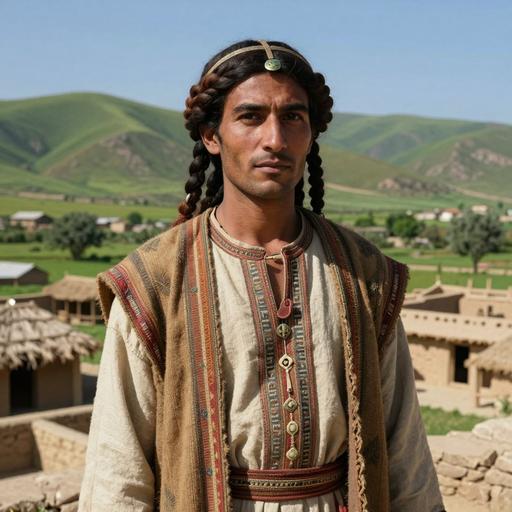
Portrait reconstruction of I6548
Ancient Individual

A man buried in Pakistan in the Iron Age era

I6548
1000 BCE - 800 BCE
Male
Barikot Iron Age Settlement in Swat Valley, Pakistan
Pakistan
Scroll to begin
Chapter I

Identity

The biological and cultural markers that define this ancient individual

Sample ID

I6548

Date Range

1000 BCE - 800 BCE

Biological Sex

Male

mtDNA Haplogroup

H

Y-DNA Haplogroup

H-M82

Cultural Period

Barikot Iron Age Settlement in Swat Valley, Pakistan

Chapter II

Place

Where this individual was discovered

Country Pakistan
Locality Swat Valley. Barikot
Coordinates 34.7570, 72.3624
Chapter III

Time

When this individual lived in the broader context of human history

I6548 1000 BCE - 800 BCE
Chapter IV

Story

The narrative of this ancient life

The Barikot Iron Age Settlement, located in the Swat Valley of Pakistan, represents a significant Indo-Aryan cultural and historical period. The settlement provides crucial insights into the early Iron Age in South Asia and reflects the complex interplay of indigenous cultures with Indo-Aryan migrations and influences.

Geographic and Archaeological Context

Barikot, also known as Bazira in ancient texts, is situated in the lush expanses of the Swat Valley in northern Pakistan. This region is known for its fertile land and strategic location, which historically connected Central Asia and the Indian subcontinent. The settlement is part of the larger Gandhara cultural sphere, known for its rich history and contributions to early Buddhist culture.

Historical Background

The Iron Age in the Swat Valley, extending roughly from 1200 BCE to 500 BCE, marks a period of transformation characterized by the emergence of settled communities and the development of more complex societal structures. This era in Swat saw the integration of Indo-Aryan cultural elements with local traditions.

Cultural Characteristics

  1. Material Culture: Excavations at Barikot have revealed a range of artifacts that highlight the craftsmanship and daily life of its inhabitants. These include pottery, iron tools, and personal ornaments which illustrate the adoption and adaptation of Iron Age technology. The pottery styles, such as painted and grey wares, show continuity and change in cultural practices.

  2. Architecture: The settlement's architecture, featuring stone-built structures, suggests a transition from semi-nomadic lifestyles to more permanent habitation. Public and private buildings show evidence of urban planning indicative of growing societal complexity.

  3. Religious and Social Structure: Religious artifacts and structural remains, such as early sanctuaries, suggest a synthesis of local animistic traditions with Indo-Aryan religious practices. This likely included early forms of Vedic rituals. The social structure was probably stratified, with emerging elites possibly connected to religious and military leadership roles.

  4. Economy and Subsistence: The economy at Barikot would have been largely agrarian, supported by the fertile soils of the Swat Valley. Evidence suggests organized agriculture, with wheat and barley as staple crops. Animal husbandry, including cattle and sheep, supplemented their economic activities. Trade networks are presumed to have existed, given Swat's location along ancient routes.

Interaction with Other Cultures

Barikot's development was influenced by interaction with surrounding regions, especially through the diffusion of Indo-Aryan language and culture. This period likely corresponds with the movement of Indo-Aryan groups into the region, bringing with them cultural and technological innovations such as iron metallurgy, which was crucial for agricultural and martial advances.

Legacy and Significance

The Barikot Iron Age Settlement contributes significantly to understanding the early implementation of iron technology in the region and the dissemination of Indo-Aryan cultural practices. The archaeological findings from this site not only reflect a period of cultural hybridity but also set the stage for later historical developments including the rise of the Gandhara civilization and the spread of Buddhism.

In contemporary scholarship, Barikot offers vital clues about the early Vedic society's spread, interaction, and adaptation in the complex cultural milieu of the ancient Swat Valley. This era serves as a pivotal chapter in the broader historical narrative of South Asia, marking the intersection and melding of foreign and indigenous influences that shaped subsequent cultural and historical trajectories in the region.

Chapter V

Genetics

The genetic ancestry of this ancient individual

Ancient Genetic Admixture

This analysis compares the DNA profile of I6548 with ancient reference populations, showing the genetic composition in terms of prehistoric ancestral groups.

Neolithic Farmers 52.3%
Ancient Asians 27.8%
Western Steppe Pastoralists 19.8%

Modern Genetic Admixture

This analysis compares the DNA profile with present-day reference populations, showing what percentage of genetic makeup resembles modern populations from different regions.

Asia 89.2%
Central Asian, Northern Indian & Pakistani 68.2%
Pakistan 51.6%
Indian 16.6%
Northern West Asian 20.3%
Mesopotamian 18.4%
Anatolian 1.9%
Chinese & Southeast Asian 0.8%
Chinese 0.8%
Europe 7.1%
Southern European 2.9%
Italian 2.9%
Eastern European 2.2%
Northwestern European 2.0%
Finnish 2.0%
America 3.0%
America 3.0%
Native American 3.0%
Oceania 0.7%
Melanesian 0.7%
Papuan 0.7%

Closest Modern Populations

These are the modern populations showing the closest statistical alignment to A man buried in Pakistan in the Iron Age era, ranked by genetic distance. Lower distance values indicate closer statistical similarity.

1
Awan
2.3461
2
Kamboj
2.4228
3
Kohistani
2.4778
4
Khatri
2.5117
5
Punjabi Sikh India
2.5753
6
Sindhi
2.6235
7
Kashmiri Pandit
2.6410
8
Arora
2.7994
9
Kashmiri Pakistan
2.8587
10
Tarkhan Sikh/Hindu
2.9115
Chapter VI

Context

Other ancient individuals connected to this sample

Sources

References

Scientific publications and genetic data

Scientific Publication

The formation of human populations in South and Central Asia

Authors Narasimhan VM, Patterson N, Moorjani P
Abstract

By sequencing 523 ancient humans, we show that the primary source of ancestry in modern South Asians is a prehistoric genetic gradient between people related to early hunter-gatherers of Iran and Southeast Asia. After the Indus Valley Civilization's decline, its people mixed with individuals in the southeast to form one of the two main ancestral populations of South Asia, whose direct descendants live in southern India. Simultaneously, they mixed with descendants of Steppe pastoralists who, starting around 4000 years ago, spread via Central Asia to form the other main ancestral population. The Steppe ancestry in South Asia has the same profile as that in Bronze Age Eastern Europe, tracking a movement of people that affected both regions and that likely spread the distinctive features shared between Indo-Iranian and Balto-Slavic languages.

G25 Coordinates

The G25 coordinates for sample I6548 can be used for detailed admixture analysis in our G25 Studio tool.

I6548,0.0731484,0.00076728,-0.10370594,0.0643302,-0.06696256,0.04150776,0.00100746,-0.00075444,-0.00138666,-0.00288728,-0.00433696,0.00163966,-0.00239878,0.00183272,0.00283344,0.0069731,0.00470718,0.00311386,0.00183882,-0.00378998,-0.0006164,-0.00367942,0.0034826,0.00450932,-0.00011694
Analyze in G25 Studio
Use code for 40% off Expires Feb 26