Menu
Store
Blog
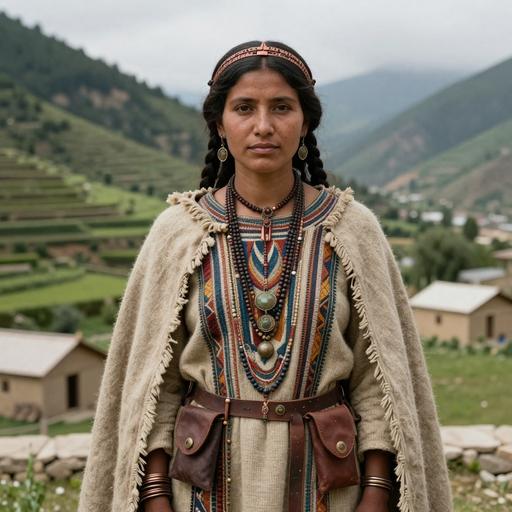
Portrait reconstruction of I6557
Ancient Individual

A woman buried in Pakistan in the Iron Age era

I6557
1000 BCE - 800 BCE
Female
Arkotkila Iron Age Civilization in Swat Valley, Pakistan
Pakistan
Scroll to begin
Chapter I

Identity

The biological and cultural markers that define this ancient individual

Sample ID

I6557

Date Range

1000 BCE - 800 BCE

Biological Sex

Female

mtDNA Haplogroup

U2e1h

Cultural Period

Arkotkila Iron Age Civilization in Swat Valley, Pakistan

Chapter II

Place

Where this individual was discovered

Country Pakistan
Locality Swat Valley. Arkotkila
Coordinates 34.8626, 72.2409
Chapter III

Time

When this individual lived in the broader context of human history

I6557 1000 BCE - 800 BCE
Chapter IV

Story

The narrative of this ancient life

The Arkotkila Iron Age Civilization is a term used to describe a phase of cultural development in the Swat Valley, Pakistan, which is part of the broader historical continuum of the Indus Valley Civilization and subsequent cultural transitions. This era is particularly significant due to its representation of the transition from the Bronze Age to the Iron Age in the region, which is marked by significant socio-cultural, technological, and economic changes.

Geographical Context

The Swat Valley, located in northern Pakistan, is characterized by its mountainous terrain and fertile land, making it a conducive environment for early human settlement and cultural development. It has served as a crossroads for different cultures and peoples due to its position between Central Asia and the Indian subcontinent.

Temporal Framework

The Arkotkila Iron Age is situated after the decline of the mature Indus Valley Civilization (circa 1900 BCE) and before the rise of the well-documented historical periods. This Iron Age phase likely spans from around 1500 BCE to 500 BCE, though specific dates can vary based on ongoing archaeological research.

Cultural and Technological Developments

Metallurgy and Tool Making

The most defining feature of the Arkotkila Iron Age is the introduction and widespread use of iron. This technological advancement enabled the creation of more durable tools and weapons, which had profound effects on agriculture, warfare, and daily life. The inhabitants of the Swat Valley would have exploited local iron resources to enhance their agricultural productivity, leading to more settled communities and the growth of populations.

Pottery and Craftsmanship

Archaeological findings from the Arkotkila site in the Swat Valley include a variety of pottery styles, which demonstrate a high level of craftsmanship and artistic expression. These ceramics often feature intricate designs and signify a continuation as well as an evolution of earlier traditions from the Indus Valley period.

Settlement Patterns and Architecture

The Arkotkila Iron Age saw the development of more defined and complex settlement patterns. Communities were typically organized into villages with fortified structures, possibly to protect against invasions or inter-community conflicts. The remains of residential buildings and community spaces indicate a shift towards more permanent and organized habitation.

Socio-Political Structure

The transition to the Iron Age likely affected the socio-political organization in the Swat Valley. Hierarchical structures may have developed or strengthened due to increased agricultural output and control over iron resources. This would have resulted in the emergence of local chieftains or petty kingdoms, laying the groundwork for more structured and extensive political entities.

Religious and Cultural Insights

While direct evidence of specific religious practices from the Arkotkila Iron Age is limited, the cultural tapestry of the Swat Valley suggests a synthesis of indigenous beliefs with outside influences. The presence of burial sites and ritualistic artifacts suggests that spiritual beliefs and practices played a significant role in the society. Artifacts such as figurines and amulets point towards ritualistic activities and the possible worship of local deities or ancestral spirits.

Interaction with Surrounding Cultures

The Arkotkila Iron Age civilization was not isolated but interacted with neighboring cultures, including the remnants of the Indus Valley Civilization, tribes from Central Asia, and the burgeoning Vedic communities to the south. These interactions could have played a significant role in the exchange of ideas, technologies, and cultural practices, enriching the cultural landscape of the Swat Valley.

Conclusion

The Arkotkila Iron Age Civilization represents an era of transformative change in the Swat Valley, marked by technological advancements, evolving social structures, and rich cultural expressions. This period set the stage for subsequent historical developments in the region, showcasing the intricate tapestry of human innovation and adaptation. While much is still to be uncovered through continued archaeological research, the legacy of the Arkotkila Iron Age endures as a testament to the resilience and ingenuity of the early societies in South Asia.

Chapter V

Genetics

The genetic ancestry of this ancient individual

Ancient Genetic Admixture

This analysis compares the DNA profile of I6557 with ancient reference populations, showing the genetic composition in terms of prehistoric ancestral groups.

Neolithic Farmers 44.5%
Ancient Asians 31.9%
Western Steppe Pastoralists 20.8%
Ancient Native Americans 2.9%

Modern Genetic Admixture

This analysis compares the DNA profile with present-day reference populations, showing what percentage of genetic makeup resembles modern populations from different regions.

Asia 100.0%
Central Asian, Northern Indian & Pakistani 74.1%
Pakistan 38.2%
Indian 35.9%
Northern West Asian 25.9%
Caucasian 20.2%
Mesopotamian 4.7%
Anatolian 1.0%

Closest Modern Populations

These are the modern populations showing the closest statistical alignment to A woman buried in Pakistan in the Iron Age era, ranked by genetic distance. Lower distance values indicate closer statistical similarity.

1
Kalash
2.1898
2
Pashtun Yusufzai
2.6631
3
Pashtun Pakistan
2.6720
4
Pashtun Uthmankhel
2.8398
5
Kamboj
2.8834
6
Pashtun Afghanistan Northeast
3.0090
7
Pashtun Tarkalani
3.0747
8
Khatri
3.2026
9
Jat Punjab Muslim
3.2483
10
Arain
3.2887
Chapter VI

Context

Other ancient individuals connected to this sample

Sources

References

Scientific publications and genetic data

Scientific Publication

The formation of human populations in South and Central Asia

Authors Narasimhan VM, Patterson N, Moorjani P
Abstract

By sequencing 523 ancient humans, we show that the primary source of ancestry in modern South Asians is a prehistoric genetic gradient between people related to early hunter-gatherers of Iran and Southeast Asia. After the Indus Valley Civilization's decline, its people mixed with individuals in the southeast to form one of the two main ancestral populations of South Asia, whose direct descendants live in southern India. Simultaneously, they mixed with descendants of Steppe pastoralists who, starting around 4000 years ago, spread via Central Asia to form the other main ancestral population. The Steppe ancestry in South Asia has the same profile as that in Bronze Age Eastern Europe, tracking a movement of people that affected both regions and that likely spread the distinctive features shared between Indo-Iranian and Balto-Slavic languages.

G25 Coordinates

The G25 coordinates for sample I6557 can be used for detailed admixture analysis in our G25 Studio tool.

I6557,0.07790086,0.01901956,-0.08928678,0.0686471,-0.07793106,0.0413271,0.00642014,0.00486474,-0.02000342,-0.02277998,-0.00735134,-0.0002038,-0.0044299,-0.00889106,0.0129592,0.00696234,-0.00850542,-0.0030865,-0.00330384,-0.01228904,-0.00631458,-0.00283624,-0.000219,-0.00092312,-0.00469987
Analyze in G25 Studio
Use code for 40% off Expires Feb 26