Menu
Currency
Main
Store
Blog

Loading Report

Preparing your ancestry journey

Connecting to ancient matches...

Preparing your report

Skip to main content
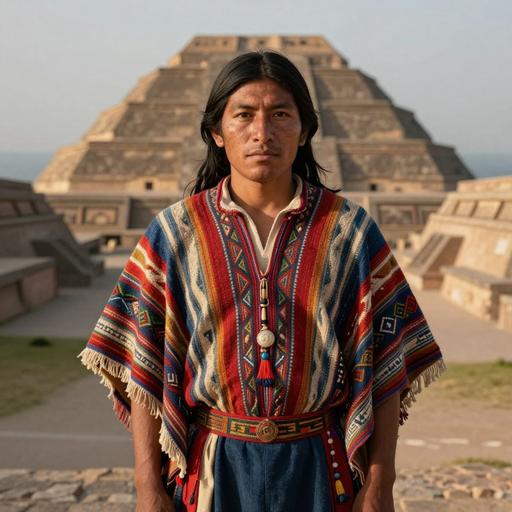
Portrait reconstruction of A man buried in Peru in the Pre-Columbian South America era
Ancient Individual

A man buried in Peru in the Pre-Columbian South America era

A man buried in Peru during the Early Intermediate Period Lima Culture, Peru 1,450 Years Ago

A fragment of the ancient world, preserved across millennia in strands of DNA.

I0974
200 CE - 700 CE
Male
Peru
Scroll to begin
Chapter I

Identity

The biological and cultural markers that define this ancient individual

Sample ID

I0974

Date Range

200 CE - 700 CE

Cultural Period

Early Intermediate Period Lima Culture, Peru 1,450 Years Ago

Biological Sex

Male

mtDNA Haplogroup

B2

Y-DNA Haplogroup

Q-M346

Chapter II

Place

Where this individual was discovered

Country Peru
Locality Lima. Huaca Pucllana
Chapter III

Time

When this individual lived in the broader context of human history

I0974 200 CE - 700 CE
Chapter IV

Story

The narrative of this ancient life

The Early Intermediate Period (EIP), spanning approximately from 200 CE to 600 CE, marked a significant chapter in the Andean civilizations of Peru, during which the Lima culture flourished. This era was characterized by increased regional differentiation and complex socio-political developments across the central coast of Peru. Around 1,450 years ago, the Lima culture emerged as one of the defining cultures of this period, leaving a lasting legacy through its distinct architectural achievements, pottery, textile production, and societal organization.

Geographic and Environmental Context

The Lima culture developed primarily in the coastal valleys of modern-day Lima, Peru, with significant influence extending into the surrounding areas. This region boasts an arid climate, which the Lima people ingeniously adapted to through sophisticated irrigation systems that facilitated agriculture and supported larger, more stable populations. The fertile river valleys, such as those of the Rímac, Chillón, and Lurín, provided a backbone for agricultural activities, enabling the cultivation of maize, beans, squash, and cotton.

Social and Political Structure

The social and political organization of the Lima culture was complex and hierarchically structured. Settlements varied in size and were organized around central ceremonial and administrative centers. These centers functioned not only as hubs of religious activities but also as places for political governance and trade. The political landscape was likely composed of a network of autonomous local polities or chiefdoms, each led by elite groups or chiefs who controlled resources and labor.

The elites played significant roles, and their status might have been reflected in the construction of monumental architecture and their burial practices. Redistribution of surplus resources was likely a crucial element of governance, reinforcing the power and influence of the ruling class within these polities.

Architectural and Technological Achievements

One of the most prominent features of the Lima culture was its architectural expertise. The Lima people are credited with constructing large adobe pyramids, platforms, and compounds, commonly known as \huacas." Huacas such as Huaca Pucllana and Huaca Huallamarca in present-day Lima are emblematic of the architectural style and engineering prowess of the Lima culture. These structures served religious, ceremonial, and administrative purposes and were often adorned with intricate friezes and colorful murals.

Technologically, the Lima culture excelled in crafting adobe bricks, a critical building material that contributed to the enduring nature of their structures. They also advanced in the creation of irrigation systems to maximize agricultural output, demonstrating innovation in water management.

Artistic and Cultural Developments

The artistic expression of the Lima culture is perhaps best exemplified by their pottery and textiles. Lima pottery typically featured bold, geometric designs with a preference for red, black, and white colors. These ceramics often depicted stylized animals, human figures, and deities, indicating a rich tapestry of religious and cultural symbolism.

Textile production was another area of expertise. The weaving techniques of the Lima people were highly sophisticated, producing textiles with complex patterns and vibrant dyes, which often played a role in both everyday life and ceremonial functions. Textiles were not only utilitarian but also an important medium for cultural expression and communication.

Religion and Belief Systems

Religion was a central aspect of Lima culture, influencing daily life, governance, and social organization. The Lima people practiced a sophisticated belief system that likely involved worship of various deities related to nature and agricultural fertility. The ceremonial centers and huacas served as the focal points for religious activities, where offerings and rituals were conducted to appease the gods and ensure agricultural abundance.

Interaction and Connectivity

The Lima culture was part of a broader network of interactions among Andean civilizations. They engaged in trade with neighboring cultures, exchanging goods such as spondylus shells, obsidian, and other valuable resources. This connectivity facilitated the exchange of ideas, technologies, and cultural practices, allowing the Lima culture to adapt and thrive in a dynamic environment.

Legacy

The legacy of the Lima culture is evident in the enduring architectural monuments that dot the landscape of modern-day Lima. While the culture eventually gave way to later Andean civilizations, such as the Wari and the Inca, the cultural and technological innovations of the Lima people laid foundational groundwork for subsequent developments in the region.

In summary, the Early Intermediate Period's Lima culture was a distinct and influential civilization that contributed significantly to the cultural and historical tapestry of ancient Peru. Their achievements in architecture, agriculture, and the arts continue to captivate scholars and visitors alike, offering invaluable insights into the complex web of Andean history."

Context

Related Samples

This individual exists within a broader network of ancient samples. No ancient genome stands alone.

Sample ID Culture/Period Date Location Action
I0974 Early Intermediate Period Lima Culture, Peru 1,450 Years Ago 200 CE Lima. Huaca Pucllana, Peru View
I0975 Early Intermediate Period Lima Culture, Peru 1,450 Years Ago 635 CE Lima. Huaca Pucllana, Peru View
I0045 Early Intermediate Period Lima Culture, Peru 1,450 Years Ago 100 CE Lima. Huaca Pucllana, Peru View
I0979 Middle Horizon Tiwanaku, Bolivia 650 CE Tiwanaku. La Paz, Bolivia View
I0977 Middle Horizon Tiwanaku, Bolivia 900 CE Tiwanaku. La Paz, Bolivia View
I0976 Middle Horizon Tiwanaku, Bolivia 900 CE Tiwanaku. La Paz, Bolivia View
I0978 Middle Horizon Tiwanaku, Bolivia 1015 CE Tiwanaku. La Paz, Bolivia View
I0971 Middle Horizon Lima Coast, Peru 1,000 Years Ago 500 CE Lima. Huaca Pucllana, Peru View
I0969 Late Intermediate Period Lima Culture, Peru 650 Years Ago 1065 CE Lima. Huaca Pucllana, Peru View
I0968 Middle Horizon Lima Coast, Peru 1,000 Years Ago 985 CE Lima. Huaca Pucllana, Peru View
I0972 Late Intermediate Period Ychsma Culture, Peru 900 CE Lima. Huaca Pucllana, Peru View
I0964 Late Intermediate Period Lima Culture, Peru 650 Years Ago 1315 CE Lima. Huaca Pucllana, Peru View
I0965 Late Intermediate Period Lima Culture, Peru 650 Years Ago 1300 CE Lima. Huaca Pucllana, Peru View
I0967 Late Intermediate Period Ychsma Culture, Peru 900 CE Lima. Huaca Pucllana, Peru View
I0966 Late Intermediate Period Ychsma Culture, Peru 900 CE Lima. Huaca Pucllana, Peru View
I1743 Late Horizon San Sebastian, Peru 500 Years Ago 1430 CE Cusco. San Sebastián. Machu Piccu, Peru View
I1744 Late Intermediate Period San Sebastian, Peru 600 Years Ago 1285 CE Cusco. San Sebastián. Machu Piccu, Peru View
I1400 Late Intermediate Period San Sebastian, Peru 600 Years Ago 1295 CE Cusco. San Sebastián. Machu Piccu, Peru View
I1479 Late Intermediate Period Palpa, Peru 550 Years Ago 1325 CE Ica. Palpa. Los Molinos, Peru View
I1396 Late Intermediate Period Pacapaccari, Peru 600 Years Ago 1315 CE Ayacucho. Lucanas. Laramate. Pacapaccari, Peru View
I1358 Late Intermediate Period Pacapaccari, Peru 600 Years Ago 1175 CE Ayacucho. Lucanas. Laramate. Pacapaccari, Peru View
I1356 Late Intermediate Period Pacapaccari, Peru 600 Years Ago 1310 CE Ayacucho. Lucanas. Laramate. Pacapaccari, Peru View
I0042 Late Intermediate Period Botigiriayocc, Peru 600 Years Ago 1215 CE Ayachucho. Lucanas. Laramate. Botigiriayocc, Peru View
I0044 Late Intermediate Period Lima Culture, Peru 650 Years Ago 1230 CE Lima. Huaca Pucllana, Peru View
I2233 Early Horizon Paracas Culture, Peru 2,250 Years Ago 115 BCE Paracas Penisula. Wari Kayan, Peru View
I2236 Late Intermediate Period Chanka Culture, Peru 1200 CE Chanka, Peru View
I2237 Early Intermediate Period El Brujo, Peru 1,300 Years Ago 525 CE El Brujo, Peru View
I2238 Early Intermediate Period Moche Culture, Peru 200 CE El Brujo, Peru View
I2241 Middle Horizon to Late Intermediate Period Lambayeque Culture, Peru 750 CE El Brujo, Peru View
I2242 Middle Horizon to Late Intermediate Period El Brujo, Peru 850 Years Ago 1185 CE El Brujo, Peru View
I2243 Middle Horizon to Late Intermediate Period Lambayeque Culture, Peru 750 CE El Brujo, Peru View
I2244 Middle Horizon to Late Intermediate Period Lambayeque Culture, Peru 750 CE El Brujo, Peru View
I2250 Late Intermediate Period Chimu Culture, Peruvian Highlands 1100 CE Chinchawas, Peru View
I2251 Late Intermediate Period Chimu Culture, Peruvian Highlands 1100 CE Chinchawas, Peru View
I2252 Middle Horizon Chinchawas, Peruvian Highlands 750 CE Chinchawas, Peru View
I2253 Middle Horizon Wari Highlands, Peru 750 CE Chinchawas, Peru View
I2262 Early Intermediate Period Moche Culture, Peru 200 CE El Brujo, Peru View
I2263 Early Intermediate Period El Brujo, Peru 1,300 Years Ago 710 CE El Brujo, Peru View
I2264 Late Intermediate Period Chimu Culture, Peruvian Highlands 1100 CE Chinchawas, Peru View
I2268 Late Archaic Huaca Prieta, Peru 4,500 Years Ago 2400 BCE El Brujo, Peru View
I2539 Middle Horizon Caleta Huelen, Chile 1,100 Years Ago 795 CE Caleta Huelen 12, Chile View
I2540 Middle Horizon Caleta Huelen, Chile 1,100 Years Ago 750 CE Caleta Huelen 12, Chile View
I2543 Middle Horizon Campanayuq, Peru 1,000 Years Ago 985 CE Chanka, Peru View
I2544 Late Intermediate Period Chanka Culture, Peru 1100 CE Charrangochayoc, Peru View
I2545 Late Horizon Inca Culture, Peru 1400 CE Mesayocpata, Peru View
I2549 Late Intermediate Period Palpa, Peru 550 Years Ago 1390 CE Ica. Palpa. Los Molinos, Peru View
I2550 Middle Horizon Palpa, Peru 950 Years Ago 985 CE Monte Grande, Peru View
I2557 Early Intermediate Period Ullujaya, Peru 1,350 Years Ago 470 CE Ica Valley, Peru View
I2558 Early Intermediate Period Ullujaya, Peru 1,350 Years Ago 585 CE Ica Valley, Peru View
I2560 Middle Horizon Ullujaya, Peru 950 Years Ago 905 CE Ica Valley, Peru View
I2563 Late Intermediate Period Chanka Culture, Peru 1200 CE Chanka, Peru View
I2258 Late Intermediate Period La Galgada, Peru 600 Years Ago 1310 CE Ancash. Pallasca. La Galgada, Peru View
I0324 Early Intermediate Period El Brujo, Peru 1,300 Years Ago 710 CE El Brujo, Peru View
I8351 Laguna Chica Site 1600 Years Ago 250 CE Pampas. Laguna Chica, Argentina View
I14009 Late Intermediate Period Pukara, Chile 700 Years Ago 1155 CE Atacama Desert. Precordillera, Chile View
IO2 Middle Horizon Iroco, Bolivia 1,050 Years Ago 775 CE TiticacaBasin, Bolivia View
MIS3 Middle Horizon Miraflores, Bolivia 765 CE TiticacaBasin, Bolivia View
MIS5 Middle Horizon Miraflores, Bolivia 770 CE TiticacaBasin, Bolivia View
MIS7 Middle Horizon Miraflores, Bolivia 700 CE TiticacaBasin, Bolivia View
I17497 Late Intermediate Period Pukara, Chile 600 Years Ago 1301 CE Atacama Desert. Precordillera, Chile View
I2538 Middle Horizon Caleta Huelen, Chile 1,100 Years Ago 771 CE Caleta Huelen 12, Chile View
Sample ID Culture/Period Date Location Action
I0974 Early Intermediate Period Lima Culture, Peru 1,450 Years Ago 200 CE Lima. Huaca Pucllana, Peru View
I0975 Early Intermediate Period Lima Culture, Peru 1,450 Years Ago 635 CE Lima. Huaca Pucllana, Peru View
I0045 Early Intermediate Period Lima Culture, Peru 1,450 Years Ago 100 CE Lima. Huaca Pucllana, Peru View
Sources

References

Scientific publications and genetic data that inform this profile.

Scientific Publication

A Paleogenomic Reconstruction of the Deep Population History of the Andes

Authors Nakatsuka N, Lazaridis I, Barbieri C, Skoglund P, Rohland N et al.
Abstract

There are many unanswered questions about the population history of the Central and South Central Andes, particularly regarding the impact of large-scale societies, such as the Moche, Wari, Tiwanaku, and Inca. We assembled genome-wide data on 89 individuals dating from ∼9,000-500 years ago (BP), with a particular focus on the period of the rise and fall of state societies. Today's genetic structure began to develop by 5,800 BP, followed by bi-directional gene flow between the North and South Highlands, and between the Highlands and Coast. We detect minimal admixture among neighboring groups between ∼2,000-500 BP, although we do detect cosmopolitanism (people of diverse ancestries living side-by-side) in the heartlands of the Tiwanaku and Inca polities. We also highlight cases of long-range mobility connecting the Andes to Argentina and the Northwest Andes to the Amazon Basin. VIDEO ABSTRACT.

Use code for 25% off Expires Jul 12