Menu
Currency
Main
Store
Blog

Loading Report

Preparing your ancestry journey

Connecting to ancient matches...

Preparing your report

Skip to main content
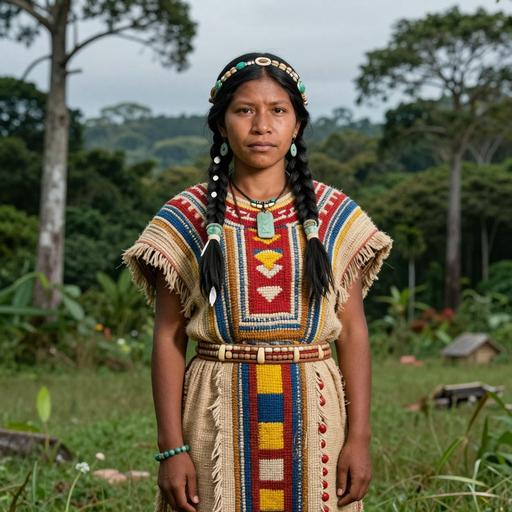
Portrait reconstruction of A woman buried in Belize in the Ancient Central America era
Ancient Individual

A woman buried in Belize in the Ancient Central America era

A woman buried in Belize during the Belize 3,600 Years Ago

A fragment of the ancient world, preserved across millennia in strands of DNA.

I24540
3708 BCE - 3543 BCE
Female
Belize
Scroll to begin
Chapter I

Identity

The biological and cultural markers that define this ancient individual

Sample ID

I24540

Date Range

3708 BCE - 3543 BCE

Cultural Period

Belize 3,600 Years Ago

Biological Sex

Female

mtDNA Haplogroup

C

Y-DNA Haplogroup

N/A (Female)

Social Role

Gatherer (AI estimate, era-typical)

Chapter II

Place

Where this individual was discovered

Country Belize
Locality Mayahak Cab Pek
Chapter III

Time

When this individual lived in the broader context of human history

I24540 3708 BCE - 3543 BCE
Chapter IV

Story

The narrative of this ancient life

Around 3,600 years ago, Belize was part of the nascent stages of what would become one of the most remarkable civilizations of the ancient world: the Maya. This era, roughly dated to 1600 BCE, falls within the Middle Preclassic period of Maya history. During this time, the seeds of Maya civilization were being sown, setting the stage for the Classic Maya period that would follow centuries later.

Geographical Context

Belize, situated on the eastern coast of Central America, provided a diverse ecological setting for its inhabitants. The region is characterized by a mix of coastal plains, mountains, and tropical forests, all of which significantly influenced the early Maya settlements. Belize’s aquatic systems, including rivers like the Belize River and the coastal lagoons, were critical for sustenance, trade, and transportation.

Sociopolitical Structure

During the Middle Preclassic period, Belize and the greater Maya region experienced the dawn of social stratification and political organization. Communities were primarily agrarian, cultivating crops such as maize, beans, squash, and chili peppers, which became the cornerstone of the Maya diet. Settlements were likely organized into chiefdoms, with emerging elites beginning to wield significant influence. These leaders were responsible for coordinating agricultural activities, managing trade networks, and engaging in communal rituals.

Architecture and Settlements

Archaeological evidence suggests that early Maya settlements consisted of small villages with simple structures. These were typically thatched-roof houses made from perishable materials like wood and palm leaves. However, there is also evidence of early public architecture, including platforms and early ceremonial centers which indicate the growing complexity of societal organization. Sites like Cuello in northern Belize provide some of the earliest evidence of permanent architecture in the Maya lowlands, dating back to this period.

Material Culture

Ceramic production was in its nascent stages, with pottery often decorated with simple incised or painted designs. These ceramics were used in both daily life and ceremonial practices. The Belize region was rich in resources like obsidian and jade, which were highly valued. Obsidian was often used for making cutting tools, while jade held both economic and religious significance, used in jewelry and ritual objects.

Religion and Ideology

Religion played a central role in Middle Preclassic Maya culture. The early Maya believed in a pantheon of gods related to natural elements and celestial bodies. Rituals likely involved offerings and communal gatherings led by emerging religious leaders or shamans. The beginnings of the elaborate Maya calendar and astronomy can be traced to this period, as they were anchored deeply in their belief system and agricultural cycles.

Trade and Interactions

Belize's location was strategic for trade, serving as a connecting point between the highlands and the lowlands of Mesoamerica. The exchange networks facilitated not only the movement of goods like obsidian, jade, and cacao but also the flow of ideas and cultural practices. These interactions contributed to the broader Mesoamerican cultural tapestry, influencing and being influenced by neighboring cultures.

Conclusion

The era of 3,600 years ago was a formative time in the history of the Maya civilization in Belize. It was marked by significant developments in agriculture, social organization, and cultural practices that laid the groundwork for the remarkable accomplishments of later Maya periods. While still in an early stage, these foundational elements highlight the ingenuity and adaptability of the early Maya and set the stage for their future achievements in art, architecture, astronomy, and beyond.

Context

Related Samples

This individual exists within a broader network of ancient samples. No ancient genome stands alone.

Sample ID Culture/Period Date Location Action
I24542 Belize 4,600 Years Ago 2950 BCE Mayahak Cab Pek, Belize View
I24541 Belize 11,700 Years Ago 10100 BCE Mayahak Cab Pek, Belize View
I24540 Belize 3,600 Years Ago 3708 BCE Mayahak Cab Pek, Belize View
I7543 Belize 4,000 Years Ago 2017 BCE Mayahak Cab Pek, Belize View
I8041 Belize 4,000 Years Ago 2204 BCE Mayahak Cab Pek, Belize View
I19950 Belize 4,600 Years Ago 2868 BCE Saki Tzul, Belize View
I5455 Belize 4,600 Years Ago 2574 BCE Mayahak Cab Pek, Belize View
I6235 Belize 4,600 Years Ago 2837 BCE Mayahak Cab Pek, Belize View
I6236 Belize 4,600 Years Ago 2621 BCE Saki Tzul, Belize View
I19167 Belize 4,900 Years Ago 3011 BCE Mayahak Cab Pek, Belize View
I19942 Belize 4,900 Years Ago 3091 BCE Saki Tzul, Belize View
I5454 Belize 4,900 Years Ago 3319 BCE Mayahak Cab Pek, Belize View
I7544 Belize 4,900 Years Ago 2894 BCE Mayahak Cab Pek, Belize View
I3442 Belize 4,900 Years Ago 3312 BCE Mayahak Cab Pek, Belize View
I19944 Belize 4,900 Years Ago 3011 BCE Saki Tzul, Belize View
I13267 Belize 5,500 Years Ago 3630 BCE Mayahak Cab Pek, Belize View
I20428 Belize 7,000 Years Ago 5250 BCE Mayahak Cab Pek, Belize View
I19170 Belize 8,800 Years Ago 7050 BCE Mayahak Cab Pek, Belize View
I19169 Belize 8,800 Years Ago 7031 BCE Mayahak Cab Pek, Belize View
I13268 Belize 9,400 Years Ago 7711 BCE Mayahak Cab Pek, Belize View
I7556 Archaic Period Belizean Culture 3761 BCE Mayahak Cab Pek (Toledo District, Maya Mountains, Bladen Nature Reserve), Belize View
I13266 Archaic Period Belizean Culture 2561 BCE Mayahak Cab Pek (Toledo District, Maya Mountains, Bladen Nature Reserve), Belize View
I3442 3312 BCE Mayahak Cab Pek, Belize View
Sample ID Culture/Period Date Location Action
I24540 Belize 3,600 Years Ago 3708 BCE Mayahak Cab Pek, Belize View
Sources

References

Scientific publications and genetic data that inform this profile.

Scientific Publication

South-to-north migration preceded the advent of intensive farming in the Maya region

Authors Kennett DJ, Lipson M, Prufer KM, Mora-Marín D, George RJ et al.
Abstract

The genetic prehistory of human populations in Central America is largely unexplored leaving an important gap in our knowledge of the global expansion of humans. We report genome-wide ancient DNA data for a transect of twenty individuals from two Belize rock-shelters dating between 9,600-3,700 calibrated radiocarbon years before present (cal. BP). The oldest individuals (9,600-7,300 cal. BP) descend from an Early Holocene Native American lineage with only distant relatedness to present-day Mesoamericans, including Mayan-speaking populations. After ~5,600 cal. BP a previously unknown human dispersal from the south made a major demographic impact on the region, contributing more than 50% of the ancestry of all later individuals. This new ancestry derived from a source related to present-day Chibchan speakers living from Costa Rica to Colombia. Its arrival corresponds to the first clear evidence for forest clearing and maize horticulture in what later became the Maya region.

Use code for 25% off Expires Jul 15