Menu
Currency
Main
Store
Blog

Loading Report

Preparing your ancestry journey

Connecting to ancient matches...

Preparing your report

Skip to main content
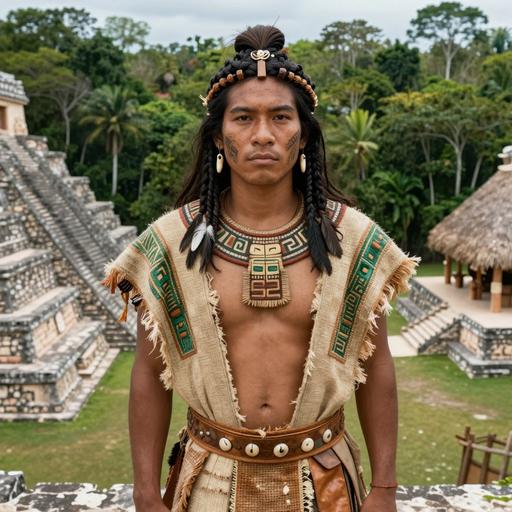
Portrait reconstruction of A man buried in Belize in the Ancient Central America era
Ancient Individual

A man buried in Belize in the Ancient Central America era

A man buried in Belize during the Belize 4,000 Years Ago

A fragment of the ancient world, preserved across millennia in strands of DNA.

I8041
2204 BCE - 2038 BCE
Male
Belize
Scroll to begin
Chapter I

Identity

The biological and cultural markers that define this ancient individual

Sample ID

I8041

Date Range

2204 BCE - 2038 BCE

Cultural Period

Belize 4,000 Years Ago

Biological Sex

Male

mtDNA Haplogroup

A2+(64)+@16111

Y-DNA Haplogroup

Not available

Social Role

Gatherer (AI estimate, era-typical)

Chapter II

Place

Where this individual was discovered

Country Belize
Locality Mayahak Cab Pek
Chapter III

Time

When this individual lived in the broader context of human history

I8041 2204 BCE - 2038 BCE
Chapter IV

Story

The narrative of this ancient life

Around 4,000 years ago, the region now known as Belize was home to the early formative stages of what would become one of the most sophisticated pre-Columbian civilizations in the Americas— the Maya civilization. During this time period, known as the Preclassic or Formative period, the Maya world was in a developmental phase that laid the foundations for the classical era of Maya culture, which would flourish in the centuries to follow.

Geography and Environment:

Belize, with its diverse environment, provided an ideal setting for early Maya settlements. The region features coastal areas, lowland rainforests, and mountain ranges. The access to diverse ecosystems offered a rich source of natural resources, which included fertile soils for agriculture, rivers for transportation and trade, and abundant wildlife for hunting.

Early Settlements:

By 2000 BCE, small agrarian communities began to form. These early settlements were typically situated along rivers and near fertile floodplains, taking advantage of the rich alluvial soils to cultivate crops. The Maya people began to develop more permanent structures, moving away from purely nomadic lifestyles. The beginnings of village life can be traced as they constructed simple dwellings made from organic materials available locally, such as wood and thatch.

Agricultural Practices:

Agriculture was at the heart of Maya culture, even during this early period. The Maya practiced slash-and-burn agriculture, known as \milpa," which allowed them to clear forested areas for the cultivation of crops. Maize (corn) was the staple crop, supplemented by beans, squash, chili peppers, and cacao, among other crops. This agricultural base supported population growth and the development of more complex societies.

Social Structure and Culture:

As these communities grew, so too did their social complexity. There is evidence of early societal stratification, with leaders or elites likely emerging based on agricultural surplus or ritual authority. The Maya developed a spiritual and ritual life connected deeply to their environment, worshipping a pantheon of deities associated with natural elements such as the sun, rain, and maize.

Technological and Artistic Developments:

Technological advances were emerging, including improved stone tool technologies and early engineering efforts reflected in terracing and irrigation. In terms of artistry, the Maya cultivated skills in pottery making and weaving, which would evolve to become highly sophisticated in later periods. Their pottery frequently featured simple geometric designs, which would later evolve into more intricate motifs and iconography.

Trade and Interaction:

Trade networks were beginning to form, linking these early Maya communities with other Mesoamerican cultures. Items such as obsidian, jade, and mother-of-pearl were likely exchanged, contributing to the flow of goods and ideas across regions. These interactions were crucial in the sharing of technologies, cultural practices, and agricultural techniques.

Religious and Ritual Practices:

Religious practices were vital from early on, with evidence suggesting that the concept of sacred spaces was already in place. These might have been simple open spaces or raised platforms used for communal gatherings and rituals. The early Maya would have developed a calendar system, which, over centuries, would evolve into the intricate Maya calendar known for its accuracy.

Archaeological Evidence:

Sites such as Cuello and Cahal Pech provide insights into early Maya life in Belize. Excavations have revealed stratified layers of settlement remains, pottery fragments, and primitive architectural structures, illustrating a gradual evolution from simple village life to more complex urban forms.

In conclusion, Belize circa 2,000 BCE was a region rich in resources that supported the burgeoning development of Maya society. This era was characterized by emerging agricultural practices, early societal organization, burgeoning trade networks, and the roots of a spiritual and cultural life that would eventually lead to the remarkable achievements of the Maya civilization during its Classic Period."

Context

Related Samples

This individual exists within a broader network of ancient samples. No ancient genome stands alone.

Sample ID Culture/Period Date Location Action
I24542 Belize 4,600 Years Ago 2950 BCE Mayahak Cab Pek, Belize View
I24541 Belize 11,700 Years Ago 10100 BCE Mayahak Cab Pek, Belize View
I24540 Belize 3,600 Years Ago 3708 BCE Mayahak Cab Pek, Belize View
I7543 Belize 4,000 Years Ago 2017 BCE Mayahak Cab Pek, Belize View
I8041 Belize 4,000 Years Ago 2204 BCE Mayahak Cab Pek, Belize View
I19950 Belize 4,600 Years Ago 2868 BCE Saki Tzul, Belize View
I5455 Belize 4,600 Years Ago 2574 BCE Mayahak Cab Pek, Belize View
I6235 Belize 4,600 Years Ago 2837 BCE Mayahak Cab Pek, Belize View
I6236 Belize 4,600 Years Ago 2621 BCE Saki Tzul, Belize View
I19167 Belize 4,900 Years Ago 3011 BCE Mayahak Cab Pek, Belize View
I19942 Belize 4,900 Years Ago 3091 BCE Saki Tzul, Belize View
I5454 Belize 4,900 Years Ago 3319 BCE Mayahak Cab Pek, Belize View
I7544 Belize 4,900 Years Ago 2894 BCE Mayahak Cab Pek, Belize View
I3442 Belize 4,900 Years Ago 3312 BCE Mayahak Cab Pek, Belize View
I19944 Belize 4,900 Years Ago 3011 BCE Saki Tzul, Belize View
I13267 Belize 5,500 Years Ago 3630 BCE Mayahak Cab Pek, Belize View
I20428 Belize 7,000 Years Ago 5250 BCE Mayahak Cab Pek, Belize View
I19170 Belize 8,800 Years Ago 7050 BCE Mayahak Cab Pek, Belize View
I19169 Belize 8,800 Years Ago 7031 BCE Mayahak Cab Pek, Belize View
I13268 Belize 9,400 Years Ago 7711 BCE Mayahak Cab Pek, Belize View
I7556 Archaic Period Belizean Culture 3761 BCE Mayahak Cab Pek (Toledo District, Maya Mountains, Bladen Nature Reserve), Belize View
I13266 Archaic Period Belizean Culture 2561 BCE Mayahak Cab Pek (Toledo District, Maya Mountains, Bladen Nature Reserve), Belize View
I3442 3312 BCE Mayahak Cab Pek, Belize View
Sample ID Culture/Period Date Location Action
I7543 Belize 4,000 Years Ago 2017 BCE Mayahak Cab Pek, Belize View
I8041 Belize 4,000 Years Ago 2204 BCE Mayahak Cab Pek, Belize View
Sources

References

Scientific publications and genetic data that inform this profile.

Scientific Publication

South-to-north migration preceded the advent of intensive farming in the Maya region

Authors Kennett DJ, Lipson M, Prufer KM, Mora-Marín D, George RJ et al.
Abstract

The genetic prehistory of human populations in Central America is largely unexplored leaving an important gap in our knowledge of the global expansion of humans. We report genome-wide ancient DNA data for a transect of twenty individuals from two Belize rock-shelters dating between 9,600-3,700 calibrated radiocarbon years before present (cal. BP). The oldest individuals (9,600-7,300 cal. BP) descend from an Early Holocene Native American lineage with only distant relatedness to present-day Mesoamericans, including Mayan-speaking populations. After ~5,600 cal. BP a previously unknown human dispersal from the south made a major demographic impact on the region, contributing more than 50% of the ancestry of all later individuals. This new ancestry derived from a source related to present-day Chibchan speakers living from Costa Rica to Colombia. Its arrival corresponds to the first clear evidence for forest clearing and maize horticulture in what later became the Maya region.

Use code for 25% off Expires Jul 15