Menu
Currency
Main
Store
Blog

Loading Report

Preparing your ancestry journey

Connecting to ancient matches...

Preparing your report

Skip to main content
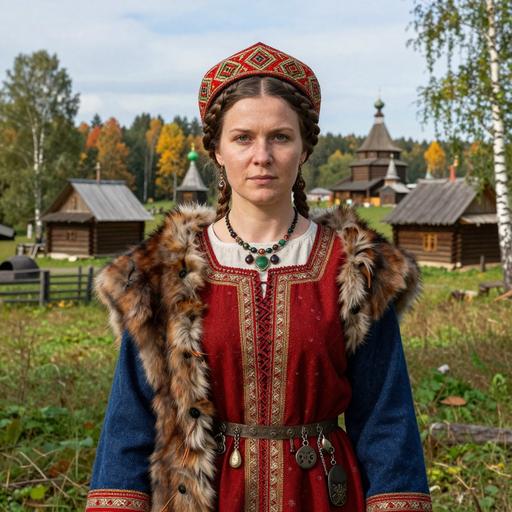
Portrait reconstruction of A woman buried in Russia in the Medieval era
Ancient Individual

A woman buried in Russia in the Medieval era

A woman buried in Russia during the Medieval Krasnoe

A fragment of the ancient world, preserved across millennia in strands of DNA.

KRS001
1412 CE - 1444 CE
Female
Russia
Scroll to begin
Chapter I

Identity

The biological and cultural markers that define this ancient individual

Sample ID

KRS001

Date Range

1412 CE - 1444 CE

Cultural Period

Medieval Krasnoe

Biological Sex

Female

mtDNA Haplogroup

T1a

Y-DNA Haplogroup

N/A (Female)

Chapter II

Place

Where this individual was discovered

Country Russia
Locality Krasnoe-3 (Vladimir Oblast, Suzdalsky District)
Coordinates 56.4988, 40.5424
Chapter III

Time

When this individual lived in the broader context of human history

KRS001 1412 CE - 1444 CE
Chapter IV

Story

The narrative of this ancient life

The concept of \Medieval Krasnoe" in Russia isn't a well-documented or commonly recognized historical term or entity, as there isn't a widely known region or cultural group specifically referred to as "Medieval Krasnoe" in historical records or scholarly research. However, if we are to infer that this term relates to a medieval period or locale within the broader expanse of the medieval Russian principalities, we can provide a generalized depiction of what a medieval culture in this region might entail.

Geographical Context

Krasnoe could refer to a village, town, or region within medieval Russia, possibly situated in the northern or central parts of the principalities that made up the Kyivan Rus' and later the fragmented territories preceding the rise of Muscovy. The geography of medieval Russia was characterized by vast, forested areas, rolling plains, and numerous rivers and lakes, which played a crucial role in shaping the economic activities and lifestyle of the communities.

Political Structure

During the medieval period, the Rus' lands were divided into numerous principalities ruled by a prince, often from the Rurikid dynasty. These political entities included major centers like Novgorod, Moscow, and Vladimir-Suzdal. The political structure was feudal in nature, where local lords and princes wielded power over their territories, collecting taxes, and owing allegiance to overlord princes or, during certain periods, to the Grand Prince of Kyiv or Vladimir.

Social Organization

The society was hierarchically structured, with a clear distinction between the classes. The nobility (boyars) and princely class held significant power, followed by a class of free townspeople (posadniks) and merchants. Below them were the peasantry, who worked the land under a system that bound them to their lord's estates, resembling serfdom.

Economy

The economy of medieval Russian territories was predominantly agrarian. Agriculture was the mainstay, with peasants farming crops such as rye, oats, barley, and flax. The substantial forested landscape provided resources like timber, furs, and honey — crucial for trade. Notably, trade routes such as the Varangian to Greek trade route facilitated the exchange of goods between the Byzantine Empire, Norse merchants, and the East Slavic lands.

Religion and Culture

The Christianization of Kyivan Rus' in 988 introduced Eastern Orthodox Christianity, which significantly influenced the cultural and spiritual life of medieval Russians. Churches and monasteries became centers of learning, literacy, and artistic expression. The iconography, frescoes, and wooden church architecture from this period are notable cultural legacies. Folklore and oral traditions remained robust, often interwoven with Christian motifs.

Architecture and Art

Architecture was primarily characterized by wooden structures due to the abundance of forests, although stone churches and fortifications began to emerge with increased influence from Byzantine and Romanesque styles. Icons and frescoes were prominent forms of religious art, reflecting Byzantine influence blended with local styles.

Military and Defense

Defense strategies in these regions often relied on wooden fortifications known as kremlins or gorodishches, and the use of cavalry was significant in warfare. The threat from nomadic tribes, such as the Mongols, in the later medieval period, led to a focus on militaristic security and fortification enhancements.

Daily Life

The lifestyle was harsh, with communities largely self-sufficient. Daily life revolved around seasonal agricultural cycles, religious festivals, and communal gatherings. Crafts such as pottery, textiles, metalwork, and woodworking were vital to everyday life and trade.

In conclusion, while "Medieval Krasnoe" is not a term anchored in recognized historical discourse, by extrapolating common elements from the medieval Russian context, one can imagine a village or town in this era as a microcosm of the broader cultural, religious, and socio-economic dynamics that characterized medieval Russia."

Context

Related Samples

This individual exists within a broader network of ancient samples. No ancient genome stands alone.

Sample ID Culture/Period Date Location Action
BOL001_antiquity1240k Davydovskoye Archaeological Culture 239 CE Bolshoye-Davydovskoye-2 (Ivanovo Oblast, Gavrilovo-Posadsky District, Bolshoye Davydovskoye Village), Russia View
BOL002_antiquity1240k Davydovskoye Archaeological Culture 130 CE Bolshoye-Davydovskoye-2 (Ivanovo Oblast, Gavrilovo-Posadsky District, Bolshoye Davydovskoye Village), Russia View
BOL003_antiquity1240k Davydovskoye Archaeological Culture 237 CE Bolshoye-Davydovskoye-2 (Ivanovo Oblast, Gavrilovo-Posadsky District, Bolshoye Davydovskoye Village), Russia View
BOL004 Davydovskoye Archaeological Culture 212 CE Bolshoye-Davydovskoye-2 (Ivanovo Oblast, Gavrilovo-Posadsky District, Bolshoye Davydovskoye Village), Russia View
BOL005 Davydovskoye Archaeological Culture 130 CE Bolshoye-Davydovskoye-2 (Ivanovo Oblast, Gavrilovo-Posadsky District, Bolshoye Davydovskoye Village), Russia View
BOL006 Davydovskoye Archaeological Culture 130 CE Bolshoye-Davydovskoye-2 (Ivanovo Oblast, Gavrilovo-Posadsky District, Bolshoye Davydovskoye Village), Russia View
BOL007 Davydovskoye Archaeological Culture 261 CE Bolshoye-Davydovskoye-2 (Ivanovo Oblast, Gavrilovo-Posadsky District, Bolshoye Davydovskoye Village), Russia View
BOL008 Davydovskoye Archaeological Culture 235 CE Bolshoye-Davydovskoye-2 (Ivanovo Oblast, Gavrilovo-Posadsky District, Bolshoye Davydovskoye Village), Russia View
BOL009 Davydovskoye Archaeological Culture 240 CE Bolshoye-Davydovskoye-2 (Ivanovo Oblast, Gavrilovo-Posadsky District, Bolshoye Davydovskoye Village), Russia View
GOR001 Medieval Gorokhovets Culture 771 CE Puzhalova-gora (Vladimir Oblast, Gorokhovets municipality), Russia View
GOS001 Medieval Gorokhovets Culture 1047 CE Sretensky-monastery (Vladimir Oblast, Gorokhovetsky District), Russia View
GOS002 Medieval Gorokhovets Culture 1039 CE Sretensky-monastery (Vladimir Oblast, Gorokhovetsky District), Russia View
GOS003 Medieval Gorokhovets Culture 1021 CE Sretensky-monastery (Vladimir Oblast, Gorokhovetsky District), Russia View
KBL002 Modern Russia Kibol (1900 CE) 1665 CE Kibol-3 (Vladimir Oblast, Suzdalsky District), Russia View
KBL003 Modern Russia Kibol (1900 CE) 1645 CE Kibol-3 (Vladimir Oblast, Suzdalsky District), Russia View
KED001 Modern Russian (Kideksha) 1648 CE Kideksha (Vladimir Oblast, Suzdalsky District), Russia View
KED002 Modern Russian (Kideksha) 1661 CE Kideksha (Vladimir Oblast, Suzdalsky District), Russia View
KED003 Modern Russian (Kideksha) 1526 CE Kideksha (Vladimir Oblast, Suzdalsky District), Russia View
KED004 Medieval Rus' (Kideksha) 1400 CE Kideksha (Vladimir Oblast, Suzdalsky District), Russia View
KRS001 Medieval Krasnoe 1412 CE Krasnoe-3 (Vladimir Oblast, Suzdalsky District), Russia View
SHE001 Early Medieval Shekshovo 881 CE Shekshovo-9 (Ivanovo Oblast, Gavrilovo-Posadsky District, Sheksnovo Village), Russia View
SHE002 Early Medieval Shekshovo 993 CE Shekshovo-9 (Ivanovo Oblast, Gavrilovo-Posadsky District, Sheksnovo Village), Russia View
SHE003 Early Medieval Shekshovo 772 CE Shekshovo-9 (Ivanovo Oblast, Gavrilovo-Posadsky District, Sheksnovo Village), Russia View
SHE004 Early Medieval Shekshovo 888 CE Shekshovo-9 (Ivanovo Oblast, Gavrilovo-Posadsky District, Sheksnovo Village), Russia View
SHE005 Medieval Shekshovo Culture 992 CE Shekshovo-9 (Ivanovo Oblast, Gavrilovo-Posadsky District, Sheksnovo Village), Russia View
SHE006 Medieval Shekshovo Culture 986 CE Shekshovo-9 (Ivanovo Oblast, Gavrilovo-Posadsky District, Sheksnovo Village), Russia View
SHE007 Medieval Shekshovo Culture 1044 CE Shekshovo-9 (Ivanovo Oblast, Gavrilovo-Posadsky District, Sheksnovo Village), Russia View
SHE008 Medieval Shekshovo Culture 1303 CE Shekshovo-9 (Ivanovo Oblast, Gavrilovo-Posadsky District, Sheksnovo Village), Russia View
SHE009 Medieval Shekshovo Culture 1299 CE Shekshovo-9 (Ivanovo Oblast, Gavrilovo-Posadsky District, Sheksnovo Village), Russia View
SHK001 Medieval Shekshovo Culture 1166 CE Shekshovo-2 (Ivanovo Oblast, Gavrilovo-Posadsky District, Sheksnovo Village), Russia View
SHK002 Medieval Shekshovo Culture 1053 CE Shekshovo-2 (Ivanovo Oblast, Gavrilovo-Posadsky District, Sheksnovo Village), Russia View
Sample ID Culture/Period Date Location Action
KRS001 Medieval Krasnoe 1412 CE Krasnoe-3 (Vladimir Oblast, Suzdalsky District), Russia View
Sources

References

Scientific publications and genetic data that inform this profile.

Scientific Publication

Genetic admixture and language shift in the medieval Volga-Oka interfluve

Authors Peltola S, Majander K, Makarov N, Dobrovolskaya M, Nordqvist K et al.
Abstract

The Volga-Oka interfluve in northwestern Russia has an intriguing history of population influx and language shift during the Common Era. Today, most inhabitants of the region speak Russian, but until medieval times, northwestern Russia was inhabited by Uralic-speaking peoples.1,2,3 A gradual shift to Slavic languages started in the second half of the first millennium with the expansion of Slavic tribes, which led to the foundation of the Kievan Rus' state in the late 9th century CE. The medieval Rus' was multicultural and multilingual-historical records suggest that its northern regions comprised Slavic and Uralic peoples ruled by Scandinavian settlers.4,5,6 In the 10th-11th centuries, the introduction of Christianity and Cyrillic literature raised the prestige status of Slavic, driving a language shift from Uralic to Slavic.3 This eventually led to the disappearance of the Uralic languages from northwestern Russia. Here, we study a 1,500-year time transect of 30 ancient genomes and stable isotope values from the Suzdal region in the Volga-Oka interfluve. We describe a previously unsampled local Iron Age population and a gradual genetic turnover in the following centuries. Our time transect captures the population shift associated with the spread of Slavic languages and illustrates the ethnically mixed state of medieval Suzdal principality, eventually leading to the formation of the admixed but fully Slavic-speaking population that inhabits the area today. We also observe genetic outliers that highlight the importance of the Suzdal region in medieval times as a hub of long-reaching contacts via trade and warfare.