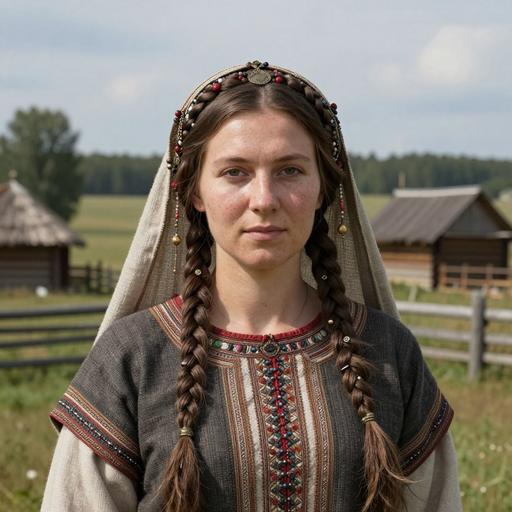
The Early Medieval Shekshovo era refers to the historical and cultural landscape of a particular region within the broader context of medieval Russia, primarily during the early medieval period, roughly spanning from the 9th to the 11th century. This era is marked by significant social, political, and cultural transformations as Eastern Slavic tribes coalesced into larger socio-political entities, leading to the formation of the Kievan Rus'.
Geography and Environment
Shekshovo, presumably situated within the wider Northern Russian plains, would have been characterized by its mixed forest zones, abundant water resources, and fertile land owing to the proximity of rivers. This geography facilitated agriculture, hunting, and fishing, which were crucial for subsistence and economic activities. The harsh Russian winters, along with the striking changes in seasons, played a significant role in shaping the lifestyle and cultural practices of the inhabitants.
Sociopolitical Structure
During the early medieval period, the region likely experienced a transition from tribal configurations to more centralized forms of governance. Initially, society was organized around extended family units or clans (known as \obshchina"), which were part of larger tribal unions. Leadership structures were generally patriarchal, with chieftains or elder councils holding sway, but as these tribes merged or were conquered by more powerful entities like the Varangians or neighboring principalities, they began to form early manifestations of feudal systems.
The political scene was dynamic, marked by shifting alliances and frequent conflicts among tribes. With the expansion and consolidation of the Kievan Rus', the area would gradually come under the influence or control of larger principalities, leading to increased political stability and integration into broader networks of trade and culture.
Economy and Trade
The economy of early medieval Shekshovo was primarily agrarian, characterized by subsistence farming, with wheat, rye, and barley as staple crops. Animal husbandry, including cattle, pigs, and horses, supplemented farming. The availability of forests offered resources like timber, furs, and honey, contributing to local economies.
Trade played an increasingly vital role, facilitated by the region’s rivers, which acted as critical arteries linking Northern Europe with the Byzantine Empire and the Islamic world. This not only allowed for the exchange of goods like salt, cloth, and metalwork but also introduced diverse cultural and religious ideas.
Religion and Culture
Religiously, the early medieval period was a time of transformation from paganism to Christianity. Initially, inhabitants of Shekshovo, like other Eastern Slavic groups, practiced a form of paganism centered on nature worship, with gods and spirits associated with natural elements and agricultural cycles. Sacred groves, idols, and ritual sites were commonplace.
With the official Christianization of the Kievan Rus' in the late 10th century, the region experienced significant religious change. Christianity gradually penetrated the social fabric, leading to the construction of churches and the establishment of monastic communities. This religious shift was instrumental in altering cultural norms, literacy, and the arts, as Byzantine influences became significant.
Art and Architecture
Art and architecture during this period were influenced by both indigenous traditions and external contacts. Pagan art, characterized by animal motifs and intricate patterns, slowly gave way to Christian-themed icons and frescoes. Wooden architecture dominated, with early churches and fortresses often built from logs and featuring steep-pitched roofs adapted to the snowy climate.
Society and Daily Life
The social fabric of Shekshovo was composed of free peasants, craftsmen, merchants, and a developing class of nobility. Villages were self-sufficient communities with strong kinship bonds, and life was largely centered around seasonal agricultural activities and communal work.
Festivals and rituals, both pagan and Christian, marked the calendar, providing opportunities for communal bonding and the transmission of folklore and traditions. These occasions also featured music, dance, and oral storytelling, which were crucial elements of cultural expression.
Challenges and Legacy
The era was not without challenges. Frequent conflicts, environmental challenges, and the complexities of integrating into larger political entities presented ongoing hurdles. However, the early medieval period laid the groundwork for the development of Russian culture and identity, influencing the social, religious, and political transformations that would follow.
In summary, Early Medieval Shekshovo, like much of Eastern Europe during this time, was a region of transition and synthesis, where local traditions and external influences melded into a unique historical and cultural identity that would contribute to the development of the medieval Russian state."