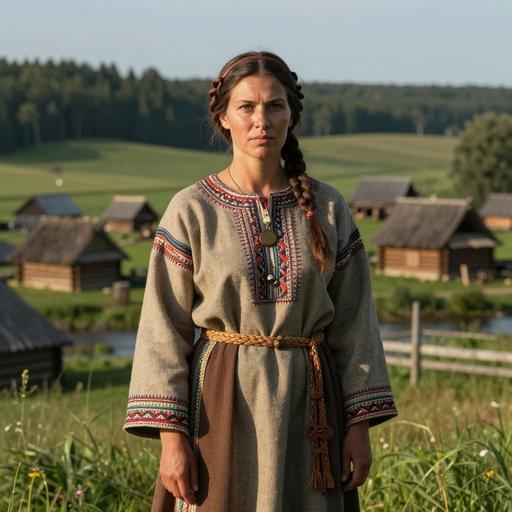
The medieval Shekshovo culture, part of the greater tapestry of Medieval Russia, offers a fascinating glimpse into the socio-economic, political, and cultural dynamics that characterized Eastern Europe during the Middle Ages. This culture is named after the archaeological site of Shekshovo, located in the modern-day Vladimir Oblast. Though not as widely studied as some other cultures, the Shekshovo culture is significant for its unique contributions to the understanding of medieval life in this region.
Geographical and Historical Context
The Shekshovo culture developed in the northeastern part of the medieval Russian territories, an area marked by dense forests and a network of rivers, which played a crucial role in trade and communication. The region was influenced by various neighboring entities, including the Volga Bulgars, the emerging Rus principalities, and even more distant cultures through trade connections, such as those from Scandinavia and Byzantium.
Social Structure and Economy
The social structure of the Shekshovo culture was likely shaped by a combination of indigenous Slavic traditions and influences from the various groups they interacted with. Society was organized in a hierarchical manner with a prince or local chieftain at its head, supported by a class of nobility and clergy. Below them were the commoners, who comprised the majority, consisting mainly of farmers, craftspeople, and traders.
Economically, the Shekshovo culture was largely agrarian, but the region was also known for its craftsmanship, particularly in metalwork and pottery. The proximity to riverine systems facilitated trade, making it a part of the broader trade routes that connected Northern Europe with Asia and the Byzantine Empire. Goods such as furs, wax, honey, and agricultural products were traded for textiles, metals, and other luxury items.
Religion and Beliefs
The Shekshovo culture existed during a time of religious transition, as the Kievan Rus had officially adopted Christianity in the 10th century. However, adherence to pagan practices likely persisted for some time. Archaeological evidence from Shekshovo sites occasionally reveals pagan symbols and ritual items alongside Christian artifacts, indicating a complex period of religious syncretism.
Art and Architecture
Art and architecture from the Shekshovo culture reveal a blend of native and imported influences. The architectural designs of their churches and public buildings show a transition from wooden structures to more durable stone constructions, reflecting both technological advancement and religious influence. Artistic expressions in frescoes, iconography, and metalwork display both Byzantine and native elements, illustrating the cultural amalgamation that characterized this era.
Daily Life and Material Culture
People in the Shekshovo culture lived in wooden houses, typically organized in small communities or villages. These settlements were fortified, indicating a need for defense against potential invasions or conflicts, which were common during the period of Kievan Rus' fragmentation and Mongol invasions.
Daily life included communal agricultural activities, as well as specific seasonal and religious festivals, some of which were remnants of pagan Slavic traditions. Garments were primarily made from wool and linen, dyed using natural pigments, while personal adornments often featured intricate metalwork.
Legacy
The Shekshovo culture, much like its contemporaries in the Kievan Rus and surrounding regions, contributed to the socio-political and cultural foundations of what would eventually become the Russian state. The blend of indigenous and foreign elements in their cultural practices demonstrates the vibrant exchanges that characterized early medieval Eastern Europe.
In conclusion, the medieval Shekshovo culture stands as a testament to the dynamic processes of cultural interaction, adaptation, and synthesis that were at play in medieval Russia. While the material and documentary evidence is modest compared to larger, more extensively studied cultures, the insights gained from Shekshovo enrich the understanding of the diverse and intricate history of the region.