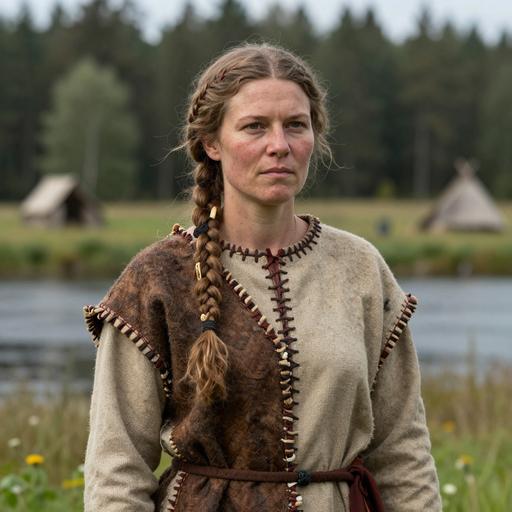
The Hunter-Gatherer culture of Motala, Sweden, is an intriguing chapter of human prehistory, positioned within the broader context of the Western European Hunter-Gatherers (WEHG) during the Mesolithic period. This era, which spanned from approximately 10,000 to 5,000 BCE, marks a critical transitional phase as humans adapted to post-glacial environments across Europe.
Geography and Environment
Motala is situated in south-central Sweden, an area characterized by a landscape of lakes, rivers, and dense forests. During the Mesolithic period, this region was undergoing significant ecological transformation due to the retreat of the ice sheets from the last Ice Age. The climate was warming, which allowed for the spread of deciduous forests interspersed with conifers, creating a richly diverse environment. Waterways were abundant, providing a lifeline for the communities that thrived there.
Subsistence and Economy
The Western European Hunter-Gatherers, including those from Motala, were highly adapted to their landscapes. Their economy was based on a mix of hunting, fishing, and foraging, which ensured a varied diet. The presence of lakes and rivers meant that fishing was an essential component of their subsistence strategy. Evidence, such as fishing implements and remains of fish species like pike and perch, suggests that they had sophisticated methods for catching fish.
Hunting supplemented their diet, with evidence of red deer, wild boar, and elk being prevalent game. These communities used tools like arrows and spears, crafted with microlithic technology, indicating advanced hunting techniques. Gathering played a crucial role as well, with nuts, berries, and wild plants providing nutritional balance.
Social Structure and Settlement Patterns
The Hunter-Gatherers of Motala lived in semi-permanent settlements, often near water sources. Archaeological findings suggest small, kin-based groups, which were flexible and mobile to adapt to the seasonal availability of resources. The social structure was likely egalitarian, with shared responsibilities for hunting, gathering, and processing food, although some division of labor based on age and gender might have existed.
Their dwellings were constructed to provide shelter from the harsh Scandinavian weather, using materials like wood and animal hides. The architecture likely consisted of simple, yet functional design, optimized for their nomadic lifestyle.
Tools and Technology
The technology of the Motala inhabitants was marked by a high degree of sophistication, particularly in the domain of lithic tools. They utilized local flint and stone to create an array of tools that typified the Mesolithic toolkit—microliths, scrapers, blades, and burins. These tools were essential for their survival, utilized in hunting, processing food, and crafting other implements.
Bone and antler were also significant materials. Artifacts such as bone fishhooks, harpoons, and needles have been discovered, demonstrating their skill in working with organic materials.
Art and Spirituality
While there is limited direct evidence of art from this specific region, parallels with other Mesolithic cultures suggest that symbolic expression was an integral part of their lives. This could have included body ornamentation with ochre, creating carvings, or engaging in ritualistic practices. Artifacts from other hunter-gatherer sites include decorated objects, which hint at a complex spiritual life potentially involving animistic beliefs or ancestor worship.
Burial Practices
One of the most striking aspects of the Motala hunter-gatherers was their mortuary practices, underscoring complex social and spiritual dimensions. Excavations in the region have revealed burials that include a variety of grave goods, such as red ochre, stone tools, and animal teeth pendants, suggesting a belief in an afterlife or the importance of items in death as in life.
In conclusion, the Hunter-Gatherer culture of Motala represents a community deeply intertwined with its natural environment, exhibiting adaptations that reflect both survival needs and evolving cultural practices. Their lifestyle, characterized by mobility, a diverse subsistence strategy, and intricate social structures, offers fascinating insights into the resilience and adaptability of human societies during the Mesolithic period.