Menu
Currency
Main
Store
Blog

Loading Report

Preparing your ancestry journey

Connecting to ancient matches...

Preparing your report

Skip to main content
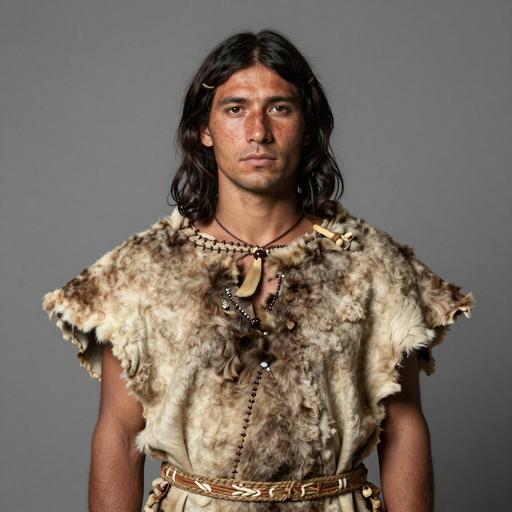
Portrait reconstruction of A man buried in Russia in the Mesolithic era
Ancient Individual

A man buried in Russia in the Mesolithic era

A man buried in Russia during the Hunter-Gatherer Popovo, Russia

A fragment of the ancient world, preserved across millennia in strands of DNA.

Popovo2
7500 BCE - 5000 BCE
Male
Russia
Scroll to begin
Chapter I

Identity

The biological and cultural markers that define this ancient individual

Sample ID

Popovo2

Date Range

7500 BCE - 5000 BCE

Cultural Period

Hunter-Gatherer Popovo, Russia

Biological Sex

Male

mtDNA Haplogroup

U4d

Y-DNA Haplogroup

J-M267

Chapter II

Place

Where this individual was discovered

Country Russia
Locality Popovo. Archangelsk
Coordinates 61.2640, 38.9050
Chapter III

Time

When this individual lived in the broader context of human history

Popovo2 7500 BCE - 5000 BCE
Chapter IV

Story

The narrative of this ancient life

The Hunter-Gatherer Popovo culture of Russia, part of the broader Circumpolar Cultures, refers to a prehistoric society that inhabited the northern regions of Russia. This culture existed during a time when vast expanses of the Earth's surface were covered by dense forests and expansive tundra, and human groups primarily subsisted on hunting, gathering, and fishing. Below is an extensive and detailed description of this era and culture:

Geography and Environment

The Popovo people lived in what is now the Russian Arctic, a region characterized by its extreme climates and challenging environments. This area is marked by long, harsh winters and brief, milder summers. The landscape ranges from tundra in the north to taiga (boreal forest) further south. The tundra is dominated by mosses, lichens, and small shrubs, whereas the taiga is rich in coniferous trees such as pine, spruce, and fir. Large rivers and numerous lakes also feature prominently in the region's geography, providing critical resources for sustenance.

Subsistence Strategies

The Popovo culture, like many hunter-gatherer societies, developed complex subsistence strategies to survive. They relied heavily on the rich biodiversity available in their environment. The seasonal migrations of large game animals such as reindeer (caribou), elk, and various species of fish in the rivers and lakes formed a significant part of their diet. During the colder months, hunting expeditions focused on large game, while the warmer seasons provided opportunities to gather berries, nuts, roots, and plants. This seasonal approach to food resources required a deep understanding of animal behavior and plant ecology.

Technology and Tools

The Popovo people were adept at crafting tools from the resources available to them. Stone, bone, antler, and wood were the primary materials used in tool-making. Flint-knapping techniques were employed to create sharp blades, arrowheads, and scrapers, which were essential for hunting and processing game. Bone and antler were used to make durable tools such as needles, fishing hooks, and harpoons. The society also utilized sleds and skis for transportation across the snowy and icy terrain, showcasing their adaptation to the climate.

Social Structure and Community Life

The Hunter-Gatherer Popovo communities were likely organized into small, mobile family groups or bands, which facilitated efficient resource use and mobility. These bands were composed of kin-related individuals who cooperated in hunting, gathering, and other daily tasks. Leadership within these groups was probably based on age, experience, or skill rather than formal hierarchies, allowing for flexible social organization.

Cultural practices, beliefs, and knowledge were likely passed down through oral traditions, storytelling, and communal gatherings. Rituals and spiritual beliefs may have played a role in reinforcing social bonds and understanding the natural world; however, exact details of their spiritual life remain speculative due to the lack of written records.

Art and Symbolism

While evidence is scarce, it is possible that the Popovo culture, like their circumpolar counterparts, expressed themselves through art and symbolism. Artifacts such as carved figurines, engraved tools, and decorated personal items suggest an appreciation for aesthetics and symbolic communication. Such artifacts could have served various functions, including ritualistic purposes, social identity, and storytelling.

Environmental and Cultural Interactions

The Popovo people were part of a broader network of circumpolar cultures, often engaging in exchanges with neighboring groups. These interactions could have included trade of materials like flint or amber, the sharing of technological innovations, and cultural exchanges that enriched their societal practices.

In conclusion, the Hunter-Gatherer Popovo culture of Russia embodies resilience and adaptability in the face of one of Earth's most formidable environments. Their subsistence strategies, technological innovations, and social structures illustrate a profound connection with the natural world, which enabled them to thrive in the circumpolar regions. Despite the challenges of their environment, the Popovo people developed a rich cultural tapestry that marks a significant period in the history of human adaptation and survival.

Context

Related Samples

This individual exists within a broader network of ancient samples. No ancient genome stands alone.

Sample ID Culture/Period Date Location Action
I0963 Hunter-Gatherer Russia 6000 BCE Archangelsk. Popovo, Russia View
Donkalnis1 Early to Middle Neolithic Narva Culture, Lithuania 5500 BCE Donkalnis, Lithuania View
Donkalnis4 Mesolithic Lithuania 5991 BCE Donkalnis, Lithuania View
Donkalnis6 Early to Middle Neolithic Narva Culture, Lithuania 4718 BCE Donkalnis, Lithuania View
Donkalnis7 Early to Middle Neolithic Narva Culture, Lithuania 5374 BCE Donkalnis, Lithuania View
Kivisaare3 Early to Middle Neolithic Narva Culture, Estonia 4776 BCE Kivisaare, Estonia View
Kivutkalns153 Bronze Age Latvia 796 BCE Kivutkalns, Latvia View
Kivutkalns164 Bronze Age Latvia 719 BCE Kivutkalns, Latvia View
Kivutkalns194 Bronze Age Latvia 407 BCE Kivutkalns, Latvia View
Kivutkalns19 Bronze Age Latvia 720 BCE Kivutkalns, Latvia View
Kivutkalns207 Bronze Age Latvia 787 BCE Kivutkalns, Latvia View
Kivutkalns209 Bronze Age Latvia 788 BCE Kivutkalns, Latvia View
Kivutkalns215 Bronze Age Latvia 758 BCE Kivutkalns, Latvia View
Kivutkalns222 Bronze Age Latvia 745 BCE Kivutkalns, Latvia View
Kivutkalns25 Bronze Age Latvia 799 BCE Kivutkalns, Latvia View
Kivutkalns42 Bronze Age Latvia 809 BCE Kivutkalns, Latvia View
Kretuonas1 Early to Middle Neolithic Narva Culture, Lithuania 4453 BCE Kretuonas 1B, Lithuania View
Kretuonas2 Early to Middle Neolithic Narva Culture, Lithuania 5500 BCE Kretuonas 1B, Lithuania View
Kretuonas4 Early to Middle Neolithic Narva Culture, Lithuania 5500 BCE Kretuonas 1B, Lithuania View
Kvarlov5164 Middle Neolithic Funnel Beaker Culture, Sweden 3945 BCE Kvärlöv. Saxtorp. Skåne, Sweden View
MotalaAA Hunter-Gatherer Motala, Sweden 5724 BCE Motala. Kanaljorden, Sweden View
Olsund_new Late Neolithic to Bronze Age Sweden 2573 BCE Ölsund. Hälsingland, Sweden View
Plinkaigalis241 Late Neolithic Lithuania 2861 BCE Plinkaigalis, Lithuania View
Plinkaigalis242 Late Neolithic Lithuania 3264 BCE Plinkaigalis, Lithuania View
Popovo2 Hunter-Gatherer Popovo, Russia 7500 BCE Popovo. Archangelsk, Russia View
Spiginas1 Early to Middle Neolithic Narva Culture, Lithuania 4442 BCE Spiginas, Lithuania View
Spiginas2 Late Neolithic Lithuania 2132 BCE Spiginas, Lithuania View
Spiginas4 Mesolithic Lithuania 6442 BCE Spiginas, Lithuania View
Tamula1 Middle Neolithic Comb Ceramic Culture 1, Estonia 3621 BCE Tamula, Estonia View
Tamula3 Middle Neolithic Comb Ceramic Culture 2, Estonia 3796 BCE Tamula, Estonia View
Turlojiske1932 Bronze Age Lithuania 1257 BCE Turlojiškė, Lithuania View
Turlojiske1 Bronze Age Lithuania 928 BCE Turlojiškė, Lithuania View
Turlojiske3 Bronze Age Lithuania 1015 BCE Turlojiškė, Lithuania View
Turlojiske5 Bronze Age Lithuania 2100 BCE Turlojiškė, Lithuania View
UzOO77_new Eastern Hunter-Gatherer, Russia 5500 BCE Yuzhnyy Oleni Ostrov. Karelia, Russia View
Veibri4 Early to Middle Neolithic Narva Culture, Estonia 4895 BCE Veibri, Estonia View
Gyvakarai1_10bp Late Neolithic Lithuania 2620 BCE Gyvakarai, Lithuania View
UzOO77 Yuzhny Oleny Ostrov Culture 5500 BCE Yuzhny Oleniy Ostrov (Republic of Karelia, Medvezhyegorsky District, Velikaya Guba Village), Russia View
Kretuonas2 5500 BCE Kretuonas 1B, Lithuania View
MA973 2575 BCE Kursi. Jõgeva, Estonia View
Gyvakarai1_10bp 2620 BCE Gyvakarai, Lithuania View
Sample ID Culture/Period Date Location Action
Popovo2 Hunter-Gatherer Popovo, Russia 7500 BCE Popovo. Archangelsk, Russia View
Sources

References

Scientific publications and genetic data that inform this profile.

Scientific Publication

The genetic prehistory of the Baltic Sea region

Authors Mittnik A, Wang CC, Pfrengle S, Daubaras M, Zariņa G et al.
Abstract

While the series of events that shaped the transition between foraging societies and food producers are well described for Central and Southern Europe, genetic evidence from Northern Europe surrounding the Baltic Sea is still sparse. Here, we report genome-wide DNA data from 38 ancient North Europeans ranging from ~9500 to 2200 years before present. Our analysis provides genetic evidence that hunter-gatherers settled Scandinavia via two routes. We reveal that the first Scandinavian farmers derive their ancestry from Anatolia 1000 years earlier than previously demonstrated. The range of Mesolithic Western hunter-gatherers extended to the east of the Baltic Sea, where these populations persisted without gene-flow from Central European farmers during the Early and Middle Neolithic. The arrival of steppe pastoralists in the Late Neolithic introduced a major shift in economy and mediated the spread of a new ancestry associated with the Corded Ware Complex in Northern Europe.

Use code for 25% off Expires Jul 12