Menu
Currency
Main
Store
Blog

Loading Report

Preparing your ancestry journey

Connecting to ancient matches...

Preparing your report

Skip to main content
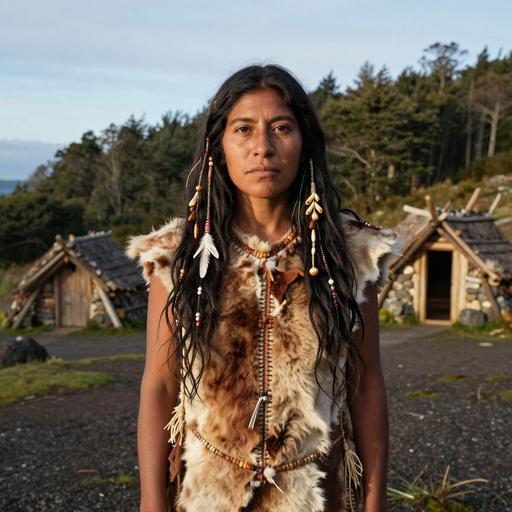
Portrait reconstruction of A woman buried in Chile in the Ancient South America era
Ancient Individual

A woman buried in Chile in the Ancient South America era

A woman buried in Chile during the Punta Santa Ana Site, Chile 7,300 Years Ago

A fragment of the ancient world, preserved across millennia in strands of DNA.

SA5832
5634 BCE - 5051 BCE
Female
Chile
Scroll to begin
Chapter I

Identity

The biological and cultural markers that define this ancient individual

Sample ID

SA5832

Date Range

5634 BCE - 5051 BCE

Cultural Period

Punta Santa Ana Site, Chile 7,300 Years Ago

Biological Sex

Female

mtDNA Haplogroup

Not available

Y-DNA Haplogroup

N/A (Female)

Social Role

Gatherer (AI estimate, era-typical)

Chapter II

Place

Where this individual was discovered

Country Chile
Locality Punta Santa Ana. Patagonia. Chile
Chapter III

Time

When this individual lived in the broader context of human history

SA5832 5634 BCE - 5051 BCE
Chapter IV

Story

The narrative of this ancient life

The Punta Santa Ana site, located in Chile, offers a fascinating glimpse into the cultural and environmental contexts of Paleo-Indian life approximately 7,300 years ago. During this period, the region was inhabited by groups of hunter-gatherers who were adept at exploiting the diverse and rich ecosystems around them. This description seeks to provide an extensive and detailed understanding of the landscape, material culture, subsistence strategies, and social organization characteristic of these early inhabitants.

Geography and Environment

Around 7,300 years ago, the area surrounding Punta Santa Ana was markedly different from today, reflecting the ongoing climatic changes following the last Ice Age. The environment consisted of a combination of coastal and inland ecological zones. The coastal areas provided access to abundant marine resources, while the nearby grasslands and forests offered terrestrial game and plant resources.

Material Culture

The material culture of the Punta Santa Ana site's inhabitants reveals their adaptation and technological ingenuity. The lithic toolkit was predominantly composed of finely crafted stone tools, including bifacial projectile points, scrapers, and knives. These tools were primarily made from high-quality local stone, which suggests a deep knowledge of available resources and sophisticated craftsmanship.

Additionally, organic materials like bone, wood, and plant fibers were likely used to supplement stone implements, although these do not preserve well in the archaeological record. The use of organic materials would have been integral for creating tools like harpoons, fishing gear, and woven goods.

Subsistence Strategies

The people at Punta Santa Ana capitalized on a mixed subsistence economy, exploiting both marine and terrestrial resources. The proximity to the coast meant access to shellfish, fish, sea mammals, and seabirds, which constituted a significant part of their diet. Inland, the hunter-gatherers pursued a variety of game, such as guanacos and other small to medium-sized mammals, using their advanced toolkit to hunt and process meat.

Gathering plant resources, such as tubers, seeds, and fruits, also played a crucial role in their subsistence. The seasonal availability of these resources would have necessitated a mobile lifestyle, with groups moving strategically throughout the landscape to optimize resource exploitation.

Social Organization

The social structure of the Paleo-Indians in this area likely revolved around small, kin-based groups. These bands would have been characterized by flexible and egalitarian social frameworks, necessary for survival in the challenging and changing environments. Cooperation was crucial, not only for hunting and gathering but also for the sharing of knowledge, tool-making techniques, and navigating the landscape.

Evidence from similar archaeological contexts suggests that social networks extended beyond immediate family groups. These networks could facilitate the exchange of goods, information, and marriage partners, thereby enhancing genetic diversity and social ties.

Cultural and Spiritual Life

Although direct evidence of spiritual practices or symbolic behavior from this period is sparse, it is reasonable to assume, based on parallels from contemporary and historically documented hunter-gatherer societies, that the people of Punta Santa Ana had rich cultural traditions. These may have included rituals and ceremonies centered around important life events, the changing seasons, and hunting successes.

Artistic expressions, perhaps in the form of body decoration, ornamentation, or temporary structures, may have played a role in reinforcing group identity and transmitting cultural knowledge.

Conclusion

The Punta Santa Ana site's inhabitants exemplify the adaptability and resilience of Paleo-Indian societies in South America. Through their innovative use of resources, sophisticated tool-making skills, and flexible social structures, these early peoples were able to thrive in a dynamic and diverse environment. The ongoing study of sites like Punta Santa Ana continues to shed light on the complex interactions between humans and their surroundings during this pivotal period in human prehistory.

Context

Related Samples

This individual exists within a broader network of ancient samples. No ancient genome stands alone.

Sample ID Culture/Period Date Location Action
Lovelock3 Lovelock Cave, Nevada, USA 600 Years Ago 1270 CE Lovelock Cave. Nevada. US, USA View
AHUR_2064 Spirit Cave, Nevada, USA 11,000 Years Ago 9229 BCE Nevada. Spirit Cave, USA View
Lovelock2 Lovelock Cave, Nevada, USA 1,850 Years Ago 26 CE Lovelock Cave. Nevada. US, USA View
Lovelock1 Lovelock Cave, Nevada, USA 1,850 Years Ago 49 BCE Lovelock Cave. Nevada. US, USA View
Lovelock4 Lovelock Cave, Nevada, USA 1,850 Years Ago 126 CE Lovelock Cave. Nevada. US, USA View
TrailCreek Trail Creek, Alaska, USA 9,000 Years Ago 7181 BCE Alaska. Trail Creek, USA View
AHUR770c Spirit Cave, Nevada, USA 11,000 Years Ago 9252 BCE Nevada. Spirit Cave, USA View
Andaman Great Andaman People 100BP 1800 CE Great Andaman Island, India View
A460 Western Archipelago Ayayema Culture, Chile 5,100 Years Ago 3364 BCE Ayayema Cave. Patagonia, Chile View
SA5832 Punta Santa Ana Site, Chile 7,300 Years Ago 5634 BCE Punta Santa Ana. Patagonia. Chile, Chile View
19651 Big Bar Site, Canada 5,700 Years Ago 3796 BCE Northwest, Canada View
Sumidouro5 Sumidouro Site, Brazil 10,100 Years Ago 8612 BCE Caverna do Sumidouro. Lagoa Santa. Brazil, Brazil View
Sumidouro6 Sumidouro Site, Brazil 10,100 Years Ago 8293 BCE Caverna do Sumidouro. Lagoa Santa. Brazil, Brazil View
Sumidouro4 Sumidouro Site, Brazil 10,100 Years Ago 8300 BCE Caverna do Sumidouro. Lagoa Santa. Brazil, Brazil View
Sumidouro7 Sumidouro Site, Brazil 10,100 Years Ago 8422 BCE Caverna do Sumidouro. Lagoa Santa. Brazil, Brazil View
Sumidouro8 Sumidouro Site, Brazil 10,100 Years Ago 8172 BCE Caverna do Sumidouro. Lagoa Santa. Brazil, Brazil View
Aconcagua Aconcagua Inca Culture 500 Years Ago 1400 CE Cerro Aconcagua. Mendoza Province, Argentina View
19651 3796 BCE Northwest, Canada View
SA5832 5634 BCE Punta Santa Ana. Patagonia. Chile, Chile View
A460 3364 BCE Ayayema Cave. Patagonia, Chile View
Aconcagua 1400 CE Cerro Aconcagua. Mendoza Province, Argentina View
AHUR_2064 9229 BCE Nevada. Spirit Cave, USA View
AHUR770c 9252 BCE Nevada. Spirit Cave, USA View
Andaman 1800 CE Great Andaman Island, India View
Lovelock1 49 BCE Lovelock Cave. Nevada. US, USA View
Lovelock2 26 CE Lovelock Cave. Nevada. US, USA View
Lovelock3 1270 CE Lovelock Cave. Nevada. US, USA View
Lovelock4 126 CE Lovelock Cave. Nevada. US, USA View
Sumidouro4 8300 BCE Caverna do Sumidouro. Lagoa Santa. Brazil, Brazil View
Sumidouro5 8612 BCE Caverna do Sumidouro. Lagoa Santa. Brazil, Brazil View
Sumidouro6 8293 BCE Caverna do Sumidouro. Lagoa Santa. Brazil, Brazil View
Sumidouro7 8422 BCE Caverna do Sumidouro. Lagoa Santa. Brazil, Brazil View
Sumidouro8 8172 BCE Caverna do Sumidouro. Lagoa Santa. Brazil, Brazil View
TrailCreek 7181 BCE Alaska. Trail Creek, USA View
Sample ID Culture/Period Date Location Action
SA5832 Punta Santa Ana Site, Chile 7,300 Years Ago 5634 BCE Punta Santa Ana. Patagonia. Chile, Chile View
Sources

References

Scientific publications and genetic data that inform this profile.

Scientific Publication

Early human dispersals within the Americas

Authors Moreno-Mayar JV, Vinner L, de Barros Damgaard P, de la Fuente C, Chan J et al.
Abstract

Studies of the peopling of the Americas have focused on the timing and number of initial migrations. Less attention has been paid to the subsequent spread of people within the Americas. We sequenced 15 ancient human genomes spanning from Alaska to Patagonia; six are ≥10,000 years old (up to ~18× coverage). All are most closely related to Native Americans, including those from an Ancient Beringian individual and two morphologically distinct "Paleoamericans." We found evidence of rapid dispersal and early diversification that included previously unknown groups as people moved south. This resulted in multiple independent, geographically uneven migrations, including one that provides clues of a Late Pleistocene Australasian genetic signal, as well as a later Mesoamerican-related expansion. These led to complex and dynamic population histories from North to South America.

Use code for 20% off Expires Jul 22