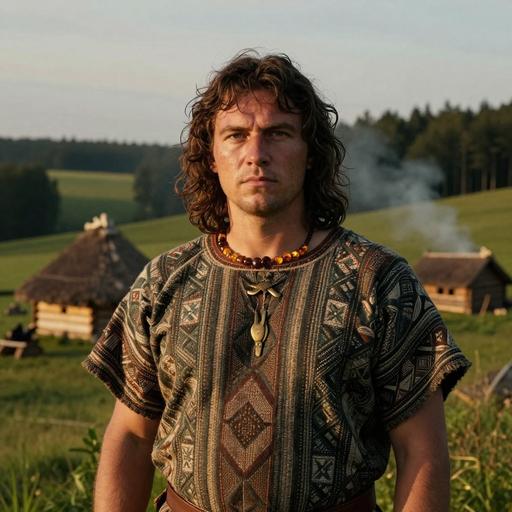
A man buried in Lithuania in the Bronze Age era

Download PDF creates a visual, rasterized copy. Use Print for selectable text and better assistive-technology support.

Loading Report

Preparing your ancestry journey

Preparing the available report content...

Your report will open automatically.

Skip to main content
Reference library / Sample profile

A man buried in Lithuania in the Bronze Age era

Explore the recorded context, genetic comparisons and research behind this reference sample.

LithuaniaBronze Age Lithuania

A reference profile describes this sample. It does not establish a personal or family relationship.

AI portrait reconstruction for A man buried in Lithuania in the Bronze Age era
AI-generated artistic reconstruction, not a photograph of the individual.
Record

Sample details

Recorded details and available lineage markers.

Individual

LBA individual, Lithuania

Sample ID: Turlojiske1

Date Range

928 BCE - 810 BCE

Cultural Period

Bronze Age Lithuania

Biological Sex

Male

mtDNA Haplogroup

T2b

Y-DNA Haplogroup

R-PF6162

Social Role

Pastoralist (AI estimate, era-typical)

Geography

Location

Where this individual was discovered

Country Lithuania
Locality Turlojiškė
Coordinates 54.3620, 23.3330
Chronology

Date range

When this individual lived in the broader context of human history

LBA individual, Lithuania 928 BCE - 810 BCE
Context

Historical context

Background information associated with the reference record.

The Bronze Age in Lithuania, part of the broader Baltic region, spans approximately from 2000 BCE to 500 BCE, a period marked by significant cultural development and external influences. While detailed historical records from this era are sparse, archaeological findings offer a glimpse into the lives of the people inhabiting this region during the Bronze Age.

Geographic and Environmental Context:

Bronze Age Lithuania was characterized by its diverse geography, including lush forests, numerous rivers, and access to the Baltic Sea's coastlines. This environment influenced the lifestyle and subsistence strategies of its inhabitants. The region's rich natural resources, such as amber, played a crucial role in trade, while the fertile land supported agricultural activities.

Cultural and Social Structures:

  1. Settlement Patterns:

    • Inhabitants lived in small, often semi-permanent, communities typically located near rivers or other water sources. These settlements were primarily composed of wooden structures and were organized around family units or small kin groups.
    • Evidence suggests some degree of societal stratification, likely based on wealth, access to resources, and role in the community.
  2. Economy and Trade:

    • Agriculture was central, with communities cultivating crops such as barley, wheat, and rye, alongside livestock raising, including cattle, pigs, and sheep.
    • The Baltic Sea and inland waterways facilitated trade routes, allowing for the exchange of goods like amber, fur, and crafted items with neighboring regions and distant cultures.
    • Amber, abundant in the area, became a highly valued commodity traded across Europe, providing a vital economic link to the cultures of Central and Western Europe, as well as the Mediterranean.
  3. Technology and Craftsmanship:

    • The introduction and utilization of bronze significantly impacted tool and weapon manufacturing, enhancing agricultural efficiency and military capability.
    • Metallurgical skills were advanced, with evidence of local smelting and forging of bronze into weapons, tools, and decorative items.
    • Pottery became more refined, with distinct styles emerging that likely held cultural or regional significance.
  4. Rituals and Beliefs:

    • Religious practices in Bronze Age Lithuania were heavily animistic, worshipping natural elements and involving rituals conducted at sacred sites such as groves, springs, and rivers.
    • Burial customs varied, with some evidence of cremations and tumulus burials, suggesting a developing complexity in beliefs regarding death and the afterlife.
    • The artifacts found in graves indicate a belief in an afterlife, as personal possessions, weapons, and ornaments often accompanied the deceased.
  5. Cultural Interactions:

    • Lithuania's location facilitated interactions with a variety of cultures, including those from Scandinavia, the Central European Urnfield culture, and the expansive Indo-European peoples.
    • These interactions brought new cultural elements and technologies, influencing local practices while contributing to the area's unique cultural synthesis.

Decline and Transition:

By the end of the Bronze Age, the region experienced significant changes, underscored by shifting trade patterns, climatic changes, and the gradual transition into what would become the Iron Age. These factors, combined with evolving cultural and technological advancements, laid the groundwork for the later historical development of the Baltic tribes, particularly the Balts.

The Bronze Age left an indelible mark on Lithuania's cultural landscape, setting the stage for its subsequent historical evolution. Though much remains to be discovered about this era, the archaeological record provides essential insights into the transitional journey from a prehistoric to a more organized and interconnected society.

Analysis

Genetic comparisons

These comparisons show genetic similarity, not identity or origin. The populations listed are those whose genomes show statistical alignment to this ancient individual.

Similarity reflects shared history, not shared identity. These are analytical comparisons, not claims about who this person was.

Modern Genetic Admixture

This analysis compares the DNA profile with present-day reference populations, showing statistical similarity to modern reference populations from different regions. The excavation site records where this individual was found, not a fixed modern genetic identity.

Europe 100.0%
Eastern European 57.6%
Northwestern European 42.4%
Finnish 14.8%
Northwestern European 13.8%
Scandinavian 7.6%
English 6.3%

Closest Modern Populations

These are the modern populations showing the closest statistical alignment to A man buried in Lithuania in the Bronze Age era, ranked by genetic distance. Lower distance values indicate closer statistical similarity. Cross-region similarity can reflect shared ancestry, population movement, continuity, or later admixture.

1
Belarusian
1.4924
Context

Related Samples

This individual exists within a broader network of ancient samples. No ancient genome stands alone.

Individual Culture/Period Date Location Action
Circumpolar Cultures individual, Russia Hunter-Gatherer Russia 6000 BCE Archangelsk. Popovo, Russia View
EMN Narva-o individual, Lithuania Early to Middle Neolithic Narva Culture, Lithuania 5500 BCE Donkalnis, Lithuania View
Mesolithic individual, Lithuania Mesolithic Lithuania 5991 BCE Donkalnis, Lithuania View
EMN Narva individual, Lithuania Early to Middle Neolithic Narva Culture, Lithuania 4718 BCE Donkalnis, Lithuania View
EMN Narva individual, Lithuania Early to Middle Neolithic Narva Culture, Lithuania 5374 BCE Donkalnis, Lithuania View
EMN Narva individual, Estonia Early to Middle Neolithic Narva Culture, Estonia 4776 BCE Kivisaare, Estonia View
LBA Flat Graves individual, Latvia Bronze Age Latvia 796 BCE Kivutkalns, Latvia View
LBA Flat Graves individual, Latvia Bronze Age Latvia 719 BCE Kivutkalns, Latvia View
Baltic individual, Latvia Bronze Age Latvia 407 BCE Kivutkalns, Latvia View
LBA Flat Graves individual, Latvia Bronze Age Latvia 720 BCE Kivutkalns, Latvia View
LBA Flat Graves individual, Latvia Bronze Age Latvia 787 BCE Kivutkalns, Latvia View
LBA Flat Graves individual, Latvia Bronze Age Latvia 788 BCE Kivutkalns, Latvia View
LBA Flat Graves individual, Latvia Bronze Age Latvia 758 BCE Kivutkalns, Latvia View
LBA Flat Graves individual, Latvia Bronze Age Latvia 745 BCE Kivutkalns, Latvia View
LBA Flat Graves individual, Latvia Bronze Age Latvia 799 BCE Kivutkalns, Latvia View
LBA Flat Graves individual, Latvia Bronze Age Latvia 809 BCE Kivutkalns, Latvia View
EMN Narva individual, Lithuania Early to Middle Neolithic Narva Culture, Lithuania 4453 BCE Kretuonas 1B, Lithuania View
European Hunter-Gatherers individual, Lithuania Early to Middle Neolithic Narva Culture, Lithuania 5500 BCE Kretuonas 1B, Lithuania View
EMN Narva individual, Lithuania Early to Middle Neolithic Narva Culture, Lithuania 5500 BCE Kretuonas 1B, Lithuania View
MN individual, Sweden Middle Neolithic Funnel Beaker Culture, Sweden 3945 BCE Kvärlöv. Saxtorp. Skåne, Sweden View
Mesolithic individual, Sweden Hunter-Gatherer Motala, Sweden 5724 BCE Motala. Kanaljorden, Sweden View
LN EBA individual, Sweden Late Neolithic to Bronze Age Sweden 2573 BCE Ölsund. Hälsingland, Sweden View
LN individual, Lithuania Late Neolithic Lithuania 2861 BCE Plinkaigalis, Lithuania View
LN individual, Lithuania Late Neolithic Lithuania 3264 BCE Plinkaigalis, Lithuania View
Arkhangelsk Mesolithic individual, Russia Hunter-Gatherer Popovo, Russia 7500 BCE Popovo. Archangelsk, Russia View
EMN individual, Lithuania Early to Middle Neolithic Narva Culture, Lithuania 4442 BCE Spiginas, Lithuania View
LN individual, Lithuania Late Neolithic Lithuania 2132 BCE Spiginas, Lithuania View
Middle Mesolithic individual, Lithuania Mesolithic Lithuania 6442 BCE Spiginas, Lithuania View
MN-1 individual, Estonia Middle Neolithic Comb Ceramic Culture 1, Estonia 3621 BCE Tamula, Estonia View
MN-2 individual, Estonia Middle Neolithic Comb Ceramic Culture 2, Estonia 3796 BCE Tamula, Estonia View
LBA individual, Lithuania Bronze Age Lithuania 1257 BCE Turlojiškė, Lithuania View
LBA individual, Lithuania Bronze Age Lithuania 928 BCE Turlojiškė, Lithuania View
LBA individual, Lithuania Bronze Age Lithuania 1015 BCE Turlojiškė, Lithuania View
LBA individual, Lithuania Bronze Age Lithuania 2100 BCE Turlojiškė, Lithuania View
Circumpolar Cultures individual, Russia Eastern Hunter-Gatherer, Russia 5500 BCE Yuzhnyy Oleni Ostrov. Karelia, Russia View
EMN Narva individual, Estonia Early to Middle Neolithic Narva Culture, Estonia 4895 BCE Veibri, Estonia View
Indo-European individual, Lithuania Late Neolithic Lithuania 2620 BCE Gyvakarai, Lithuania View
Karelia Mesolithic individual, Russia Yuzhny Oleny Ostrov Culture 5500 BCE Yuzhny Oleniy Ostrov (Republic of Karelia, Medvezhyegorsky District, Velikaya Guba Village), Russia View
Baltic Emn individual, Lithuania 5500 BCE Kretuonas 1B, Lithuania View
Baltic Ln individual, Estonia 2575 BCE Kursi. Jõgeva, Estonia View
Baltic Ln individual, Lithuania 2620 BCE Gyvakarai, Lithuania View
Page 1
Individual Culture/Period Date Location Action
LBA individual, Lithuania Bronze Age Lithuania 1257 BCE Turlojiškė, Lithuania View
LBA individual, Lithuania Bronze Age Lithuania 928 BCE Turlojiškė, Lithuania View
LBA individual, Lithuania Bronze Age Lithuania 1015 BCE Turlojiškė, Lithuania View
LBA individual, Lithuania Bronze Age Lithuania 2100 BCE Turlojiškė, Lithuania View
Page 1
Sources

References

Scientific publications and genetic data that inform this profile.

G25 Coordinates

These coordinates represent a position in genetic space, a tool for comparison, not a conclusion. You can use these to perform custom admixture analysis in G25 Studio.

Turlojiske1,0.13457506,0.1155934,0.0791277,0.07150612,0.03859236,0.02854024,0.01219422,0.01349954,-0.00223744,-0.02783,-0.0051807,-0.00785962,0.01762598,0.02467018,-0.00845424,-0.0015974,-0.00393314,-4.398E-05,0.00216948,0.0011134,-0.00131818,-0.0019757,0.00781206,-0.00065842,-0.00207952
Continue in G25 Studio
Use code for 30% off • Expires Nov 16