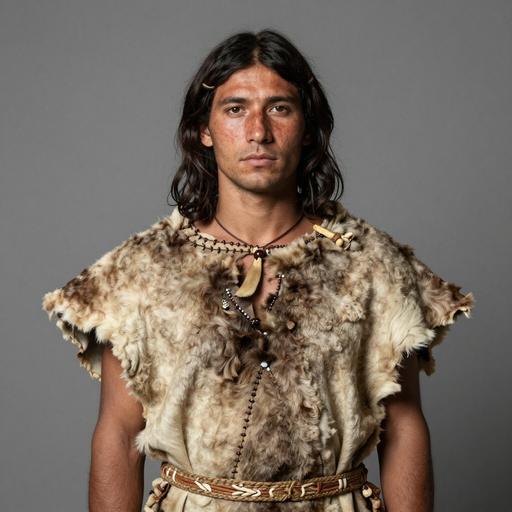
A man buried in Russia in the Mesolithic era

Download PDF creates a visual, rasterized copy. Use Print for selectable text and better assistive-technology support.

Loading Report

Preparing your ancestry journey

Preparing the available report content...

Your report will open automatically.

Skip to main content
Reference library / Sample profile

A man buried in Russia in the Mesolithic era

Explore the recorded context, genetic comparisons and research behind this reference sample.

RussiaHunter-Gatherer Popovo, Russia

A reference profile describes this sample. It does not establish a personal or family relationship.

AI portrait reconstruction for A man buried in Russia in the Mesolithic era
AI-generated artistic reconstruction, not a photograph of the individual.
Record

Sample details

Recorded details and available lineage markers.

Individual

Arkhangelsk Mesolithic individual, Russia

Sample ID: Popovo2

Date Range

7500 BCE - 5000 BCE

Cultural Period

Hunter-Gatherer Popovo, Russia

Biological Sex

Male

mtDNA Haplogroup

U4d

Y-DNA Haplogroup

J-M267

Social Role

Hunter (AI estimate, era-typical)

Geography

Location

Where this individual was discovered

Country Russia
Locality Popovo. Archangelsk
Coordinates 61.2640, 38.9050
Chronology

Date range

When this individual lived in the broader context of human history

Arkhangelsk Mesolithic individual, Russia 7500 BCE - 5000 BCE
Context

Historical context

Background information associated with the reference record.

Region & Environment

Central Russia in the early Holocene featured broad forested zones and networks of rivers and wetlands. Seasonal shifts in temperature and water availability shaped where people could hunt, fish, and gather plant foods.

Historical Context

From roughly the 9th to the 6th millennium BCE, many regions of Eastern Europe saw increasing demographic and cultural differentiation among foraging communities, even as farming spread in some areas. In Central Russia, the Popovo phase fits within a broader pattern of Eastern European hunter-gatherer lifeways.

Populations & Lifeways

Populations were mobile to semi-mobile, likely moving between resource-rich areas as animals migrated and plants ripened. Diet would have combined hunting and fishing with gathered foods. Social organization cannot be reconstructed in detail, but archaeological patterns suggest repeated use of productive landscapes.

Archaeology & Material Culture

Evidence for this period is dominated by stone tools and the residues of daily tasks. Pottery may or may not be present depending on local horizons, but where ceramics occur in the broader region, they often relate to processing and storage. Lithic industries typically show standardized knapping choices consistent with teaching and shared traditions within communities.

Culture & Society

The Popovo culture label reflects stylistic and technological regularities in artifact assemblages. Such consistency implies communication among groups and the maintenance of shared traditions over generations, even without evidence for formal state institutions.

Legacy & Transition

Later in the Holocene, Eastern European trajectories increasingly involved the adoption and spread of farming in some areas and continuing forager traditions in others. The Popovo hunter-gatherer phase therefore represents a foundation for understanding how communities responded to environmental change and shifting regional contacts before major subsistence transitions.

Analysis

Genetic comparisons

These comparisons show genetic similarity, not identity or origin. The populations listed are those whose genomes show statistical alignment to this ancient individual.

Similarity reflects shared history, not shared identity. These are analytical comparisons, not claims about who this person was.

Modern Genetic Admixture

This analysis compares the DNA profile with present-day reference populations, showing statistical similarity to modern reference populations from different regions. The excavation site records where this individual was found, not a fixed modern genetic identity.

Europe 89.5%
Eastern European 57.0%
Northwestern European 32.6%
Finnish 16.9%
Scandinavian 9.2%
English 3.6%
Northwestern European 2.9%
America 10.5%
America 10.5%
Native American 10.5%

Closest Modern Populations

These are the modern populations showing the closest statistical alignment to A man buried in Russia in the Mesolithic era, ranked by genetic distance. Lower distance values indicate closer statistical similarity. Cross-region similarity can reflect shared ancestry, population movement, continuity, or later admixture.

1
Komi A
3.5438
2
Russian Leshukonsky
3.6741
3
Tatar Mishar
3.8227
4
Russian Pinezhsky
4.6366
5
Russian Pinega
4.6618
6
Russian Krasnoborsky
5.1400
7
Vepsian
5.2674
8
Finnish North
5.5366
9
Mordovian
5.5478
10
Karelian
5.5671
Context

Related Samples

This individual exists within a broader network of ancient samples. No ancient genome stands alone.

Individual Culture/Period Date Location Action
Circumpolar Cultures individual, Russia Hunter-Gatherer Russia 6000 BCE Archangelsk. Popovo, Russia View
EMN Narva-o individual, Lithuania Early to Middle Neolithic Narva Culture, Lithuania 5500 BCE Donkalnis, Lithuania View
Mesolithic individual, Lithuania Mesolithic Lithuania 5991 BCE Donkalnis, Lithuania View
EMN Narva individual, Lithuania Early to Middle Neolithic Narva Culture, Lithuania 4718 BCE Donkalnis, Lithuania View
EMN Narva individual, Lithuania Early to Middle Neolithic Narva Culture, Lithuania 5374 BCE Donkalnis, Lithuania View
EMN Narva individual, Estonia Early to Middle Neolithic Narva Culture, Estonia 4776 BCE Kivisaare, Estonia View
LBA Flat Graves individual, Latvia Bronze Age Latvia 796 BCE Kivutkalns, Latvia View
LBA Flat Graves individual, Latvia Bronze Age Latvia 719 BCE Kivutkalns, Latvia View
Baltic individual, Latvia Bronze Age Latvia 407 BCE Kivutkalns, Latvia View
LBA Flat Graves individual, Latvia Bronze Age Latvia 720 BCE Kivutkalns, Latvia View
LBA Flat Graves individual, Latvia Bronze Age Latvia 787 BCE Kivutkalns, Latvia View
LBA Flat Graves individual, Latvia Bronze Age Latvia 788 BCE Kivutkalns, Latvia View
LBA Flat Graves individual, Latvia Bronze Age Latvia 758 BCE Kivutkalns, Latvia View
LBA Flat Graves individual, Latvia Bronze Age Latvia 745 BCE Kivutkalns, Latvia View
LBA Flat Graves individual, Latvia Bronze Age Latvia 799 BCE Kivutkalns, Latvia View
LBA Flat Graves individual, Latvia Bronze Age Latvia 809 BCE Kivutkalns, Latvia View
EMN Narva individual, Lithuania Early to Middle Neolithic Narva Culture, Lithuania 4453 BCE Kretuonas 1B, Lithuania View
European Hunter-Gatherers individual, Lithuania Early to Middle Neolithic Narva Culture, Lithuania 5500 BCE Kretuonas 1B, Lithuania View
EMN Narva individual, Lithuania Early to Middle Neolithic Narva Culture, Lithuania 5500 BCE Kretuonas 1B, Lithuania View
MN individual, Sweden Middle Neolithic Funnel Beaker Culture, Sweden 3945 BCE Kvärlöv. Saxtorp. Skåne, Sweden View
Mesolithic individual, Sweden Hunter-Gatherer Motala, Sweden 5724 BCE Motala. Kanaljorden, Sweden View
LN EBA individual, Sweden Late Neolithic to Bronze Age Sweden 2573 BCE Ölsund. Hälsingland, Sweden View
LN individual, Lithuania Late Neolithic Lithuania 2861 BCE Plinkaigalis, Lithuania View
LN individual, Lithuania Late Neolithic Lithuania 3264 BCE Plinkaigalis, Lithuania View
Arkhangelsk Mesolithic individual, Russia Hunter-Gatherer Popovo, Russia 7500 BCE Popovo. Archangelsk, Russia View
EMN individual, Lithuania Early to Middle Neolithic Narva Culture, Lithuania 4442 BCE Spiginas, Lithuania View
LN individual, Lithuania Late Neolithic Lithuania 2132 BCE Spiginas, Lithuania View
Middle Mesolithic individual, Lithuania Mesolithic Lithuania 6442 BCE Spiginas, Lithuania View
MN-1 individual, Estonia Middle Neolithic Comb Ceramic Culture 1, Estonia 3621 BCE Tamula, Estonia View
MN-2 individual, Estonia Middle Neolithic Comb Ceramic Culture 2, Estonia 3796 BCE Tamula, Estonia View
LBA individual, Lithuania Bronze Age Lithuania 1257 BCE Turlojiškė, Lithuania View
LBA individual, Lithuania Bronze Age Lithuania 928 BCE Turlojiškė, Lithuania View
LBA individual, Lithuania Bronze Age Lithuania 1015 BCE Turlojiškė, Lithuania View
LBA individual, Lithuania Bronze Age Lithuania 2100 BCE Turlojiškė, Lithuania View
Circumpolar Cultures individual, Russia Eastern Hunter-Gatherer, Russia 5500 BCE Yuzhnyy Oleni Ostrov. Karelia, Russia View
EMN Narva individual, Estonia Early to Middle Neolithic Narva Culture, Estonia 4895 BCE Veibri, Estonia View
Indo-European individual, Lithuania Late Neolithic Lithuania 2620 BCE Gyvakarai, Lithuania View
Karelia Mesolithic individual, Russia Yuzhny Oleny Ostrov Culture 5500 BCE Yuzhny Oleniy Ostrov (Republic of Karelia, Medvezhyegorsky District, Velikaya Guba Village), Russia View
Baltic Emn individual, Lithuania 5500 BCE Kretuonas 1B, Lithuania View
Baltic Ln individual, Estonia 2575 BCE Kursi. Jõgeva, Estonia View
Baltic Ln individual, Lithuania 2620 BCE Gyvakarai, Lithuania View
Page 1
Individual Culture/Period Date Location Action
Arkhangelsk Mesolithic individual, Russia Hunter-Gatherer Popovo, Russia 7500 BCE Popovo. Archangelsk, Russia View
Page 1
Sources

References

Scientific publications and genetic data that inform this profile.

G25 Coordinates

These coordinates represent a position in genetic space, a tool for comparison, not a conclusion. You can use these to perform custom admixture analysis in G25 Studio.

Popovo2,0.11951148,0.04741406,0.08016326,0.06532334,0.00907086,0.01522898,0.00191538,0.00541924,-0.00490264,-0.02912626,0.00910894,-0.0083167,0.01313818,-0.00353672,-0.0086421,-0.01191912,-0.01091752,-0.00270722,-0.0084127,-0.00966434,-0.00057402,0.00432666,-0.01577258,0.00672558,-0.00348611
Continue in G25 Studio
Use code for 30% off • Expires Nov 16