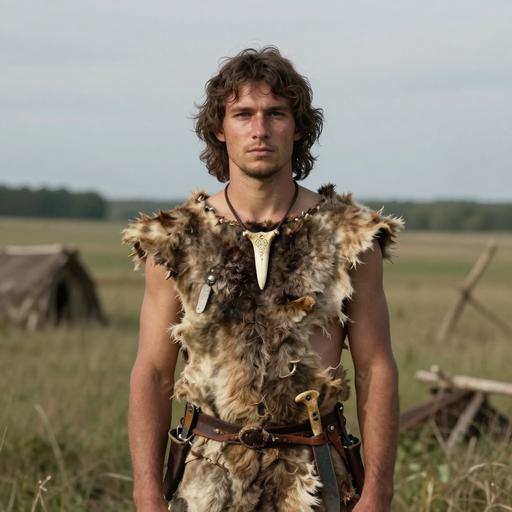
A man buried in Lithuania in the Mesolithic era

Download PDF creates a visual, rasterized copy. Use Print for selectable text and better assistive-technology support.

Loading Report

Preparing your ancestry journey

Preparing the available report content...

Your report will open automatically.

Skip to main content
Reference library / Sample profile

A man buried in Lithuania in the Mesolithic era

Explore the recorded context, genetic comparisons and research behind this reference sample.

LithuaniaLithuania Mesolithic

A reference profile describes this sample. It does not establish a personal or family relationship.

AI portrait reconstruction for A man buried in Lithuania in the Mesolithic era
AI-generated artistic reconstruction, not a photograph of the individual.
Record

Sample details

Recorded details and available lineage markers.

Individual

Mesolithic individual, Lithuania

Sample ID: Donkalnis4

Date Range

5991 BCE - 5736 BCE

Cultural Period

Lithuania Mesolithic

Biological Sex

Male

mtDNA Haplogroup

U5b2c1

Y-DNA Haplogroup

I-P215

Social Role

Hunter (AI estimate, era-typical)

Geography

Location

Where this individual was discovered

Country Lithuania
Locality Donkalnis
Coordinates 55.8080, 24.4220
Chronology

Date range

When this individual lived in the broader context of human history

Mesolithic individual, Lithuania 5991 BCE - 5736 BCE
Context

Historical context

Background information associated with the reference record.

Region & Environment

Mesolithic Lithuania occupied a landscape of extensive woodland, river valleys, and large lake systems, shaped by post-glacial climate change. Rich wetland and aquatic zones supported fishing and water-adjacent foraging, while forest resources contributed to hunting and gathering. Over the course of the Mesolithic, environmental conditions became relatively stable, enabling repeated seasonal use of familiar areas.

Historical Context

In northeastern Europe, the Mesolithic is characterized by hunter-gatherer lifeways rather than farming. Cultural variability is expressed through regional lithic traditions and site organization, and archaeologists often distinguish complexes such as Kunda to describe shared artifact patterns. These groups were not isolated: similarities in toolmaking traditions and raw-material choices suggest contact or shared knowledge across broader areas.

Populations & Lifeways

Populations were primarily mobile or semi-mobile, moving between resource zones as seasons changed. People relied on a broad-spectrum subsistence strategy:

  • fishing and collecting aquatic foods in lake and river settings
  • hunting animals in and around forest habitats
  • gathering plant foods and other forest resources Household-scale activities took place at temporary or repeatedly used locations, including knapping, food processing, and tool maintenance.

Archaeology & Material Culture

Lithic technology is central to Mesolithic archaeology in Lithuania. Stone tools and debitage reflect tasks associated with cutting, scraping, and preparing animal products and plant foods. Site deposits often preserve evidence of repeated visits, and artifact assemblages are used to relate locations to the Kunda cultural complex. Organic materials rarely survive in all contexts, so interpretations commonly rely on what stone and site stratigraphy can show.

Culture & Society

Kunda-associated material patterns suggest communities that shared conventions in tool production and possibly broader social ties. Social structure is difficult to reconstruct directly, but repeated use of places and the maintenance of tool traditions imply teaching and cooperation within networks of households. Variation between sites may reflect differences in seasonality, local resource availability, or the length of stays.

Legacy & Transition

Mesolithic lifeways in Lithuania ultimately gave way to Neolithic farming communities, bringing new technologies, pottery traditions, and changing settlement patterns. The transition represents a long regional process rather than an abrupt replacement: later periods inherit some aspects of how landscapes were used, while adopting fundamentally new approaches to food production and material culture.

Analysis

Genetic comparisons

These comparisons show genetic similarity, not identity or origin. The populations listed are those whose genomes show statistical alignment to this ancient individual.

Similarity reflects shared history, not shared identity. These are analytical comparisons, not claims about who this person was.

Modern Genetic Admixture

This analysis compares the DNA profile with present-day reference populations, showing statistical similarity to modern reference populations from different regions. The excavation site records where this individual was found, not a fixed modern genetic identity.

Europe 96.0%
Northwestern European 96.0%
Scandinavian 28.1%
Finnish 24.8%
Northwestern European 22.1%
English 21.1%
America 4.0%
America 4.0%
Native American 4.0%

Closest Modern Populations

These are the modern populations showing the closest statistical alignment to A man buried in Lithuania in the Mesolithic era, ranked by genetic distance. Lower distance values indicate closer statistical similarity. Cross-region similarity can reflect shared ancestry, population movement, continuity, or later admixture.

1
Polish Kashubian
2.3151
2
Polish
2.5949
3
Swedish
2.8267
4
Czech
2.8888
5
German Hamburg
3.2031
6
Polish Silesian
3.2996
7
German East
3.3210
8
Cossack Ukrainian
3.3444
9
Ukrainian Rivne
3.3447
10
Slovakian
3.3986
Context

Related Samples

This individual exists within a broader network of ancient samples. No ancient genome stands alone.

Individual Culture/Period Date Location Action
Circumpolar Cultures individual, Russia Hunter-Gatherer Russia 6000 BCE Archangelsk. Popovo, Russia View
EMN Narva-o individual, Lithuania Early to Middle Neolithic Narva Culture, Lithuania 5500 BCE Donkalnis, Lithuania View
Mesolithic individual, Lithuania Mesolithic Lithuania 5991 BCE Donkalnis, Lithuania View
EMN Narva individual, Lithuania Early to Middle Neolithic Narva Culture, Lithuania 4718 BCE Donkalnis, Lithuania View
EMN Narva individual, Lithuania Early to Middle Neolithic Narva Culture, Lithuania 5374 BCE Donkalnis, Lithuania View
EMN Narva individual, Estonia Early to Middle Neolithic Narva Culture, Estonia 4776 BCE Kivisaare, Estonia View
LBA Flat Graves individual, Latvia Bronze Age Latvia 796 BCE Kivutkalns, Latvia View
LBA Flat Graves individual, Latvia Bronze Age Latvia 719 BCE Kivutkalns, Latvia View
Baltic individual, Latvia Bronze Age Latvia 407 BCE Kivutkalns, Latvia View
LBA Flat Graves individual, Latvia Bronze Age Latvia 720 BCE Kivutkalns, Latvia View
LBA Flat Graves individual, Latvia Bronze Age Latvia 787 BCE Kivutkalns, Latvia View
LBA Flat Graves individual, Latvia Bronze Age Latvia 788 BCE Kivutkalns, Latvia View
LBA Flat Graves individual, Latvia Bronze Age Latvia 758 BCE Kivutkalns, Latvia View
LBA Flat Graves individual, Latvia Bronze Age Latvia 745 BCE Kivutkalns, Latvia View
LBA Flat Graves individual, Latvia Bronze Age Latvia 799 BCE Kivutkalns, Latvia View
LBA Flat Graves individual, Latvia Bronze Age Latvia 809 BCE Kivutkalns, Latvia View
EMN Narva individual, Lithuania Early to Middle Neolithic Narva Culture, Lithuania 4453 BCE Kretuonas 1B, Lithuania View
European Hunter-Gatherers individual, Lithuania Early to Middle Neolithic Narva Culture, Lithuania 5500 BCE Kretuonas 1B, Lithuania View
EMN Narva individual, Lithuania Early to Middle Neolithic Narva Culture, Lithuania 5500 BCE Kretuonas 1B, Lithuania View
MN individual, Sweden Middle Neolithic Funnel Beaker Culture, Sweden 3945 BCE Kvärlöv. Saxtorp. Skåne, Sweden View
Mesolithic individual, Sweden Hunter-Gatherer Motala, Sweden 5724 BCE Motala. Kanaljorden, Sweden View
LN EBA individual, Sweden Late Neolithic to Bronze Age Sweden 2573 BCE Ölsund. Hälsingland, Sweden View
LN individual, Lithuania Late Neolithic Lithuania 2861 BCE Plinkaigalis, Lithuania View
LN individual, Lithuania Late Neolithic Lithuania 3264 BCE Plinkaigalis, Lithuania View
Arkhangelsk Mesolithic individual, Russia Hunter-Gatherer Popovo, Russia 7500 BCE Popovo. Archangelsk, Russia View
EMN individual, Lithuania Early to Middle Neolithic Narva Culture, Lithuania 4442 BCE Spiginas, Lithuania View
LN individual, Lithuania Late Neolithic Lithuania 2132 BCE Spiginas, Lithuania View
Middle Mesolithic individual, Lithuania Mesolithic Lithuania 6442 BCE Spiginas, Lithuania View
MN-1 individual, Estonia Middle Neolithic Comb Ceramic Culture 1, Estonia 3621 BCE Tamula, Estonia View
MN-2 individual, Estonia Middle Neolithic Comb Ceramic Culture 2, Estonia 3796 BCE Tamula, Estonia View
LBA individual, Lithuania Bronze Age Lithuania 1257 BCE Turlojiškė, Lithuania View
LBA individual, Lithuania Bronze Age Lithuania 928 BCE Turlojiškė, Lithuania View
LBA individual, Lithuania Bronze Age Lithuania 1015 BCE Turlojiškė, Lithuania View
LBA individual, Lithuania Bronze Age Lithuania 2100 BCE Turlojiškė, Lithuania View
Circumpolar Cultures individual, Russia Eastern Hunter-Gatherer, Russia 5500 BCE Yuzhnyy Oleni Ostrov. Karelia, Russia View
EMN Narva individual, Estonia Early to Middle Neolithic Narva Culture, Estonia 4895 BCE Veibri, Estonia View
Indo-European individual, Lithuania Late Neolithic Lithuania 2620 BCE Gyvakarai, Lithuania View
Karelia Mesolithic individual, Russia Yuzhny Oleny Ostrov Culture 5500 BCE Yuzhny Oleniy Ostrov (Republic of Karelia, Medvezhyegorsky District, Velikaya Guba Village), Russia View
Baltic Emn individual, Lithuania 5500 BCE Kretuonas 1B, Lithuania View
Baltic Ln individual, Estonia 2575 BCE Kursi. Jõgeva, Estonia View
Baltic Ln individual, Lithuania 2620 BCE Gyvakarai, Lithuania View
Page 1
Individual Culture/Period Date Location Action
Mesolithic individual, Lithuania Mesolithic Lithuania 5991 BCE Donkalnis, Lithuania View
Middle Mesolithic individual, Lithuania Mesolithic Lithuania 6442 BCE Spiginas, Lithuania View
European Hunter-Gatherers individual, Lithuania Mesolithic Lithuania 6464 BCE Donkalnis (Telsiai County, Telšių rajono savivaldybė), Lithuania View
Page 1
Sources

References

Scientific publications and genetic data that inform this profile.

G25 Coordinates

These coordinates represent a position in genetic space, a tool for comparison, not a conclusion. You can use these to perform custom admixture analysis in G25 Studio.

Donkalnis4,0.1366402,0.12710014,0.0712772,0.06588984,0.04018946,0.03017252,0.00766936,0.01003246,0.0028985,-0.01583586,-0.00708942,-0.00097426,0.00876168,0.0102889,0.0055447,0.00539126,-0.00552696,0.0025554,0.00266458,0.00230286,0.00232156,-0.00160764,0.00791134,0.00488166,-0.00013425
Continue in G25 Studio
Use code for 30% off • Expires Nov 16