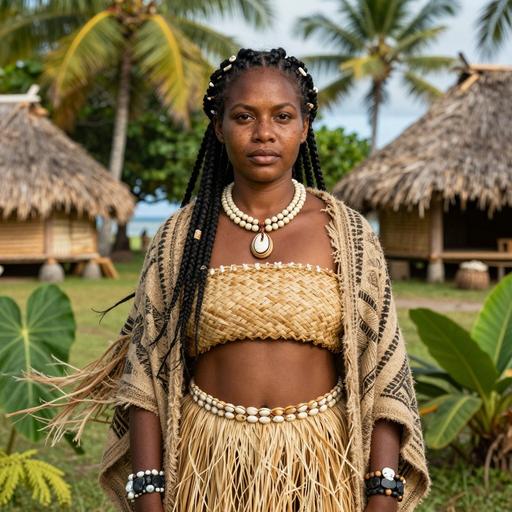
Vanuatu, an archipelago located in the South Pacific Ocean, boasts a rich and diverse history rooted in Austronesian culture. Approximately 1,100 years ago, around the early 10th century CE, Vanuatu was home to communities that were part of the Lapita cultural complex. This period was characterized by a significant degree of social and cultural development influenced by earlier Austronesian-speaking settlers who had navigated vast oceanic distances.
Geography and Environment
Vanuatu consists of around 82 islands, featuring diverse landscapes that range from volcanic mountains and dense rainforests to coral reefs and sandy beaches. The climate is tropical, with a wet season and a dry season, which has historically influenced agricultural and maritime practices. The environment allowed for both subsistence farming and fishing, supporting a relatively stable, though dispersed population.
Social Structure and Community Life
The social structure in Vanuatu 1,100 years ago was organized into small, clan-based communities. These clans were typically led by chiefs, who held significant influence and were often regarded as spiritual leaders as well. The kinship system was pivotal, and social organization was heavily dependent on extended family ties and inter-clan relations.
Communal life was the norm, with communal houses serving as the focal point for social and ceremonial gatherings. Society placed a high value on communal cooperation, which was essential for survival in the island environment.
Economy and Subsistence
Subsistence in Vanuatu during this period was primarily agricultural, supplemented by fishing and foraging. Key crops included taro, yams, and bananas, all of which are well-suited to the island's tropical climate. The cultivation of these crops was integral to the social and cultural practices of the communities. Additionally, pig farming was an important economic activity, with pigs often being used as a form of currency and in ceremonial exchanges.
Fishing, both coastal and deep-sea, was a vital component of the economy. The rich marine environment provided a bounty of fish and shellfish, supporting dietary needs and trade. Skills in navigation and boat-making were well-developed, showcasing the Austronesian legacy of maritime prowess.
Art, Culture, and Religion
The people of Vanuatu had a vibrant cultural life characterized by complex rituals, art forms, and spiritual beliefs. They were known for their pottery, though by 1,100 years ago, the highly distinctive Lapita pottery style was evolving. Artistic expression often took the form of intricate wood carvings, masks, and body adornments.
Religion and spirituality were deeply embedded in daily life. The belief system was generally animistic, with a reverence for ancestors and natural spirits thought to inhabit the landscape. Ceremonial activities and rituals were conducted to honor these spirits, ensure agricultural fertility, and maintain social harmony.
Music and dance were integral to ceremonial practices, with traditional songs and dances performed during significant community events. These art forms also served as a means of oral history transmission, preserving mythologies and ancestral knowledge.
Technology and Craftsmanship
Technological practices in Vanuatu at this time largely revolved around the skills needed for survival and cultural expression. This included the crafting of outrigger canoes for ocean navigation, demonstrating the sophisticated maritime technology inherited from Austronesian ancestors.
Other crafts included weaving, with plant fibers used to create baskets, mats, and clothing. The use of stone tools for farming and construction was common, although there is evidence of early metal use occurring in later periods through trade contacts.
Trade and External Contacts
While Vanuatu was relatively isolated, trade contacts with neighboring island groups were not uncommon. Maritime trade routes facilitated the exchange of goods such as pottery, shell ornaments, feathers, and precious stones. These exchanges were not only economic but also aided in spreading cultural ideas and practices across the region.
Overall, Vanuatu 1,100 years ago was a society rich in cultural traditions and deeply interconnected with its environment. The enduring legacy of the Austronesian peoples is evident in the language, social structure, and maritime skills that have been passed down through generations and continue to shape the cultural identity of Vanuatu today.