Menu
Currency
Main
Store
Blog

Loading Report

Preparing your ancestry journey

Connecting to ancient matches...

Preparing your report

Skip to main content
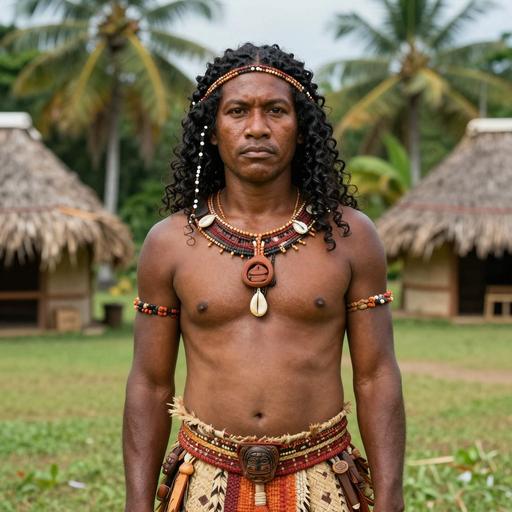
Portrait reconstruction of A man buried in Vanuatu in the Early Prehistoric era
Ancient Individual

A man buried in Vanuatu in the Early Prehistoric era

A man buried in Vanuatu during the Vanuatu 2,600 Years Ago

A fragment of the ancient world, preserved across millennia in strands of DNA.

MAL004
772 BCE - 421 BCE
Male
Vanuatu
Scroll to begin
Chapter I

Identity

The biological and cultural markers that define this ancient individual

Sample ID

MAL004

Date Range

772 BCE - 421 BCE

Cultural Period

Vanuatu 2,600 Years Ago

Biological Sex

Male

mtDNA Haplogroup

B4a1a1a

Y-DNA Haplogroup

M-M5

Chapter II

Place

Where this individual was discovered

Country Vanuatu
Locality Malakula
Chapter III

Time

When this individual lived in the broader context of human history

MAL004 772 BCE - 421 BCE
Chapter IV

Story

The narrative of this ancient life

Vanuatu, an island nation in the South Pacific Ocean, is known for its rich cultural history and vibrant indigenous traditions. The period around 2,600 years ago marks an important era in the history of Vanuatu as it was a time of early settlement and development of the Lapita culture, which is a significant phase in the Austronesian expansion across the Pacific.

Historical Context

Around 2,600 years ago, Vanuatu was part of the broader migration and settlement patterns of Austronesian-speaking peoples. These migrations were characterized by the seafaring prowess of the Austronesians, who originated from Taiwan and moved through the Philippines, Indonesia, Melanesia, and into the broader Pacific. The Lapita people, as part of this cultural and migratory wave, played a key role in the settlement of Vanuatu.

Lapita Culture

1. Pottery: The Lapita culture is particularly renowned for its intricately decorated pottery, which is often used as a defining characteristic of the culture in archaeological studies. These ceramics were typically large, used for cooking and storage, and featured elaborate geometric designs. The pottery’s design reflects a high degree of skill and artistry, indicative of a complex society with artistic and ceremonial concerns.

2. Social Structure: Lapita society likely had a complex social structure. Evidence from burial sites suggests a stratified society with social differentiation. The presence of grave goods, such as shells and personal adornments, points to the existence of hierarchical distinctions based on status or role within the community.

3. Subsistence and Economy: The Lapita people were adept agriculturalists and fishermen. They cultivated root crops like taro and yam and engaged in fishing and shellfishing, indicating their reliance on both terrestrial and marine resources. Their economy was also supplemented by the domestication of animals such as pigs, dogs, and chickens, which were likely introduced to Vanuatu during this period.

4. Navigation and Trade: One of the most remarkable aspects of the Lapita culture was their navigational skills. They used outrigger canoes to traverse the vast Pacific Ocean, facilitating not only exploration and settlement but also trade between islands. This trade network allowed for the exchange of goods, ideas, and cultural practices across significant distances.

Settlements and Architecture

Settlements during this period were typically coastal, taking advantage of the rich marine resources. Archaeological evidence suggests that Lapita villages consisted of stilt houses, which were designed to handle both the tropical climate and occasional flooding. These structures were typically made from locally sourced materials such as timber, pandanus leaves, and coconut fiber.

Cultural Practices

1. Art and Symbolism: The artistic endeavors of the Lapita people went beyond pottery. Although specific details about their broader artistic practices are not fully known due to the perishable nature of organic materials, it is likely that they engaged in tattooing, body ornamentation, and the production of items from wood and bone.

2. Rituals and Beliefs: The Lapita culture's complex social structure likely included rich spiritual beliefs and ritual practices. The presence of ceremonial sites and artifacts suggests that they held religious or spiritual ceremonies. These rituals might have included ancestor worship, as evidenced by the veneration of significant leaders or community members through elaborate burials.

Linguistic Heritage

The language spoken by the Lapita people is an ancestor of the many Austronesian languages found in Vanuatu today. Linguistic studies suggest a continuity of Austronesian linguistic traits, influencing the development of modern languages in the region.

Conclusion

Vanuatu 2,600 years ago, within the context of the Lapita culture, represents a crucial epoch in Pacific history, characterized by migration, settlement, and cultural development. This period laid the foundations for the diverse cultural landscape that defines Vanuatu today, with its unique blend of linguistic, artistic, and social traditions inherited from these early Austronesian settlers. Archaeological and anthropological research continues to uncover the layers of history from this era, offering a deeper understanding of the origins and evolution of modern-day Vanuatu.

Context

Related Samples

This individual exists within a broader network of ancient samples. No ancient genome stands alone.

Sample ID Culture/Period Date Location Action
FUT002 Vanuatu 1,200 Years Ago 651 CE Futuna, Vanuatu View
FUT006 Vanuatu 1,200 Years Ago 680 CE Futuna, Vanuatu View
FUT007 Vanuatu 1,200 Years Ago 681 CE Futuna, Vanuatu View
LHA001 Tonga 800 Years Ago 1034 CE Tongatapu, Tonga View
MAL002 Vanuatu 2,500 Years Ago 755 BCE Malakula, Vanuatu View
MAL004 Vanuatu 2,600 Years Ago 772 BCE Malakula, Vanuatu View
MAL007 Vanuatu 2,000 Years Ago 163 BCE Malakula, Vanuatu View
TAN001 Vanuatu 200 Years Ago 1661 CE Tanna, Vanuatu View
TAN002 Vanuatu 2,500 Years Ago 680 BCE Tanna, Vanuatu View
TAP003 French Polynesia 400 Years Ago 1508 CE French Polynesia. Ra'iatea, French Polynesia View
FUT001 Vanuatu 1,100 Years Ago 688 CE Futuna, Vanuatu View
MAI002 Solomon Islands 500 Years Ago 1431 CE Malaita, Solomon Islands View
MAL001 Vanuatu 2,200 Years Ago 399 BCE Malakula, Vanuatu View
MAL006 Vanuatu 2,700 Years Ago 811 BCE Malakula, Vanuatu View
MAL008 Vanuatu 2,200 Years Ago 399 BCE Malakula, Vanuatu View
TAP002 French Polynesia 200 Years Ago 1657 CE French Polynesia. Ra'iatea, French Polynesia View
TAP004 French Polynesia 200 Years Ago 1645 CE French Polynesia. Ra'iatea, French Polynesia View
TON001 Tonga 2,500 Years Ago 850 BCE Talasiu site. Tongatapu, Tonga View
TON002 Tonga 2,500 Years Ago 850 BCE Talasiu site. Tongatapu, Tonga View
FUT001 688 CE Futuna, Vanuatu View
MAI002 1431 CE Malaita, Solomon Islands View
MAL001 399 BCE Malakula, Vanuatu View
MAL006 811 BCE Malakula, Vanuatu View
MAL008 399 BCE Malakula, Vanuatu View
TAP002 1657 CE French Polynesia. Ra'iatea, French Polynesia View
TAP004 1645 CE French Polynesia. Ra'iatea, French Polynesia View
TON001 850 BCE Talasiu site. Tongatapu, Tonga View
TON002 850 BCE Talasiu site. Tongatapu, Tonga View
Sample ID Culture/Period Date Location Action
MAL004 Vanuatu 2,600 Years Ago 772 BCE Malakula, Vanuatu View
Sources

References

Scientific publications and genetic data that inform this profile.

Scientific Publication

Language continuity despite population replacement in Remote Oceania

Authors Posth C, Nägele K, Colleran H, Valentin F, Bedford S et al.
Abstract

Recent genomic analyses show that the earliest peoples reaching Remote Oceania-associated with Austronesian-speaking Lapita culture-were almost completely East Asian, without detectable Papuan ancestry. However, Papuan-related genetic ancestry is found across present-day Pacific populations, indicating that peoples from Near Oceania have played a significant, but largely unknown, ancestral role. Here, new genome-wide data from 19 ancient South Pacific individuals provide direct evidence of a so-far undescribed Papuan expansion into Remote Oceania starting ~2,500 yr BP, far earlier than previously estimated and supporting a model from historical linguistics. New genome-wide data from 27 contemporary ni-Vanuatu demonstrate a subsequent and almost complete replacement of Lapita-Austronesian by Near Oceanian ancestry. Despite this massive demographic change, incoming Papuan languages did not replace Austronesian languages. Population replacement with language continuity is extremely rare-if not unprecedented-in human history. Our analyses show that rather than one large-scale event, the process was incremental and complex, with repeated migrations and sex-biased admixture with peoples from the Bismarck Archipelago.