Menu
Currency
Main
Store
Blog

Loading Report

Preparing your ancestry journey

Connecting to ancient matches...

Preparing your report

Skip to main content
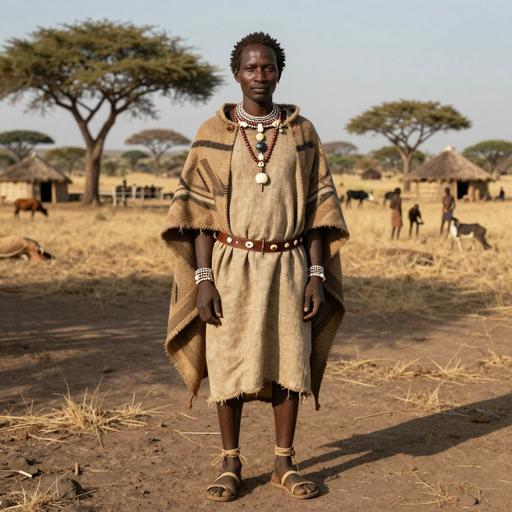
Portrait reconstruction of A man buried in Botswana in the Early Iron Age era
Ancient Individual

A man buried in Botswana in the Early Iron Age era

A man buried in Botswana during the Xaro Early Iron Age in Botswana

A fragment of the ancient world, preserved across millennia in strands of DNA.

XAR002
700 CE - 1000 CE
Male
Botswana
Scroll to begin
Chapter I

Identity

The biological and cultural markers that define this ancient individual

Sample ID

XAR002

Date Range

700 CE - 1000 CE

Cultural Period

Xaro Early Iron Age in Botswana

Biological Sex

Male

mtDNA Haplogroup

L0k1a2

Y-DNA Haplogroup

E1b1b1b2b

Social Role

Pastoralist (AI estimate, era-typical)

Chapter II

Place

Where this individual was discovered

Country Botswana
Locality Xaro
Chapter III

Time

When this individual lived in the broader context of human history

XAR002 700 CE - 1000 CE
Chapter IV

Story

The narrative of this ancient life

The Xaro Early Iron Age in Botswana marks a significant period in the cultural and technological evolution of the region, primarily associated with the spread of Bantu-speaking peoples. This era, typically dated from around the beginning of the first millennium CE, is noted for its transformation in agricultural practices, metallurgy, and settlement patterns, reflecting broader changes across Southern Africa.

Settlement Patterns and Architecture

During the Xaro Early Iron Age, communities began to establish more permanent settlements, often situated along riverbanks or near water sources, which facilitated access to water for agriculture and daily living. The typical settlement was characterized by round or oval huts, constructed using materials such as wood, thatch, and clay. These dwellings were often organized in a circular pattern around a central space, which may have served communal or livestock-keeping purposes.

Social Organization and Society

Xaro societies were likely small, kin-based communities with a relatively egalitarian social structure, although some stratification may have existed as communities grew larger and more complex. Leadership roles were probably linked to lineage and wisdom, with influential individuals guiding communal decisions. The introduction of agriculture likely led to changes in social organization as the division of labor became more pronounced.

Economy and Subsistence

The Xaro Early Iron Age marked a transition from foraging to mixed farming economies. Communities engaged in crop cultivation, growing cereals such as millet and sorghum, which were well-suited to the semi-arid climate of Botswana. The introduction of iron tools during this period revolutionized agricultural practices, enabling more efficient land clearing and cultivation.

Livestock, including cattle, goats, and sheep, played a crucial role in the economy. Cattle, in particular, were a measure of wealth and status and were integral to social practices such as bride price negotiations and communal feasting. Hunting and gathering still supplemented the diet, providing protein and other nutrients.

Metallurgy and Technological Advancements

One of the hallmark features of the Xaro Early Iron Age is the adoption of iron metallurgy. This technological advancement had far-reaching effects on the communities, allowing for the production of durable and efficient tools and weapons. The presence of iron smelting sites and furnaces provides archaeological evidence of these practices, with communities utilizing locally available iron ore to produce tools such as hoes, axes, and spears.

Cultural and Artistic Expressions

The Xaro Early Iron Age communities exhibited a variety of cultural expressions, including pottery, oral traditions, and possibly rock art. Pottery from this era is characterized by specific decorative styles and techniques, providing insights into both everyday life and more symbolic cultural practices. The designs often featured incised or impressed decorations and were used for domestic purposes as well as rituals.

The art and oral traditions of the Xaro period likely served important roles in cultural continuity, education, and social cohesion, preserving history, cosmology, and communal values.

Interaction and Trade

Trade networks expanded significantly during the Xaro Early Iron Age, facilitated by the mobility of Bantu-speaking peoples. These networks not only enabled the exchange of goods such as metals, pottery, and agricultural produce but also facilitated cultural and technological diffusion. The movement of people and ideas contributed to the dynamic and interconnected cultural landscape in Southern Africa.

Legacy and Influence

The Xaro Early Iron Age laid important foundations for subsequent cultural developments in Botswana and the broader Southern African region. The influences of this era are observed in later Iron Age societies, which continued to expand and adapt agriculture, metallurgy, and social structures.

In summary, the Xaro Early Iron Age in Botswana represents a transformative period characterized by technological innovation, shifts in subsistence strategies, and evolving social organizations. As a part of the broader Bantu expansion, these communities contributed to the rich cultural mosaic that defines Southern Africa today.

Context

Related Samples

This individual exists within a broader network of ancient samples. No ancient genome stands alone.

Sample ID Culture/Period Date Location Action
KPL001 Kakapel Late Stone Age Kansyore in Kenya 2027 BCE Kakapel, Kenya View
LUK003 Lukenya Hill Pastoral Neolithic in Kenya 1737 BCE Lukenya Hill. GvJm 202, Kenya View
NYA003 Nyarindi Late Stone Age Kansyore in Kenya 1650 BCE Nyanrindi Rockshelter, Kenya View
LUK001 Lukenya Hill Pastoral Neolithic in Kenya 1622 BCE Lukenya Hill. GvJm 202, Kenya View
NYA002 Nyarindi Late Stone Age Kansyore in Kenya 1609 BCE Nyanrindi Rockshelter, Kenya View
KIN002 Kindoki Protohistoric Era in Congo 1645 CE Kindoki, DR Congo View
KIN003 Kindoki Protohistoric Era in Congo 1662 CE Kindoki, DR Congo View
KIN004 Kindoki Protohistoric Era in Congo 1636 CE Kindoki, DR Congo View
KPL002 Kakapel Late Iron Age in Kenya 1640 BCE Kakapel, Kenya View
KPL003 Kakapel Late Iron Age in Kenya 1044 BCE Kakapel, Kenya View
MOL001 Molo Cave Pastoral Neolithic in Kenya 437 BCE Molo Cave. GoJi3, Kenya View
MTN001 Matangai Turu Iron Age in Congo 1053 CE Matangai Turu Northwest, DR Congo View
MUN001 Munsa Late Iron Age in Uganda 1400 CE Munsa, Uganda View
NGO001 Ngongo Mbata Protohistoric Era in Congo 1647 CE Ngongo mbata, DR Congo View
NQO002 Nqoma Early Iron Age in Botswana 700 CE Nqoma, Botswana View
TAU001 Taukome Early Iron Age in Botswana 900 CE Taukome, Botswana View
XAR001 Xaro Early Iron Age in Botswana 700 CE Xaro, Botswana View
XAR002 Xaro Early Iron Age in Botswana 700 CE Xaro, Botswana View
HYR002 Hyrax Hill Pastoral Neolithic in Kenya 513 BCE Hyrax Hill. GrJj25, Kenya View
MOL003 Molo Cave Pastoral Neolithic in Kenya 176 BCE Molo Cave. GoJi3, Kenya View
Sample ID Culture/Period Date Location Action
XAR001 Xaro Early Iron Age in Botswana 700 CE Xaro, Botswana View
XAR002 Xaro Early Iron Age in Botswana 700 CE Xaro, Botswana View
Sources

References

Scientific publications and genetic data that inform this profile.

Scientific Publication

Ancient genomes reveal complex patterns of population movement, interaction, and replacement in sub-Saharan Africa

Authors Wang K, Goldstein S, Bleasdale M, Clist B, Bostoen K et al.
Abstract

Africa hosts the greatest human genetic diversity globally, but legacies of ancient population interactions and dispersals across the continent remain understudied. Here, we report genome-wide data from 20 ancient sub-Saharan African individuals, including the first reported ancient DNA from the DRC, Uganda, and Botswana. These data demonstrate the contraction of diverse, once contiguous hunter-gatherer populations, and suggest the resistance to interaction with incoming pastoralists of delayed-return foragers in aquatic environments. We refine models for the spread of food producers into eastern and southern Africa, demonstrating more complex trajectories of admixture than previously suggested. In Botswana, we show that Bantu ancestry post-dates admixture between pastoralists and foragers, suggesting an earlier spread of pastoralism than farming to southern Africa. Our findings demonstrate how processes of migration and admixture have markedly reshaped the genetic map of sub-Saharan Africa in the past few millennia and highlight the utility of combined archaeological and archaeogenetic approaches.

Use code for 25% off Expires Jul 17