Menu
Currency
Main
Store
Blog

Loading Report

Preparing your ancestry journey

Connecting to ancient matches...

Preparing your report

Skip to main content
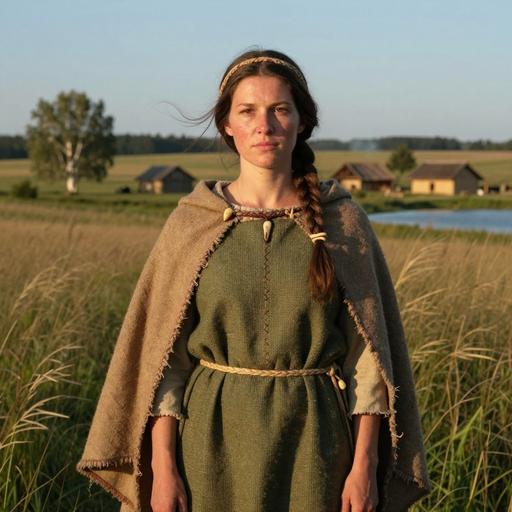
Portrait reconstruction of A woman buried in Poland in the Neolithic era
Ancient Individual

A woman buried in Poland in the Neolithic era

A woman buried in Poland during the Early Linear Pottery Culture of Ludwinowo

A fragment of the ancient world, preserved across millennia in strands of DNA.

lbk101
4350 BCE - 3950 BCE
Female
Poland
Scroll to begin
Chapter I

Identity

The biological and cultural markers that define this ancient individual

Sample ID

lbk101

Date Range

4350 BCE - 3950 BCE

Cultural Period

Early Linear Pottery Culture of Ludwinowo

Biological Sex

Female

mtDNA Haplogroup

H

Y-DNA Haplogroup

N/A (Female)

Chapter II

Place

Where this individual was discovered

Country Poland
Locality Ludwinowo-6 (Kuyavian-Pomeranian Province, Włocławek)
Coordinates 52.5622, 19.0174
Chapter III

Time

When this individual lived in the broader context of human history

lbk101 4350 BCE - 3950 BCE
Chapter IV

Story

The narrative of this ancient life

The Early Linear Pottery Culture, notably represented by the Ludwinowo site, is an era that played a foundational role in the Neolithic transition within Central Europe. Emerging around 5500 BCE, this culture marks the early stages of agricultural societies in Europe, where innovative farming techniques and sedentary lifestyles began replacing the previously dominant hunter-gatherer communities.

Geographic and Chronological Context

The Linear Pottery Culture (Linearbandkeramik, or LBK) spread across the Central European plains, encompassing areas that today are part of Hungary, Germany, Austria, Czech Republic, Slovakia, and Poland, where the Ludwinowo site is located. This region provided fertile loess soils, ideal for the early agricultural practices. The Ludwinowo site, in particular, offers a snapshot of the cultural and technological adaptations characteristic of this transition.

Social and Settlement Patterns

The Ludwinowo community, like other LBK settlements, was primarily sedentary, characterized by small hamlets or clusters of longhouses made of timber, wattle, and daub. These structures were built to suit extended family units, highlighting a shift towards more complex kinship and social structures. The establishment of permanent villages allowed for the development of communal facilities and a more organized social hierarchy.

Economy and Subsistence

The economy in the Ludwinowo site was predominantly based on agriculture, with an emphasis on the cultivation of emmer wheat, einkorn wheat, and barley. The introduction of domesticated animals, such as cattle, pigs, and sheep, played a critical role, indicating advancements in husbandry. This transition reflects significant ecological knowledge and adaptation, as early European farmers had to manage soils, crops, and livestock in a region previously dominated by wild flora and fauna.

Material Culture and Technology

One of the defining features of the Linear Pottery Culture is its, eponymous, pottery. The ceramics from Ludwinowo are characterized by simple yet elegant linear decorations, typically incised or impressed onto the surface. These decorative motifs not only served functional purposes but also held symbolic meanings, possibly related to identity or ritual practices.

In terms of tools, the community made extensive use of polished stone axes, which were essential for both farming and construction purposes. Flint tools, often sourced from local quarries, were expertly crafted for a variety of cutting and scraping tasks. The technological expertise seen in these tools reflects a deep understanding of material properties and craftsmanship.

Rituals and Beliefs

The spiritual and ritual life of the Early Linear Pottery Culture is not entirely understood, but burial practices provide some insights. The Ludwinowo site, like others in the LBK, exhibits burial grounds that suggest a belief in an afterlife or the importance of ancestor veneration. Graves often contained grave goods, such as pottery and tools, indicating the symbolic importance of these items.

Moreover, the spatial organization of Ludwinowo, with dedicated areas for specific activities and burials, implies a structured cosmology and social order. The presence of animal remains in ritual contexts also suggests shamanistic practices or sacrificial rites.

Interaction and Exchange

The people of Ludwinowo and their contemporaries were not isolated. Evidence points to a network of trade and exchange that spread innovations, raw materials, and cultural practices across vast distances. The movement of obsidian and marine shells, for example, alludes to long-distance trade routes and cultural contact with distant groups.

Impact and Legacy

The Early Linear Pottery Culture, including the Ludwinowo site, represents a pivotal moment in European prehistory. It laid the groundwork for successive agricultural societies and set the stage for the development of more complex socio-political structures in the region. This era signifies not only a technological revolution but also a profound transformation in human society, where community organization, economic management, and cultural expressions evolved in unprecedented ways.

Overall, the Early Linear Pottery Culture of Ludwinowo provides crucial insights into the life of Europe's first farmers and the cultural innovations that shaped the continent's prehistoric landscape.

Context

Related Samples

This individual exists within a broader network of ancient samples. No ancient genome stands alone.

Sample ID Culture/Period Date Location Action
buk002 Starčevo-Criș Culture of Negrileşti 5612 BCE Negrilești (Galati, Negrilești), Romania View
buk003 Starčevo-Criș Culture of Grădinile 5801 BCE Grădinile, Romania View
buk004 Gumelnița Culture 4045 BCE Gumelnița (Călărași, Oltenita), Romania View
buk010 Sălcuța Culture 5548 BCE Gârlești (Dolj County, Craiova), Romania View
buk012 Sălcuța Culture 5624 BCE Gârlești (Dolj County, Craiova), Romania View
buk013 Sălcuța Culture 5557 BCE Gârlești (Dolj County, Craiova), Romania View
buk018 Boian Culture 4931 BCE Curătești, Romania View
buk019 Boian Culture 4984 BCE Curătești, Romania View
buk022 Boian Culture 4984 BCE Curătești, Romania View
buk023 Boian Culture 4938 BCE Curătești, Romania View
buk029 Boian Culture 4715 BCE Căscioarele, Romania View
buk033 Boian Culture 4721 BCE Căscioarele, Romania View
buk040 Boian Culture 5204 BCE Sultana Valea (Călărași, Manasteria), Romania View
lbk101 Early Linear Pottery Culture of Ludwinowo 4350 BCE Ludwinowo-6 (Kuyavian-Pomeranian Province, Włocławek), Poland View
lbk102 Eastern Linear Pottery Culture of Kruszyn 4350 BCE Kruszyn-13 (Kuyavian-Pomeranian Province, Włocławek), Poland View
lbk104 Eastern Linear Pottery Culture of Kruszyn 4350 BCE Kruszyn-13 (Kuyavian-Pomeranian Province, Włocławek), Poland View
lbk138 Late Lengyel Culture from Krusza Zamkowa 4330 BCE Krusza Zamkowa-3 (Kuyavian-Pomeranian Province, Inowrocław), Poland View
poz120 Late Lengyel Culture from Krusza Zamkowa 4333 BCE Krusza Zamkowa-3 (Kuyavian-Pomeranian Province, Inowrocław), Poland View
poz121 Late Lengyel Culture from Krusza Zamkowa 4333 BCE Krusza Zamkowa-3 (Kuyavian-Pomeranian Province, Inowrocław), Poland View
poz177 Lublin-Volhynian Culture 4152 BCE Książnice (Świętokrzyskie Province, Busko County, Pacanów), Poland View
poz236 Late Neolithic Lengyel Culture of Racot 4311 BCE Racot (Greater Poland Province, Kościan), Poland View
poz252 Late Lengyel Culture from Siniarzewo 4531 BCE Siniarzewo-1 (Kuyavian-Pomeranian Province, Aleksandrów County, Zakrzewo), Poland View
poz264 Lublin-Volhynian Culture 3956 BCE Książnice (Świętokrzyskie Province, Busko County, Pacanów), Poland View
poz275 Lublin-Volhynian Culture 3954 BCE Książnice (Świętokrzyskie Province, Busko County, Pacanów), Poland View
poz297 Komornica Culture 5621 BCE Łojewo (Kuyavian-Pomeranian Province, Inowrocław), Poland View
poz375 Lublin-Volhynian Culture 3951 BCE Bronocice (Świętokrzyskie Province, Pińczów County, Działoszyce), Poland View
poz503 Kamienskie Culture Mesolithic 6814 BCE Kamienskie (Warmian-Masurian Province, Pisz County, Orzysz), Poland View
rom011 Iclod Culture 4836 BCE Iclod (Cluj, Iclod), Romania View
rom046 Iclod Culture 4711 BCE village Iclod, Cluj county, Romania View
rom047 Decea Mureșului Culture 4343 BCE village Decea Mureșului, Alba county, Romania View
rom057_rom058 Starčevo-Criș Culture 5623 BCE village Baciu, Cluj county, Romania View
rom061 Mesolithic Iron Gates, Romania 7584 BCE Ostrovul-Corbului (Mehedinți County, Hinova), Romania View
rom066 Mesolithic Iron Gates, Romania 6641 BCE Ostrovul-Corbului (Mehedinți County, Hinova), Romania View
ukr005 Neolithic Ukraine 5471 BCE Deriivka (Kirovohrad Oblast, Oleksandriia District), Ukraine View
ukr033 Neolithic Nikolske Culture 4681 BCE Nikol’ske, Ukraine View
ukr040 Neolithic Nikolske Culture 4442 BCE Nikol’ske, Ukraine View
ukr087 Neolithic Ukraine 5356 BCE Vasylivka (Zaporizhia Oblast, Vasylivka District, Vasylivska municipality), Ukraine View
ukr102 Mesolithic Ukraine 6471 BCE Deriivka (Kirovohrad Oblast, Oleksandriia District), Ukraine View
ukr104 Serednii Stih culture 3701 BCE Deriivka (Kirovohrad Oblast, Oleksandriia District), Ukraine View
ukr108 Mesolithic Ukraine 6066 BCE Deriivka (Kirovohrad Oblast, Oleksandriia District), Ukraine View
ukr111 Neolithic Ukraine 4834 BCE Deriivka (Kirovohrad Oblast, Oleksandriia District), Ukraine View
ukr112 Serednii Stih culture 4446 BCE Deriivka (Kirovohrad Oblast, Oleksandriia District), Ukraine View
ukr113 Neolithic Ukraine 4836 BCE Deriivka (Kirovohrad Oblast, Oleksandriia District), Ukraine View
ukr116 Serednii Stih culture 4446 BCE Deriivka (Kirovohrad Oblast, Oleksandriia District), Ukraine View
ukr117 Neolithic Ukraine 5304 BCE Deriivka (Kirovohrad Oblast, Oleksandriia District), Ukraine View
ukr123 Serednii Stih culture 4342 BCE Deriivka (Kirovohrad Oblast, Oleksandriia District), Ukraine View
ukr125 Ukrainian Epipaleolithic-Mesolithic Culture 8708 BCE Deriivka (Kirovohrad Oblast, Oleksandriia District), Ukraine View
ukr144 Neolithic Nikolske Culture 5209 BCE Nikol’ske, Ukraine View
ukr147 Neolithic Nikolske Culture 4784 BCE Nikol’ske, Ukraine View
ukr149 Neolithic Nikolske Culture 4602 BCE Nikol’ske, Ukraine View
ukr158 Neolithic Yasinovatka Culture 5314 BCE Yasynuvatka (Zaporizhia Oblast, Zaporizhia District, Petro-Mykhailivka municipality), Ukraine View
ukr159 Neolithic Yasinovatka Culture 5210 BCE Yasynuvatka (Zaporizhia Oblast, Zaporizhia District, Petro-Mykhailivka municipality), Ukraine View
ukr160 Yasinovatka Culture 5357 BCE Yasynuvatka (Zaporizhia Oblast, Zaporizhia District, Petro-Mykhailivka municipality), Ukraine View
ukr161 Neolithic Yasinovatka Culture 5209 BCE Yasynuvatka (Zaporizhia Oblast, Zaporizhia District, Petro-Mykhailivka municipality), Ukraine View
ukr162 Yasinovatka Culture 4784 BCE Yasynuvatka (Zaporizhia Oblast, Zaporizhia District, Petro-Mykhailivka municipality), Ukraine View
Sample ID Culture/Period Date Location Action
lbk101 Early Linear Pottery Culture of Ludwinowo 4350 BCE Ludwinowo-6 (Kuyavian-Pomeranian Province, Włocławek), Poland View
Sources

References

Scientific publications and genetic data that inform this profile.

Scientific Publication

Genetic continuity, isolation, and gene flow in Stone Age Central and Eastern Europe

Authors Mattila TM, Svensson EM, Juras A, Günther T, Kashuba N et al.
Abstract

The genomic landscape of Stone Age Europe was shaped by multiple migratory waves and population replacements, but different regions do not all show similar patterns. To refine our understanding of the population dynamics before and after the dawn of the Neolithic, we generated and analyzed genomic sequence data from human remains of 56 individuals from the Mesolithic, Neolithic, and Eneolithic across Central and Eastern Europe. We found that Mesolithic European populations formed a geographically widespread isolation-by-distance zone ranging from Central Europe to Siberia, which was already established 10,000 years ago. We found contrasting patterns of population continuity during the Neolithic transition: people around the lower Dnipro Valley region, Ukraine, showed continuity over 4000 years, from the Mesolithic to the end of the Neolithic, in contrast to almost all other parts of Europe where population turnover drove this cultural change, including vast areas of Central Europe and around the Danube River.

Use code for 25% off Expires Jul 12