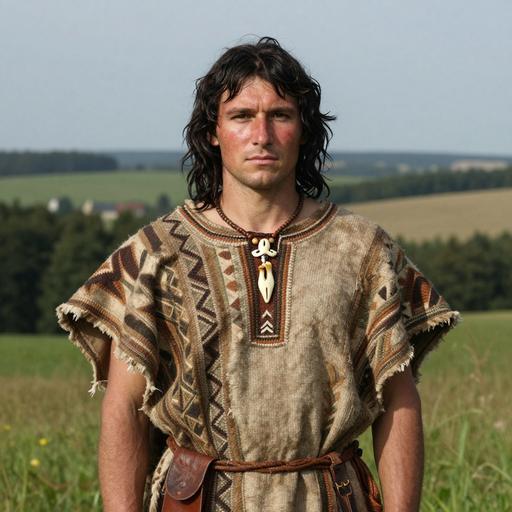
The Komornica culture, identified within the broader span of European prehistory, is a fascinating archeological culture that flourished during the Mesolithic period, roughly between 7000 and 5500 BCE. It is named after the site of Komornica, which is located in modern-day Poland, and it represents one of the distinctive traditions of hunter-gatherer societies in this region.
Geographical Context
The Komornica culture was primarily situated in what is present-day Poland, stretching into parts of the surrounding areas in Central Europe. This area provided a varied landscape, with a mix of dense forests, open meadows, and numerous rivers and lakes. Such a landscape was highly advantageous for the hunter-gatherer communities, offering a wealth of natural resources. The post-glacial environment of this period was rich in flora and fauna, providing sustenance for the Komornica people.
Subsistence and Economy
The economy of the Komornica culture was predominantly based on hunting, fishing, and gathering. The people utilized the rich river systems and forested areas to find food resources. Archaeological evidence shows that their diet was diverse; they hunted a variety of game including deer, wild boar, and birds, while also fishing for freshwater species. They gathered plant-based foods, including berries, nuts, and possibly wild grains, relying on the seasonal bounty of their environment.
Material Culture and Technology
The Komornica culture is best known for its microlithic flint tools. These small, sharp tools were likely used as tips and barbs for hunting weapons, such as arrows and spears. The tools were skillfully crafted, indicating a high level of craftsmanship and an intimate understanding of the properties of flint. The presence of these tools suggests a mobile lifestyle, adapted to following herds and moving with seasonal changes.
Moreover, the Komornica people utilized other materials such as bone, antler, and wood to create a range of implements. However, the preservation of organic materials like these is rare, so most evidence comes from well-preserved sites.
Social Organization
While specific details about their social organization are limited, the Komornica culture, like other Mesolithic societies, is typically thought to have been organized into small, mobile groups or bands. These groups were likely kin-based and operated with flexible structures suited to a nomadic lifestyle. Social interaction with neighboring groups may have occurred, as evidenced by similarities in tool technology and possible trade or exchange networks.
Settlements
Settlement patterns reveal temporary campsites rather than permanent structures. These camps, strategically located near water sources or game trails, reflect the nomadic nature of the Komornica people. Archaeological sites often contain hearths, suggesting cooking and tool-making activities, and sometimes remnants of simple shelters.
Art and Spirituality
Artistic manifestation in the Komornica culture is primarily inferred rather than extensively evidenced. Like many Mesolithic cultures, they may have created personal adornments and possibly rock art, although specific examples attributed to Komornica are rare. Spiritual life likely involved a rich oral tradition, rituals tied to nature and hunting, and possibly shamanistic practices, though this remains speculative.
Interactions with Neolithic Cultures
As the Mesolithic period gradually transitioned into the Neolithic, the Komornica people came into contact with early agricultural societies. This contact likely influenced their way of life, introducing new technologies and practices. However, the precise nature and impact of these interactions are not thoroughly documented archaeologically.
Legacy
The study of the Komornica culture provides valuable insights into the adaptability and ingenuity of early European hunter-gatherers. Their ability to thrive in diverse landscapes and climates highlights a notable chapter in the story of human prehistory. By examining the Komornica culture, archaeologists and historians gain a deeper understanding of the cultural dynamics that preceded the rise of agriculture in Europe, shedding light on the complex interplay between environment, technology, and social organization.