

Bretons, British Isles, and Ancient DNA Across the Channel
Ancient DNA shows Bretons are tied to the Atlantic gene pool long before medieval migration, revealing deep shared ancestry across Brittany, Britain, and Normandy.


Imported from WordPress: DNA>Genetic history|History and Genetics|Learning
Ancient DNA shows Bretons are tied to the Atlantic gene pool long before medieval migration, revealing deep shared ancestry across Brittany, Britain, and Normandy.
Ancient DNA shows the Sarmatians were not Scythian descendants, but a related steppe people with roots in the southern Urals and a lasting Ossetian legacy.
Ancient DNA shows Frisia was the closest continental match to Anglo-Saxon migrants, but not their sole homeland. Explore what this means for DNA ancestry.
Did R-L21 begin in the British Isles or on the Continent? Explore the ancient DNA, haplogroups, migration routes, and what it means for your ancestry.
Ancient DNA shows Germanic ancestry formed from two Bronze Age streams, Bell Beaker and Corded Ware, plus local lineages that still shape haplogroups today.
Brazilian DNA reveals one of the world’s most studied three-way admixtures, shaped by European, African, and Native American ancestry across centuries.
Discover how ancient Caucasus hunter-gatherer DNA survived in the South Caucasus, shaped Eurasian migration, and still influences Georgian ancestry today.
Explore how the R1a-Z93 Y-DNA lineage connects Bronze Age steppe migrations, ancient DNA, and the ancestry of many South Asian and Central Asian populations.
See how ancient DNA, haplogroups, and population genetics reveal the first Atlantic creole societies, from Cape Verde to São Tomé and the Angolars.
Explore how Métis ancestry reflects fur-trade history, sex-biased admixture, and population genetics, while identity remains a matter of community, not DNA.
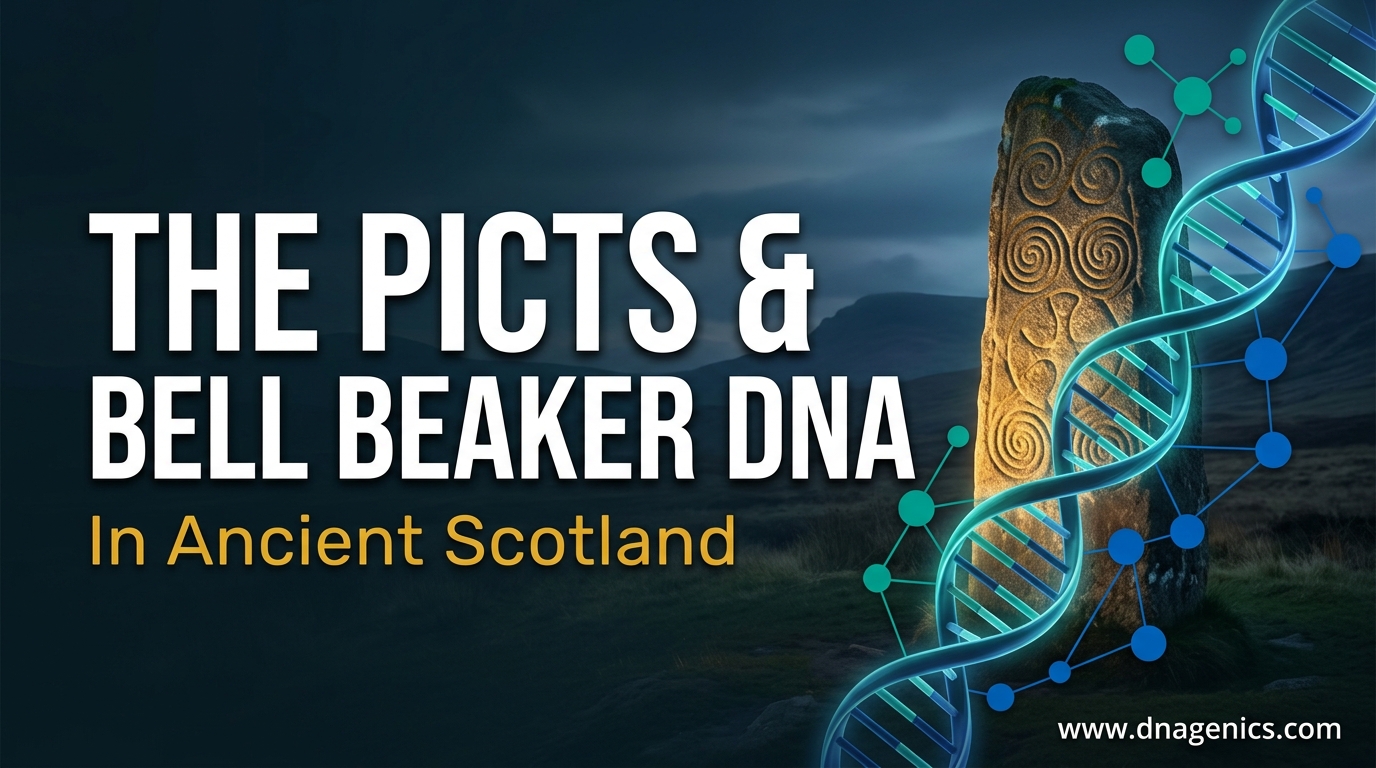
New ancient DNA reveals the Picts were local Britons with strong Bell Beaker ancestry, reshaping how we understand Scottish ancestry and migration.
Discover why Slavic-speaking populations do not form one DNA cluster, and what population genetics, migration, and ancient DNA reveal about ancestry.