

Why Europeans Have Different Paternal and Maternal Haplogroups
Explore how Bronze Age migration reshaped European DNA, leaving Steppe-linked paternal haplogroups and older maternal lineages in modern ancestry results.


Expert articles, research insights, and the latest in genetic science. Stay informed with our team's discoveries.
Explore how Bronze Age migration reshaped European DNA, leaving Steppe-linked paternal haplogroups and older maternal lineages in modern ancestry results.
Learn what African American DNA results really show, including African regional matches, European admixture, Native ancestry, and the history behind them.

Explore how ancient migration, population genetics, and endogamy shaped North and South Indian DNA, from Steppe ancestry to IVC and AASI signals.
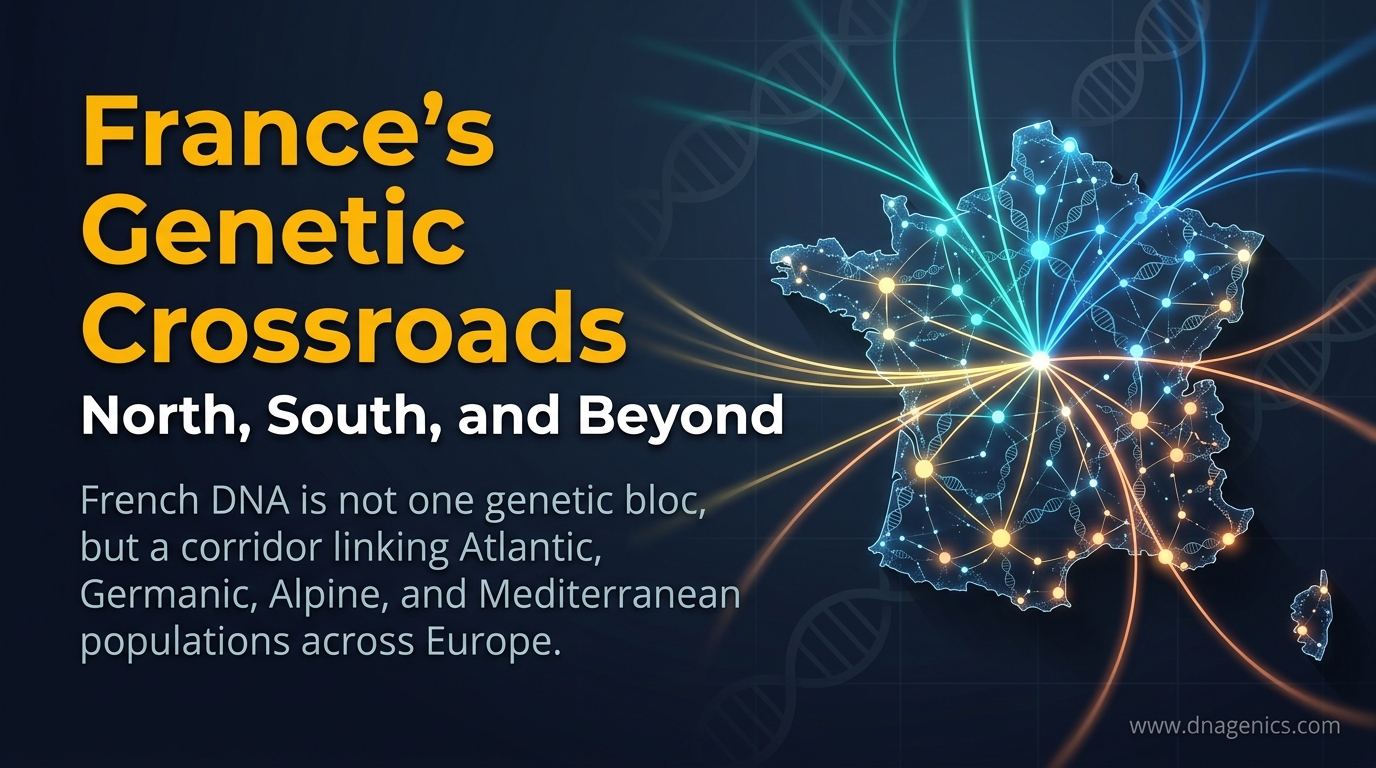
French DNA is not one genetic bloc, but a corridor linking Atlantic, Germanic, Alpine, and Mediterranean populations across Europe.

Raw DNA files can suggest Y-DNA and mtDNA haplogroups, but chip design limits resolution. Learn what ancestry results you can trust and when to test further.
Blue or green eyes in Kabyles are real, but their genetics point to ancient Anatolian farmers, not Celtic or Nordic origins. Learn what the DNA shows.
Explore how Afrikaner DNA reflects Dutch, German, French Huguenot, and smaller non-European roots, and why ancestry calculators can seem to disagree.
Explore how a Central-Western Europe DNA calculator separates Bell Beaker, Germanic, Hallstatt Celtic, and Roman ancestry using ancient DNA and population genetics.
A long-running mystery from Roman Britain shows how ancient DNA, isotopes, and population genetics can overturn conclusions from skull shape alone.

Ancient DNA shows how vitamin D shortage drove lighter skin, lactase persistence, and other adaptations. Explore the genetics behind ancestry and migration.
Ancient DNA shows Rome reshaped mobility and cities, but its genetic footprint was uneven. Discover what this means for ancestry, migration, and Europe.
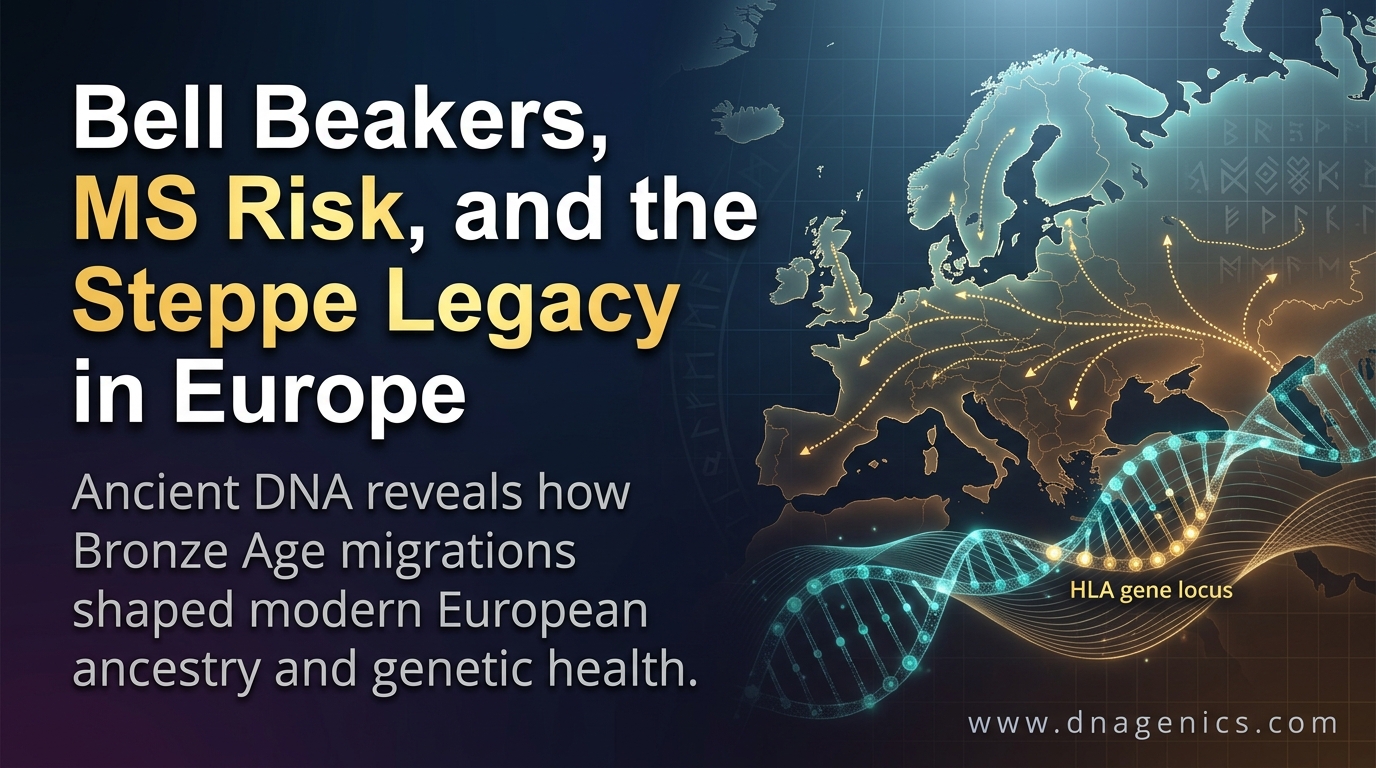
Ancient DNA reveals how Bronze Age steppe migrations shaped modern European ancestry, HLA risk variants, and why multiple sclerosis is more common in the north.