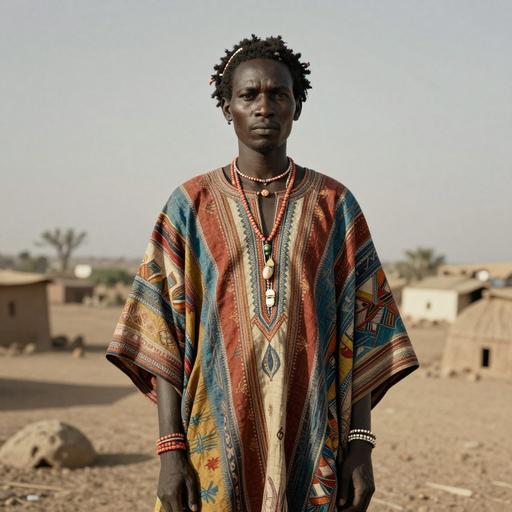
The Story
The journey of mtDNA haplogroup L3F1B4A1
Origins and Evolution
L3F1B4A1 is a downstream maternal subclade of the broader L3F1 lineage, specifically derived from L3F1B4A. Based on the phylogenetic position of L3-derived lineages and the proposed age of the parent clade, L3F1B4A1 most plausibly arose in the Horn of Africa or nearby eastern African regions during the mid-Holocene (~4.5 kya). This time depth is consistent with localized diversification of mtDNA lineages in East Africa after the Late Pleistocene and during the period of early Holocene population structure and cultural change.
Mutational differences that define L3F1B4A1 reflect its status as a relatively recent, geographically restricted branch of L3F variation. Like many rare subclades, its limited geographic spread and low frequencies suggest either a small founding population, drift in relatively isolated communities, or a lineage associated with specific demographic processes (for example, localized pastoralist or coastal groups).
Subclades (if applicable)
At present, L3F1B4A1 is described as a terminal or shallow subclade of L3F1B4A. There is limited evidence for further downstream structure within L3F1B4A1 in public databases, reflecting either true rarity or undersampling of the populations where it occurs. Future targeted sequencing in Horn of Africa populations and deeper ancient DNA sampling may reveal additional subclades or clarify internal diversity.
Geographical Distribution
The highest frequency and diversity of L3F1B4A1 are inferred in the Horn of Africa and adjacent East African regions, consistent with a local origin. Low to moderate frequencies are reported in some Central African Pygmy groups and sporadically in West and Southern African populations, reflecting historical gene flow within the African continent. Small numbers are also observed in coastal East African communities (linked to Indian Ocean trade and coastal demographic exchanges), and occasional detections in North African and Middle Eastern samples likely reflect historical back-and-forth movements across the Red Sea and Mediterranean networks. Low-frequency presence in the Americas (African-descended populations) is best explained by the trans-Atlantic slave trade carrying diverse African maternal lineages to the New World.
It is important to emphasize that many distribution inferences are sensitive to sampling intensity: rare maternal lineages can appear geographically scattered when sampling is uneven.
Historical and Cultural Significance
Although L3F1B4A1 is not associated with any high-level continental migration event, its mid-Holocene origin places it within a period of notable cultural transformations in East Africa — including the spread and diversification of pastoralist economies and expanding coastal trade networks. The lineage may therefore reflect demographic processes tied to local pastoralist expansions, coastal exchange, or small-scale population structure in highland and lowland communities.
In historic times, contact across the Red Sea and Indian Ocean, as well as later Arab and Nilotic interactions, could account for low-frequency appearances outside East Africa. The presence of the lineage in African-descended populations in the Americas is consistent with the documented translocation of diverse West and Central African maternal lineages during the slave trade, though Horn-derived lineages may be less common in the trans-Atlantic record.
Conclusion
L3F1B4A1 is a localized, low-frequency maternal subclade rooted in the Horn of Africa / East Africa with a Holocene origin (~4.5 kya). It highlights the fine-scale maternal diversity present in eastern Africa and illustrates how regional demographic processes (isolation, drift, local expansions, and later historic contacts) shape the modern distribution of rare mtDNA lineages. Further targeted modern and ancient DNA sampling in the Horn and neighboring regions will improve resolution of its phylogeography and demographic history.
Key Points
- Origins and Evolution
- Subclades (if applicable)
- Geographical Distribution
- Historical and Cultural Significance
- Conclusion