Menu
Y-DNA Haplogroup • Paternal Lineage

O2A2B1A1A1

Y-DNA Haplogroup O2A2B1A1A1

~1,000 years ago
Mainland Southeast Asia / southern China
2 subclades
Scroll to explore
Chapter I

The Story

The journey of Y-DNA haplogroup O2A2B1A1A1

Origins and Evolution

Y-DNA haplogroup O2A2B1A1A1 sits downstream of the well-documented O-M95 (O2a2) family and its immediate parent O2A2B1A1A. Given the geographic and phylogenetic context of its parent clade, O2A2B1A1A1 most plausibly arose in Mainland Southeast Asia or southern China during the Late Holocene, likely as a localized diversification associated with population movements and social changes in the last two millennia. Its shallow time depth relative to O-M95 suggests a recent branching event, consistent with male-line founder effects and regionally focused expansions.

Ancient DNA evidence (several attributed archaeological samples) and modern population surveys indicate this subclade has a distribution concentrated among Austroasiatic-speaking communities and neighboring groups, implying a demographic history shaped by language-associated migrations, local transmissions, and later admixture with Tai, Sino-Tibetan, and Austronesian groups.

Subclades

As a narrowly defined terminal branch (O2A2B1A1A1), this haplogroup represents a fine-scale phylogenetic split within the O-M95 radiation. Where deep sequencing and targeted SNP assays are available, O2A2B1A1A1 may itself contain micro-substructure reflecting recent expansions or founder events in particular ethnolinguistic communities (for example, localized lineages within Munda-speaking or Mon-Khmer groups). Continued sampling and high-resolution phylogenies will clarify internal subclades and their geographic associations.

Geographical Distribution

The modern geographic distribution of O2A2B1A1A1 is concentrated in Mainland Southeast Asia with measurable presence in parts of South Asia and Island Southeast Asia. Highest frequencies are observed among Austroasiatic-speaking populations (e.g., Khmer, Mon, Vietic groups) and certain Tai-adjacent mainland groups. It also occurs at moderate levels among Munda-speaking populations of eastern and central India—reflecting either ancient gene flow from Southeast Asia into South Asia or later male-mediated movement—and at low to moderate frequencies among southern Han Chinese and some southern Chinese minorities. Low and sporadic occurrences are reported in Austronesian-speaking populations in Island Southeast Asia and in some Tibeto-Burman groups due to local admixture.

Historical and Cultural Significance

The phylogeographic pattern of O2A2B1A1A1 ties it to the spread and persistence of Austroasiatic-related communities, particularly during the Iron Age and the early historical period of Mainland Southeast Asia. Its presence in Munda-speaking groups of India has been interpreted within broader models of south-to-west or westward movements of Austroasiatic-associated males (or later contact-mediated gene flow). Archaeologically, this lineage is consistent with male lines that participated in the formation and maintenance of local societies engaged in wet-rice agriculture, riverine exchange, and Bronze/Iron Age cultural complexes in the Mekong and adjacent regions.

Where present, O2A2B1A1A1 often forms part of a genetic profile that includes Southeast Asian maternal haplogroups (e.g., mtDNA B, F, M7 subclades) and other O-M95-derived Y lineages; this pattern supports sex-biased demographic processes (male-driven expansions or founder events) in recent prehistory and history.

Conclusion

O2A2B1A1A1 is a recent, regionally concentrated Y-chromosome lineage that refines our understanding of male demographic history in Mainland Southeast Asia and its connections to South and Island Southeast Asia. It highlights how terminal subclades of broader haplogroups like O-M95 can trace relatively recent language- and culture-associated population dynamics, and it underscores the value of dense regional sampling and ancient DNA to resolve microevolutionary events in the last few thousand years.

Key Points

  • Origins and Evolution
  • Subclades
  • Geographical Distribution
  • Historical and Cultural Significance
  • Conclusion
Chapter II

Tree & Relationships

Phylogenetic context and subclades

Evolution Path

This haplogroup's evolutionary journey from its earliest ancestor to the present.

Steps Haplogroup Age Estimate Archaeology Era Time Passed Immediate Descendants Tested Modern Descendants Ancient Connections
1 O2A2B1A1A1 Current ~1,000 years ago 🏰 Medieval 1,200 years 2 0 0
Chapter III

Where in the World

Geographic distribution and modern presence

Place of Origin

Mainland Southeast Asia / southern China

Modern Distribution

The populations where Y-DNA haplogroup O2A2B1A1A1 is found include:

  1. Austroasiatic-speaking populations (e.g., Khmer, Mon, Vietic groups)
  2. Munda-speaking groups in eastern and central India
  3. Mainland Southeast Asian populations (Thai, Lao and Tai-adjacent groups)
  4. Southern Han Chinese and ethnic minorities in southern China (low to moderate levels)
  5. Austronesian-speaking groups in Island Southeast Asia and Taiwan (low and variable frequencies)
  6. Tibeto-Burman and Burmese populations (sporadic/low frequencies influenced by admixture)
  7. Diaspora and admixed groups across South and Southeast Asia (sporadic occurrences)

Regional Presence

Southeast Asia (mainland) High
South Asia (India - Munda regions) Moderate
East Asia (southern China) Moderate
Island Southeast Asia & Taiwan Low
CHAPTER IV

When in Time

Your haplogroup in the context of human history

~10k years ago

Neolithic Revolution

Agriculture begins, settled communities form

~5k years ago

Bronze Age

Metalworking, writing, and early civilizations

~3k years ago

Iron Age

Iron tools, expanded trade networks

~2k years ago

Classical Antiquity

Greek and Roman civilizations flourish

~1k years ago

Haplogroup O2A2B1A1A1

Your Y-DNA haplogroup emerged in Mainland Southeast Asia / southern China

Mainland Southeast Asia / southern China
Present

Present Day

Modern era

Your Haplogroup
Historical Era
Chapter IV-B

Linked Cultures

Ancient cultures associated with Y-DNA haplogroup O2A2B1A1A1

Cultural Heritage

These ancient cultures have been linked to haplogroup O2A2B1A1A1 based on matching ancient DNA samples from archaeological excavations. The presence of this haplogroup in these cultures provides insights into the migrations and population movements of populations carrying this haplogroup.

Butaxiongqu Center West 5 Chinese Bronze-Iron Chokhopani Culture Dulan-Wayan Late Iron Age Culture Latuotanggu Culture Nudagang Culture Shimao Culture Upper Yellow River Culture Yellow River Culture
Culture assignments are based on archaeological context of ancient DNA samples and may represent regional associations during specific time periods.
Chapter V

Sample Catalog

3 subclade carriers of haplogroup O2A2B1A1A1 (no exact O2A2B1A1A1 samples sequenced yet)

3 / 3 samples
Portrait Sample Country Era Date Culture Y-DNA Match
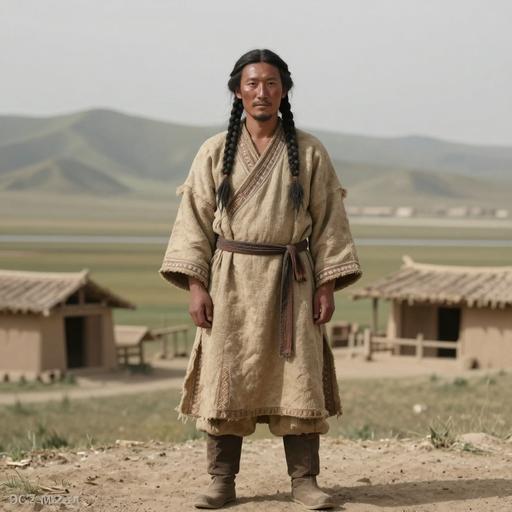
Portrait of ancient individual DCZ-M21II from China, dated 120 CE - 248 CE
DCZ-M21II
China Iron Age Upper Yellow River, China 120 CE - 248 CE Upper Yellow River Culture O2a2b1a1a1a2a Downstream
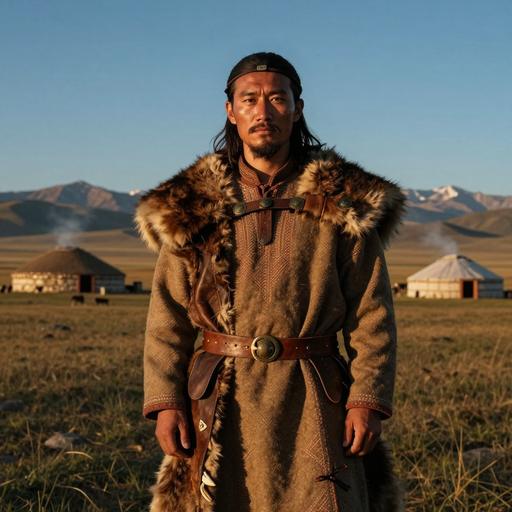
Portrait of ancient individual I6367 from Mongolia, dated 1259 BCE - 1056 BCE
I6367
Mongolia Late Bronze Age Center West 5, Mongolia 1259 BCE - 1056 BCE Center West 5 O2a2b1a1a1-CTS5866 Downstream
Portrait of ancient individual SM-M6 from China, dated 2884 BCE - 2410 BCE
SM-M6
China Late Neolithic Shimao, China 2884 BCE - 2410 BCE Shimao Culture O2a2b1a1a1a2a Downstream
Chapter VI

Carrier Distribution Map

Geographic distribution of 3 ancient DNA samples (direct and subclade carriers of O2A2B1A1A1)

Subclade carrier
Time Period Filter
All Time Periods
Showing all samples
Chapter VII

Temporal Distribution

Distribution of carriers across archaeological periods

Chapter VIII

Geographic Distribution

Distribution by country of origin (direct and subclade carriers shown by default)

Chapter IX

Country × Era Distribution

Cross-tabulation of carrier countries and archaeological periods (direct and subclade carriers shown by default)

Data

Data & Provenance

Source information and data quality

Last Updated 2026-02-16
Confidence Score 50/100
Coverage Low
Data Source

We use the latest phylotree for YDNA haplogroup classification and data.