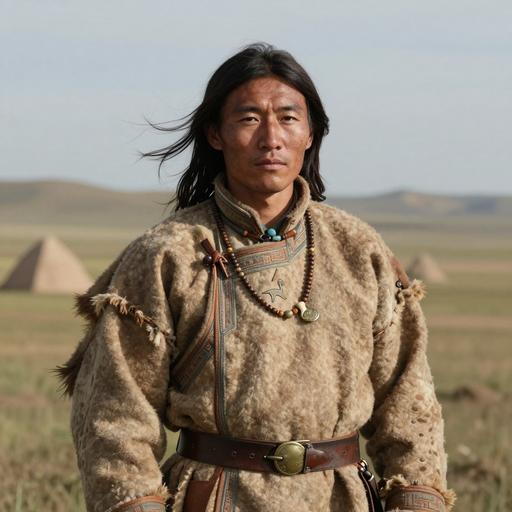
The Story
The journey of Y-DNA haplogroup Q1B1A3A
Origins and Evolution
Y-DNA haplogroup Q1B1A3A is a downstream branch of Q1B1A3, itself part of the broader paternal lineage Q, which is widely associated with ancient northern Eurasian population history. Because it sits well below the major Q branches that expanded into the Americas and across parts of Siberia and Central Asia, Q1B1A3A is expected to represent a rare, relatively young subclade that emerged after the diversification of its parent lineage, likely in North Eurasia.
The broader Q phylogeny is often connected to populations linked with Ancient North Eurasian and Siberian ancestry, as well as later movements into Inner Asia and the Americas. For Q1B1A3A specifically, there is no single universally established archaeological source population, but its distribution pattern is most consistent with small-scale persistence, local drift, and regional dispersals among northern Eurasian groups.
Subclades
As a subclade of Q1B1A3, Q1B1A3A belongs to a rare and relatively fine-grained branch of the Q tree. In many cases, subclades at this depth are identified primarily through high-resolution Y-DNA sequencing rather than through broad historical frequency patterns. If additional downstream lineages exist, they would likely be localized private branches or population-specific derivatives rather than widespread macro-lineages.
Geographical Distribution
Q1B1A3A is expected to occur at very low frequencies across a broad but discontinuous range:
- Siberian indigenous populations, where older Q lineages are most plausibly retained
- Central Asian populations, reflecting historical steppe and forest-steppe connectivity
- Indigenous peoples of the Americas, via deeper Q-related ancestral links to the peopling of the Americas
- Northern European populations, usually as rare trace ancestry or later introductions
- West Eurasian and Middle Eastern populations, typically at very low frequency and often due to historical admixture or unrecognized ancient gene flow
Its modern distribution should be interpreted as the result of ancient ancestry plus subsequent founder effects, rather than as evidence of a single recent ethnic identity.
Historical and Cultural Significance
Haplogroup Q and many of its subclades are important in studies of the peopling of Siberia and the Americas. While Q1B1A3A itself is too rare to be tied confidently to one archaeological culture, its deeper ancestry is compatible with populations moving through northern Eurasian forest and steppe zones during the late Paleolithic and early Holocene.
In Central and Inner Asia, rare Q subclades may have persisted among groups involved in long-term mobility across the steppe corridor, while in the Americas the broader haplogroup Q is the dominant paternal lineage among many Indigenous populations. In West Eurasia, occurrences are usually rare and may reflect historical gene flow, ancient retention, or isolated founder events.
Conclusion
Q1B1A3A is a rare, informative paternal lineage within haplogroup Q, likely tracing to North Eurasian ancestors and preserved today at low frequency across several disconnected regions. Its value lies less in population-level dominance and more in illuminating the deep branching structure and mobility history of northern Eurasian male lineages.
Notes on Interpretation
Because Q1B1A3A is a highly specific subclade, its exact historical associations may remain provisional until more ancient DNA and high-coverage modern sequencing data become available. Current interpretation should therefore be viewed as a phylogenetically informed inference grounded in the broader behavior of haplogroup Q lineages.
Key Points
- Origins and Evolution
- Subclades
- Geographical Distribution
- Historical and Cultural Significance
- Conclusion