Menu
mtDNA Haplogroup • Maternal Lineage

H6A1B

mtDNA Haplogroup H6A1B

~5,000 years ago
Near East / West Asia (Anatolia / Caucasus corridor)
3 subclades
41 ancient samples
Scroll to explore
Chapter I

The Story

The journey of mtDNA haplogroup H6A1B

Origins and Evolution

mtDNA haplogroup H6A1B is a downstream subclade of H6A1, itself nested within the broader haplogroup H6A/H6 branch of macro-haplogroup H. Based on the phylogenetic position of H6A1B beneath H6A1 (a lineage estimated to have arisen in the Near East/West Asia during the early Holocene, ~9 kya), H6A1B is expected to have a younger time depth, plausibly originating in the mid- to late-Holocene (roughly 4–7 kya). The subclade is defined by additional coding-region and/or control-region mutations that distinguish it from its parent H6A1 and sister lineages.

Ancient DNA and modern population surveys indicate that many H6/H6A sublineages expanded from Near Eastern refugia following the Last Glacial Maximum and into the Neolithic as farming populations spread into Anatolia, the Caucasus and Europe. H6A1B appears to represent a localized offshoot of that broader Near Eastern maternal variation, carried forward by both Neolithic farmer communities and by later regional demographic processes.

Subclades

As a specific downstream branch of H6A1, H6A1B may include one or more minor internal sublineages in high-resolution mitogenome studies; however, it is generally less diverse and less frequent than its parent H6A1. Where whole mitogenomes are available, H6A1B is identified by a distinct set of mutations downstream of the H6A1 diagnostic markers. High-resolution sequencing (complete mtDNA) is required to resolve finer substructure within H6A1B and to identify geographically restricted subclades.

Geographical Distribution

Modern and ancient samples place H6A1B largely in the Near East/Anatolia and adjacent regions: Anatolia and the Caucasus show the highest representation, with lower frequencies in southern Europe (especially the Balkans, Greece and parts of Italy) and occasional detection in North Africa and Central Asia. The pattern is consistent with a Near Eastern origin followed by localized diffusion into neighboring regions through Neolithic farmer migrations, subsequent Bronze Age/Chalcolithic movements, and later historical gene flow.

Historical and Cultural Significance

Although H6A1B is not a high-frequency haplogroup, its presence is informative for reconstructing maternal ancestry in contexts tied to Anatolian and Caucasus-derived farmer lineages. Where observed in ancient DNA, H6A1B-type mitogenomes can signal continuity or contact with Near Eastern demographic sources during the Neolithic and later periods. In modern populations, the haplogroup is sometimes seen in communities with historical connections to Anatolia, the Caucasus, the Balkans and Near Eastern diasporas, and therefore it can contribute to fine-scale maternal ancestry inference.

H6A1B may appear in archaeological contexts associated with early farming communities in Anatolia and the Balkans, and occasionally in later Chalcolithic and Bronze Age remains where regional population movements redistributed Near Eastern maternal lineages.

Conclusion

H6A1B is a geographically and temporally localized maternal lineage derived from the Near Eastern H6A1 branch. It illustrates how subclades of haplogroup H, while often low in frequency, preserve signals of post-glacial and Neolithic dispersals from West Asia into Anatolia, the Caucasus and parts of Europe. Continued recovery of complete mitogenomes from both modern and ancient samples will refine its phylogeny, age estimate and fine-scale geographic patterning.

Key Points

  • Origins and Evolution
  • Subclades
  • Geographical Distribution
  • Historical and Cultural Significance
  • Conclusion

Chapter II

Tree & Relationships

Phylogenetic context and subclades

Evolution Path

This haplogroup's evolutionary journey from its earliest ancestor to the present.

Steps Haplogroup Age Estimate Archaeology Era Time Passed Immediate Descendants Tested Modern Descendants Ancient Connections
1 H6A1B Current ~5,000 years ago 🔶 Bronze Age 5,000 years 3 123 41
2 H6A1 ~9,000 years ago 🌾 Neolithic 9,000 years 2 242 0
3 H6A ~11,000 years ago 🌾 Neolithic 11,000 years 2 258 17
4 H6 ~20,000 years ago 🏹 Mesolithic 20,000 years 11 326 4
5 H ~25,000 years ago 🦴 Paleolithic 25,000 years 9 6,551 991
6 HV ~30,000 years ago 🦴 Paleolithic 30,000 years 10 7,905 228
7 R ~60,000 years ago 🦴 Paleolithic 60,000 years 12 10,987 57
8 N ~60,000 years ago 🦴 Paleolithic 60,000 years 15 15,452 13
9 L3 ~70,000 years ago 🦴 Paleolithic 70,000 years 11 17,621 6
10 L ~160,000 years ago 🦴 Paleolithic 160,000 years 7 18,987 5

Siblings (1)

Other branches from the same parent haplogroup

Chapter III

Where in the World

Geographic distribution and modern presence

Place of Origin

Near East / West Asia (Anatolia / Caucasus corridor)

Modern Distribution

The populations where MTDNA haplogroup H6A1B is found include:

  1. Anatolian and Near Eastern populations (Turkey, Levant)
  2. Caucasus populations (Armenia, Georgia, Azerbaijan)
  3. Southern European populations (Greece, Italy, Balkans at low to moderate frequency)
  4. Balkan and Eastern European groups (Balkans, parts of the Black Sea littoral and Ukraine at low frequency)
  5. North African populations (Maghreb, at low frequency)
  6. Some Central Asian and Caucasus-adjacent communities (sporadic occurrences)
  7. Diasporic and Jewish communities (observed at low frequency in some datasets)
CHAPTER IV

When in Time

Your haplogroup in the context of human history

~10k years ago

Neolithic Revolution

Agriculture begins, settled communities form

~5k years ago

Bronze Age

Metalworking, writing, and early civilizations

~5k years ago

Haplogroup H6A1B

Your mtDNA haplogroup emerged in Near East / West Asia (Anatolia / Caucasus corridor)

Near East / West Asia (Anatolia / Caucasus corridor)
~3k years ago

Iron Age

Iron tools, expanded trade networks

~2k years ago

Classical Antiquity

Greek and Roman civilizations flourish

Present

Present Day

Modern era

Your Haplogroup
Historical Era
Chapter IV-B

Linked Cultures

Ancient cultures associated with mtDNA haplogroup H6A1B

Cultural Heritage

These ancient cultures have been linked to haplogroup H6A1B based on matching ancient DNA samples from archaeological excavations. The presence of this haplogroup in these cultures provides insights into the migrations and population movements of populations carrying this haplogroup.

Afanasievo Anatolian Bronze Age El Argar Kyrgyz Nomadic Okunevo Culture Srubnaya-Alakul Unetice Yamnaya Culture
Culture assignments are based on archaeological context of ancient DNA samples and may represent regional associations during specific time periods.
Chapter V

Sample Catalog

21 direct carriers and 20 subclade carriers of haplogroup H6A1B

41 / 41 samples
Portrait Sample Country Era Date Culture mtDNA Match
Portrait of ancient individual I20669 from United Kingdom, dated 400 CE - 600 CE
I20669
United Kingdom Early Medieval Saxon England 400 CE - 600 CE Anglo-Saxon H6a1b Direct
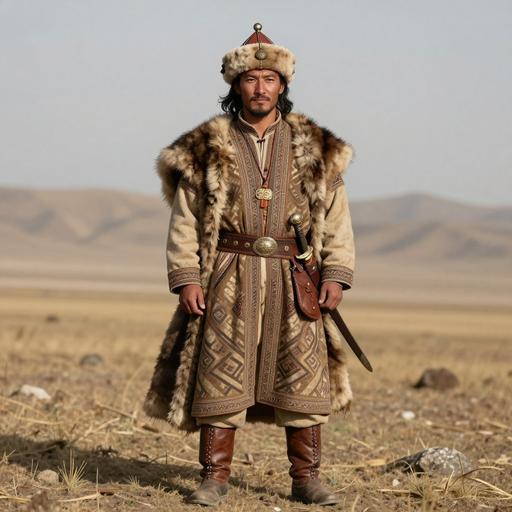
Portrait of ancient individual MJ-14 from Ukraine, dated 778 BCE - 520 BCE
MJ-14
Ukraine Iron Age Western Scythian Culture, Ukraine 778 BCE - 520 BCE Western Scythian H6a1b Direct
Portrait of ancient individual MJ-14 from Ukraine, dated 778 BCE - 520 BCE
MJ-14
Ukraine The Scythian Culture 778 BCE - 520 BCE H6a1b Direct
Portrait of ancient individual TAL005 from Kazakhstan, dated 789 BCE - 549 BCE
TAL005
Kazakhstan Early Iron Age Tasmola Culture, Kazakhstan 789 BCE - 549 BCE Tasmola Culture H6a1b Direct
Portrait of ancient individual frc007 from Sweden, dated 950 CE - 1150 CE
frc007
Sweden Northern Swedish Viking Culture 950 CE - 1150 CE Norse Viking H6a1b Direct
Portrait of ancient individual PCA0405 from Poland, dated 1222 CE - 1287 CE
PCA0405
Poland Iron Age Santok Culture 1222 CE - 1287 CE Santok Culture H6a1b Direct
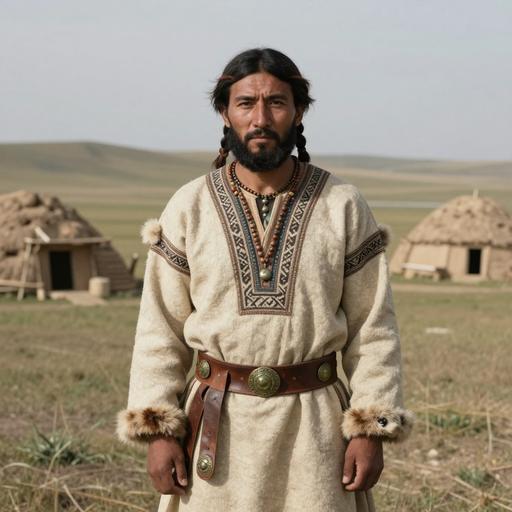
Portrait of ancient individual DA117 from Kyrgyzstan, dated 1670 CE - 1950 CE
DA117
Kyrgyzstan Modern Nomad, Kyrgyzstan 1670 CE - 1950 CE Kyrgyz Nomadic H6a1b Direct
Portrait of ancient individual DA117 from Kyrgyzstan, dated 1670 CE - 1950 CE
DA117
Kyrgyzstan Historical Steppe Nomads 1670 CE - 1950 CE H6a1b Direct
Portrait of ancient individual b6-1 from Russia, dated 1880 BCE - 1622 BCE
b6-1
Russia Srubnaya-Alakul Culture 1880 BCE - 1622 BCE Srubnaya-Alakul H6a1b Direct
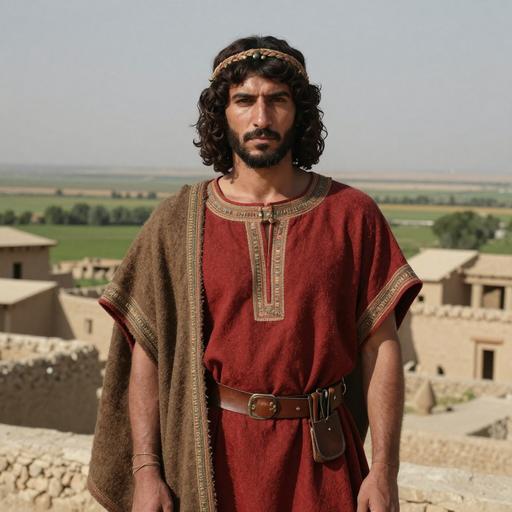
Portrait of ancient individual ALA008 from Turkey, dated 1881 BCE - 1698 BCE
ALA008
Turkey Middle to Late Bronze Age Turkey 1881 BCE - 1698 BCE Anatolian Bronze Age H6a1b Direct
Chapter VI

Carrier Distribution Map

Geographic distribution of 41 ancient DNA samples (direct and subclade carriers of H6A1B)

Direct carrier Subclade carrier
Time Period Filter
All Time Periods
Showing all samples
Chapter VII

Temporal Distribution

Distribution of carriers across archaeological periods

Chapter VIII

Geographic Distribution

Distribution by country of origin (direct and subclade carriers shown by default)

Chapter IX

Country × Era Distribution

Cross-tabulation of carrier countries and archaeological periods (direct and subclade carriers shown by default)

Data

Data & Provenance

Source information and data quality

Last Updated 2026-02-16
Confidence Score 50/100
Coverage Low
Data Source

We use the latest phylotree for MTDNA haplogroup classification and data.