Menu
mtDNA Haplogroup • Maternal Lineage

M10A1

mtDNA Haplogroup M10A1

~8,000 years ago
Central–Northeast Asia
2 subclades
Scroll to explore
Chapter I

The Story

The journey of mtDNA haplogroup M10A1

Origins and Evolution

mtDNA haplogroup M10A1 is a downstream branch of haplogroup M10A, itself a member of haplogroup M10, a lineage that expanded in northern and central parts of East Asia after the Last Glacial Maximum. Based on its phylogenetic position as a daughter clade of M10A and patterns seen in related lineages, M10A1 most likely coalesced in the early Holocene (approximately 8 kya) in a Central–Northeast Asian setting during a period of population recolonization, local differentiation, and increased interaction across the eastern Eurasian steppe.

The emergence of M10A1 fits a broader pattern of postglacial mitochondrial diversification in northern East Asia and southern Siberia, where climatic amelioration and changes in subsistence (mixed hunting–gathering and early pastoral/agropastoral economies) fostered demographic growth and regional dispersal.

Subclades (if applicable)

At present, published and public mtDNA trees indicate that M10A1 may contain a small number of downstream branches, but its internal substructure is relatively shallow and incompletely sampled compared with major pan-Eurasian lineages. Limited sampling and low overall frequency in many populations mean that many putative subclades remain poorly resolved; targeted mitogenome sequencing in Mongolic, Turkic and Siberian groups would clarify finer branching (for example, potential labels such as M10A1a/b in specific studies). Because resolution depends on whole-mitogenome data, many reported M10A1 occurrences from control-region screening may mask additional diversity.

Geographical Distribution

M10A1 shows its highest relative frequencies and diversity in the northern East-Central Asian corridor: data and population surveys place it primarily among Mongolic-speaking groups (Mongolians, Buryats), Turkic-speaking peoples of the Altai region and adjacent Central Asia (Tuvans, Altaians, some Kazakh samples), and several Siberian indigenous populations (Yakut/Sakha, Evenks and related groups). It also occurs at lower but detectable frequencies on the Tibetan Plateau and among northern Han Chinese, Koreans and in scattered Japanese regional samples. Ancient DNA finds linking M10A1 (or its parent M10A) to eastern steppe Bronze Age and Iron Age burials indicate persistence on the steppe and incorporation into nomadic horizons.

Geographically, the distribution of M10A1 conforms to a northern East Eurasian pattern: concentrated in the eastern Eurasian steppe–forest zone and extending into highlands (Tibet) and into pockets of East Asian agricultural populations through admixture and population movements.

Historical and Cultural Significance

The demographics and archaeological contexts associated with M10A1 suggest ties to the population history of the eastern Eurasian steppe and adjacent regions. Although direct ancient-DNA hits are currently limited, occurrences of M10A and M10A1 in Bronze Age and Iron Age eastern steppe assemblages imply continuity or repeated incorporation into steppe populations that later contributed to historically attested nomadic confederations (for example, Saka/Scythian-related groups, Xiongnu-era assemblages, and later Turkic expansions).

In modern populations, M10A1 appears among groups historically associated with pastoralism, horse-related nomadic lifeways, and later medieval movements (Turkic and Mongolic expansions). Its sporadic presence in Tibetan and northern agricultural populations reflects both ancient gene flow across ecological boundaries and more recent admixture.

For genealogical and population-genetic purposes, M10A1 is most informative when assayed at full mitogenome resolution in regional studies; its presence in an individual points to a northern East Eurasian maternal ancestry component rather than to a specific ethnic label.

Conclusion

M10A1 is a modestly diverse, regionally focused mtDNA lineage that arose in Central–Northeast Asia in the early Holocene and traces maternal ancestry associated largely with Mongolic, Turkic and Siberian groups, with secondary occurrences on the Tibetan Plateau and in northern East Asian populations. Ongoing mitogenomic sequencing and broader sampling across steppe and highland regions will refine its internal structure, ancient distribution, and the timing of later dispersals associated with Bronze Age and Iron Age mobile societies.

Key Points

  • Origins and Evolution
  • Subclades (if applicable)
  • Geographical Distribution
  • Historical and Cultural Significance
  • Conclusion
Chapter II

Tree & Relationships

Phylogenetic context and subclades

Evolution Path

This haplogroup's evolutionary journey from its earliest ancestor to the present.

Steps Haplogroup Age Estimate Archaeology Era Time Passed Immediate Descendants Tested Modern Descendants Ancient Connections
1 M10A1 Current ~8,000 years ago 🌾 Neolithic 8,000 years 2 17 0
2 M10A ~12,000 years ago 🌾 Neolithic 12,000 years 2 21 1
3 M10 ~25,000 years ago 🦴 Paleolithic 25,000 years 1 22 0
4 M1 ~26,000 years ago 🦴 Paleolithic 26,000 years 7 119 3
5 M ~60,000 years ago 🦴 Paleolithic 60,000 years 11 1,200 41
6 L3 ~70,000 years ago 🦴 Paleolithic 70,000 years 11 17,621 6
7 L ~160,000 years ago 🦴 Paleolithic 160,000 years 7 18,987 5

Siblings (1)

Other branches from the same parent haplogroup

Chapter III

Where in the World

Geographic distribution and modern presence

Place of Origin

Central–Northeast Asia

Modern Distribution

The populations where mtDNA haplogroup M10A1 is found include:

  1. Mongolic-speaking groups (Mongolians, Buryats)
  2. Turkic-speaking populations of the Altai and Central Asia (Tuvans, Altaians, some Kazakh samples)
  3. Siberian indigenous peoples (Yakut/Sakha, Evenk and other north Siberian groups)
  4. Tibetan Plateau populations (Tibetans and neighboring highland groups)
  5. Northern Han Chinese and ethnic minorities in northern China (low to moderate frequency)
  6. Korean peninsula populations (low frequency)
  7. Japan (sporadic/low frequency in some regional samples)
  8. Central Asian groups (Kyrgyz, scattered Uzbek/Kazakh samples at low frequency)
  9. Ancient eastern steppe assemblages (Bronze Age and Iron Age burials associated with nomadic horizons)
  10. Diaspora and admixed East Eurasian communities (scattered occurrences)
CHAPTER IV

When in Time

Your haplogroup in the context of human history

~10k years ago

Neolithic Revolution

Agriculture begins, settled communities form

~8k years ago

Haplogroup M10A1

Your mtDNA haplogroup emerged in Central–Northeast Asia

Central–Northeast Asia
~5k years ago

Bronze Age

Metalworking, writing, and early civilizations

~3k years ago

Iron Age

Iron tools, expanded trade networks

~2k years ago

Classical Antiquity

Greek and Roman civilizations flourish

Present

Present Day

Modern era

Your Haplogroup
Historical Era
Chapter IV-B

Linked Cultures

Ancient cultures associated with mtDNA haplogroup M10A1

Cultural Heritage

These ancient cultures have been linked to haplogroup M10A1 based on matching ancient DNA samples from archaeological excavations. The presence of this haplogroup in these cultures provides insights into the migrations and population movements of populations carrying this haplogroup.

Early Avar Goyet Cave Hunnic Period Indonesian Hunter-Gatherer Culture Medieval Tuv Scythian Sukhbaatar Bronze Culture Tang Culture Three Kingdoms Period Xiongnu Culture
Culture assignments are based on archaeological context of ancient DNA samples and may represent regional associations during specific time periods.
Chapter V

Sample Catalog

10 subclade carriers of haplogroup M10A1 (no exact M10A1 samples sequenced yet)

10 / 10 samples
Portrait Sample Country Era Date Culture mtDNA Match
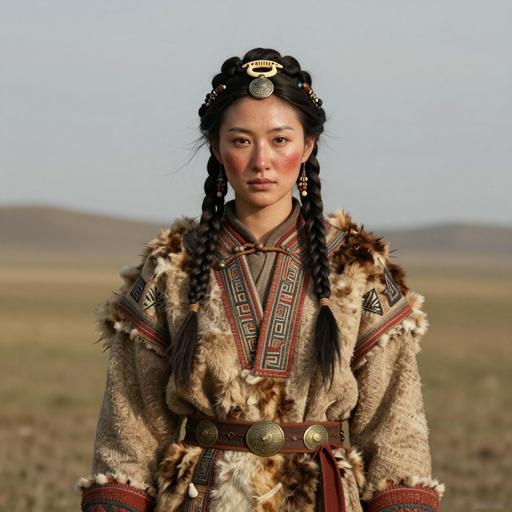
Portrait of ancient individual JAA001 from Mongolia, dated 200 BCE - 1 BCE
JAA001
Mongolia Xiongnu Period Khentii, Mongolia 200 BCE - 1 BCE Xiongnu Culture M10a1b Downstream
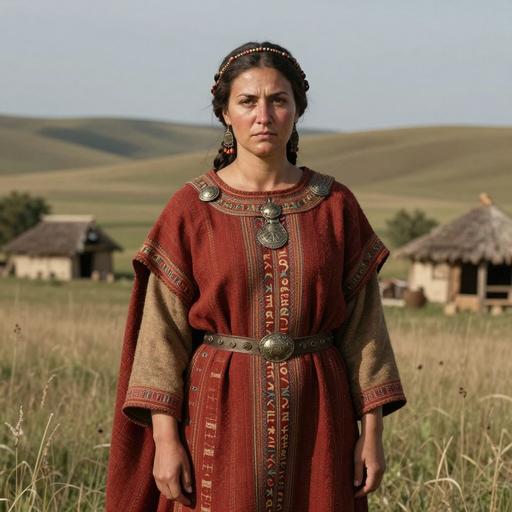
Portrait of ancient individual scy332 from Moldova, dated 250 CE - 411 CE
scy332
Moldova Scythian Period Glinoe, Moldova 250 CE - 411 CE Scythian M10a1a1a Downstream
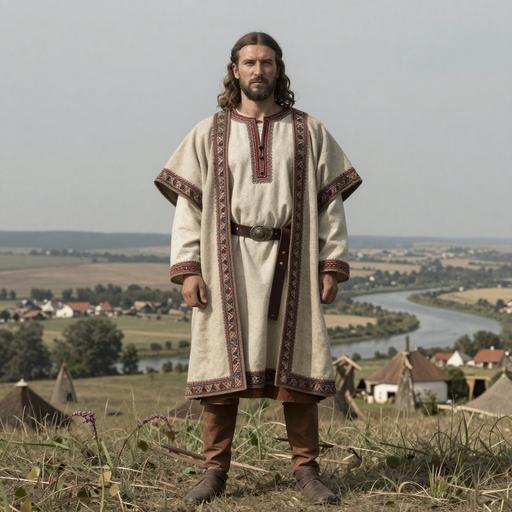
Portrait of ancient individual DA72 from Kyrgyzstan, dated 250 CE - 535 CE
DA72
Kyrgyzstan The Hun Period in Kyrgyzstan 250 CE - 535 CE Hunnic Period M10a1-a Downstream
Portrait of ancient individual DA72 from Kyrgyzstan, dated 250 CE - 535 CE
DA72
Kyrgyzstan The Huns 250 CE - 535 CE M10a1-a Downstream
Portrait of ancient individual scy332 from Moldova, dated 250 CE - 411 CE
scy332
Moldova The Scythian Culture 250 CE - 411 CE M10a1a1a Downstream
Portrait of ancient individual AKG_10209 from South Korea, dated 300 CE - 500 CE
AKG_10209
South Korea The Three Kingdoms of Korea 300 CE - 500 CE Three Kingdoms Period M10a1b Downstream
Portrait of ancient individual RKF164 from Hungary, dated 550 CE - 700 CE
RKF164
Hungary Early Avar Period Hungary 550 CE - 700 CE Early Avar M10a1a1b Downstream
Portrait of ancient individual RKF185 from Hungary, dated 550 CE - 700 CE
RKF185
Hungary Early Avar Period Hungary 550 CE - 700 CE Early Avar M10a1a1b Downstream
Portrait of ancient individual RKF148 from Hungary, dated 606 CE - 646 CE
RKF148
Hungary Early Avar Period Hungary 606 CE - 646 CE Early Avar M10a1a1b Downstream
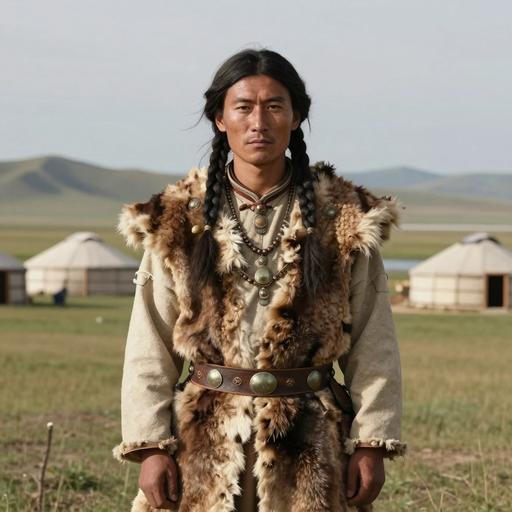
Portrait of ancient individual BUL002 from Mongolia, dated 2000 BCE - 700 BCE
BUL002
Mongolia Middle to Late Bronze Age Sukhbaatar, Mongolia 2000 BCE - 700 BCE Sukhbaatar Bronze Culture M10a1b Downstream
Chapter VI

Carrier Distribution Map

Geographic distribution of 10 ancient DNA samples (direct and subclade carriers of M10A1)

Subclade carrier
Time Period Filter
All Time Periods
Showing all samples
Chapter VII

Temporal Distribution

Distribution of carriers across archaeological periods

Chapter VIII

Geographic Distribution

Distribution by country of origin (direct and subclade carriers shown by default)

Chapter IX

Country × Era Distribution

Cross-tabulation of carrier countries and archaeological periods (direct and subclade carriers shown by default)

Data

Data & Provenance

Source information and data quality

Last Updated 2026-02-16
Confidence Score 50/100
Coverage Low
Data Source

We use the latest phylotree for MTDNA haplogroup classification and data.