The Story
The journey of mtDNA haplogroup M65A1
Origins and Evolution
mtDNA haplogroup M65A1 is a downstream subclade of M65A, itself a lineage nested within macro-haplogroup M, which is widespread across Eurasia and especially diverse in South Asia. Based on the age of its parent clade (M65A ~10.5 kya) and limited internal diversity documented in modern samples, M65A1 most likely arose on the Indian subcontinent during the early Holocene (roughly 9 kya). The emergence of M65A1 is consistent with postglacial demographic processes in South Asia — local population expansions and structure among hunter‑gatherer groups and early agricultural communities rather than large-scale incoming migrations from western Eurasia.
Subclades
As sampled to date, M65A1 appears to be a relatively shallow subclade with limited resolved downstream structure in published datasets. A few private or regionally restricted lineages have been reported, but dense full‑mitogenome sampling across understudied tribal and rural groups is still needed to reveal whether M65A1 contains distinct geographic subbranches (for example, eastern vs. western subclades). In many cases M65A1 is recognized on the basis of a small set of defining mutations within the M65A backbone; additional whole‑mitogenome sequencing may refine its internal topology.
Geographical Distribution
M65A1 is principally a South Asian lineage with highest representation (albeit usually low to moderate frequency) within the Indian subcontinent. Modern observations concentrate in:
- Tribal (Adivasi) populations across central and eastern India
- Diverse caste groups distributed across India, sometimes at lower frequencies
- Sri Lankan populations (both Tamil and Sinhalese) at low–moderate frequencies
- Inland Bangladeshi groups and populations in the Gangetic plain
- Nepali populations and foothill communities along the Himalaya
- Eastern Indian states and communities near the Myanmar border
- Low‑frequency detections in Tibet‑border/highland groups, likely reflecting limited gene flow or recent contact
- Minor occurrences in South Asian diasporas outside the subcontinent
The presence of M65A1 in one confirmed ancient DNA sample in curated databases provides direct archaeological evidence that this lineage was present in the region in the past, supporting continuity of at least some maternal lineages from the Holocene to today.
Historical and Cultural Significance
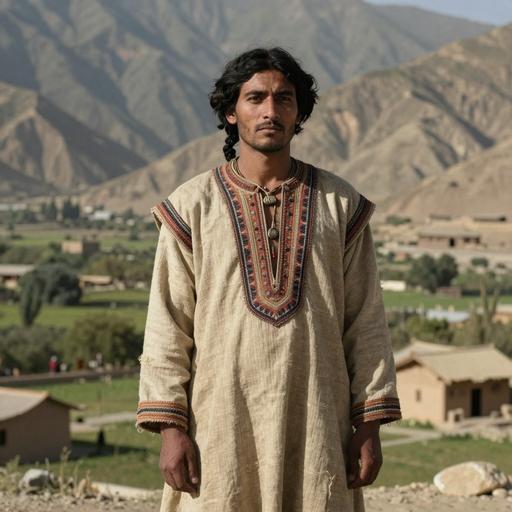
M65A1 is best interpreted as a regional maternal marker tied to the demographic history of South Asia rather than as an indicator of a specific large pan‑continental migration. Its distribution among both tribal and caste populations suggests persistence of older local maternal lineages through cultural transitions, including the local adoption of agriculture and later social stratification. Associations with Neolithic/early Holocene forager and early farming contexts (e.g., local Neolithic settlements such as Mehrgarh and broader Indus‑region networks) are plausible, though the lineage is not a defining signature of any single archaeological culture on its own. The haplogroup’s relative rarity in many urban and western Eurasian‑admixed contexts highlights its role as part of the indigenous South Asian maternal substrate.
Conclusion
mtDNA haplogroup M65A1 represents a geographically focused maternal lineage that arose on the Indian subcontinent in the early Holocene. Its persistence across tribal, caste, and neighboring populations, occasional appearance in ancient remains, and low–moderate frequencies across South Asia make it a useful marker for studies of regional maternal continuity, microgeographic structure, and postglacial demographic processes in South Asia. Greater mitogenome sampling across underrepresented groups will improve age estimates and reveal any finer substructure within M65A1.
Key Points
- Origins and Evolution
- Subclades
- Geographical Distribution
- Historical and Cultural Significance
- Conclusion