Menu
mtDNA Haplogroup • Maternal Lineage

R1B1

mtDNA Haplogroup R1B1

~15,000 years ago
South Asia
1 subclades
Scroll to explore
Chapter I

The Story

The journey of mtDNA haplogroup R1B1

Origins and Evolution

mtDNA haplogroup R1B1 is a subclade of mtDNA haplogroup R1, itself a branch of the widespread macro-haplogroup R. Based on its phylogenetic position and coalescence estimates for related R1 lineages, R1B1 most likely diversified in the South Asian subcontinent during the Late Pleistocene to early Holocene (a reasonable estimate for the split of this subclade is on the order of ~15 kya). Its emergence reflects regional maternal diversification after the initial spread of macro-haplogroup R out of Southwest and South Asia. The clade shows derived mutations that distinguish it from sister clades within R1 and is part of the mosaic of lineages that characterize deep maternal structure in South Asia.

Subclades

R1B1 contains internal variation at the sequence level (private mutations and downstream branches) that are increasingly being resolved as more high-coverage mitochondrial genomes from South Asia are generated. Some sampled lineages fall into well-defined minor subbranches, while others remain categorized as basal R1B1 due to limited sampling. Compared with continental macro-haplogroups (e.g., M or U), the internal topology of R1B1 is relatively shallow in published trees but shows geographically localized differentiation consistent with long-term regional presence.

Geographical Distribution

The highest frequencies and diversity of R1B1 are found within the Indian subcontinent, where it appears in a broad range of caste and tribal groups. Lower-frequency occurrences extend into Pakistan (particularly Punjab and Sindh), Sri Lanka, and sporadically into Central Asia, Southeast Asia (e.g., Myanmar, Thailand) and East Asia, where detections are rare. The observed pattern—high diversity in South Asia with scattered low-frequency occurrences beyond—supports an origin in South Asia with later limited dispersals or gene flow events leading to its presence outside the core region. In ancient DNA datasets, R1B1 has been identified in multiple archaeological samples (46 occurrences in the user database), indicating persistence through Holocene periods in the region.

Historical and Cultural Significance

Because R1B1 likely predates major Holocene cultural horizons in South Asia, it is most informative about pre-Neolithic and early Holocene maternal population structure. Its presence across diverse modern South Asian groups suggests long-term regional continuity and local differentiation rather than association with a single recent demographic replacement. Where R1B1 appears in archaeological contexts, it can help trace maternal lineages across transitions such as the Mesolithic-to-Neolithic and later Bronze Age cultural expansions. While not diagnostic of any single archaeological culture, R1B1 contributes to the maternal backdrop against which cultures like the Indus Valley Civilization developed.

Conclusion
mtDNA haplogroup R1B1 is a South Asia-centered maternal lineage that represents a regional branch of macro-haplogroup R. Its distribution—high diversity and frequency in the Indian subcontinent with sporadic low-frequency occurrences elsewhere—points to a Late Pleistocene/early Holocene origin in South Asia followed by local diversification and limited outward gene flow. Continued mitogenome sequencing and ancient DNA sampling across South and neighboring regions will refine the internal structure, time depth, and migratory episodes associated with R1B1.

Key Points

  • Origins and Evolution
  • Subclades
  • Geographical Distribution
  • Historical and Cultural Significance
  • Conclusion

Chapter II

Tree & Relationships

Phylogenetic context and subclades

Evolution Path
This haplogroup's evolutionary journey from its earliest ancestor to the present.

Steps Haplogroup Age Estimate Archaeology Era Time Passed Immediate Descendants Tested Modern Descendants Ancient Connections
1 R1B1 Current ~15,000 years ago 🏹 Mesolithic 15,000 years 1 0 0
2 R1B ~20,000 years ago 🏹 Mesolithic 20,000 years 1 1 58
3 R1 ~40,000 years ago 🦴 Paleolithic 40,000 years 4 11 8
4 R ~60,000 years ago 🦴 Paleolithic 60,000 years 12 10,987 57
5 N ~60,000 years ago 🦴 Paleolithic 60,000 years 15 15,452 13
6 L3 ~70,000 years ago 🦴 Paleolithic 70,000 years 11 17,621 6
7 L ~160,000 years ago 🦴 Paleolithic 160,000 years 7 18,987 5
Chapter III

Where in the World

Geographic distribution and modern presence
Place of Origin

South Asia

Modern Distribution

The populations where MTDNA haplogroup R1B1 is found include:

  1. Various populations across India (including tribal and caste groups)
  2. Pakistani populations (e.g., Punjab, Sindh)
  3. Sri Lankan populations (at lower frequencies)
  4. Central Asian groups (sporadic occurrences)
  5. Southeast Asian populations (low frequencies; e.g., Myanmar, Thailand)
  6. East Asian populations (rare/low frequency detections)
CHAPTER IV

When in Time

Your haplogroup in the context of human history

~20k years ago

Last Glacial Maximum

Peak of the last ice age, populations isolated

~15k years ago

Haplogroup R1B1

Your mtDNA haplogroup emerged in South Asia

South Asia
~10k years ago

Neolithic Revolution

Agriculture begins, settled communities form

~5k years ago

Bronze Age

Metalworking, writing, and early civilizations

~3k years ago

Iron Age

Iron tools, expanded trade networks

~2k years ago

Classical Antiquity

Greek and Roman civilizations flourish

Present

Present Day

Modern era

Your Haplogroup
Historical Era
Chapter IV-B

Linked Cultures

Ancient cultures associated with mtDNA haplogroup R1B1

Cultural Heritage

These ancient cultures have been linked to haplogroup R1B1 based on matching ancient DNA samples from archaeological excavations. The presence of this haplogroup in these cultures provides insights into the migrations and population movements of populations carrying this haplogroup.

Baalberge Culture Ertebølle Körös Culture Koshkino-Boborykino Late Medieval Nordic Ob River Culture Ust-Belaya Culture Ust-Ida Culture
Culture assignments are based on archaeological context of ancient DNA samples and may represent regional associations during specific time periods.
Chapter V

Sample Catalog

41 direct carriers and 1 subclade carrier of haplogroup R1B1

42 / 42 samples
Portrait Sample Country Era Date Culture mtDNA Match
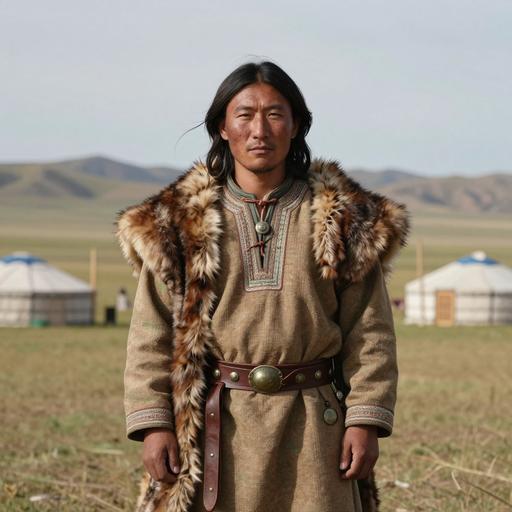
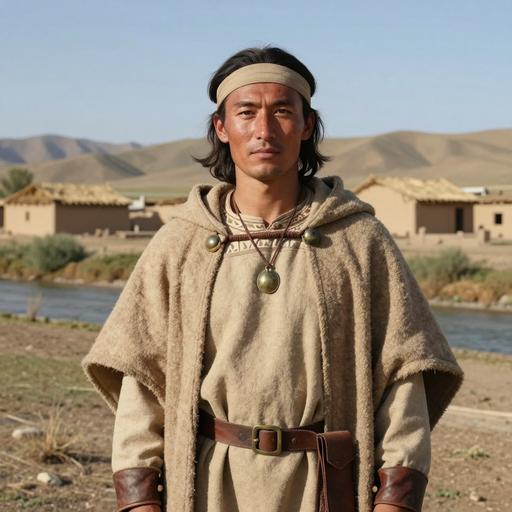
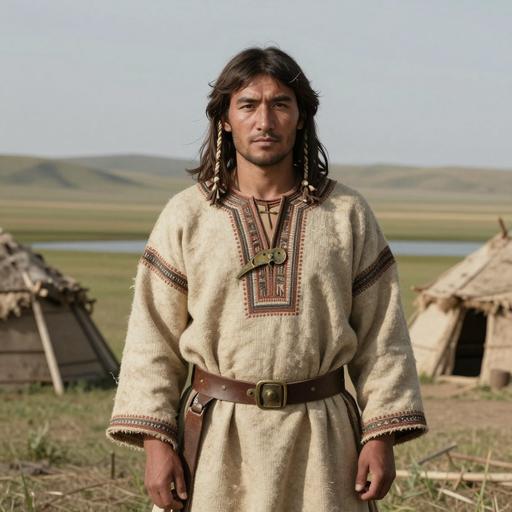
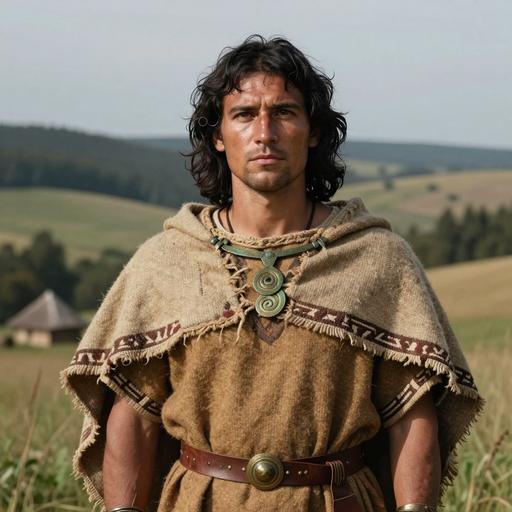
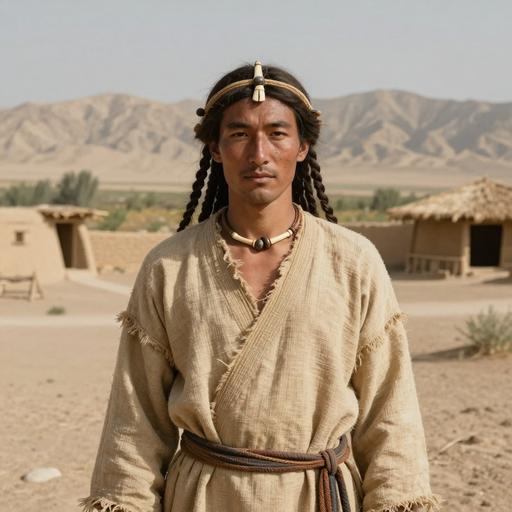
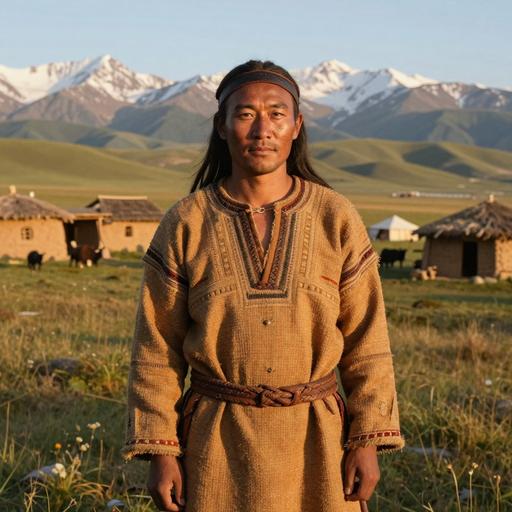
Portrait of ancient individual C3359 from China, dated 166 BCE - 11 BCE
C3359
China Iron Age Zeketai, Xinjiang, China 166 BCE - 11 BCE Zeketai Culture R1b1 Direct
Portrait of ancient individual C3361 from China, dated 166 BCE - 11 BCE
C3361
China Iron Age Zeketai, Xinjiang, China 166 BCE - 11 BCE Zeketai Culture R1b1 Direct
Portrait of ancient individual BIY002 from Russia, dated 300 BCE - 100 BCE
BIY002
Russia Iron Age Sargat Culture, Russia 300 BCE - 100 BCE Sargat Culture R1b1 Direct
Portrait of ancient individual C3617 from China, dated 387 BCE - 200 BCE
C3617
China Iron Age Baiyanghe 2, Xinjiang, China 387 BCE - 200 BCE Baiyanghe II Culture R1b1 Direct
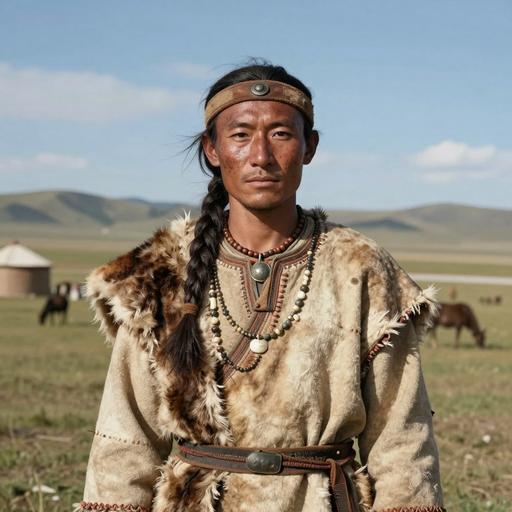
Portrait of ancient individual I7024 from Mongolia, dated 389 BCE - 208 BCE
I7024
Mongolia Early Iron Age Sagly Culture 4, Mongolia 389 BCE - 208 BCE Sagly Culture R1b1 Direct
Portrait of ancient individual C1362 from China, dated 401 BCE - 211 BCE
C1362
China Iron Age Jirentaigoukou, Xinjiang, China 401 BCE - 211 BCE Jirentaigoukou Culture R1b1 Direct
Portrait of ancient individual MAS004 from Italy, dated 805 BCE - 567 BCE
MAS004
Italy Etruscan Grosseto, Italy 805 BCE - 567 BCE Etruscan R1b1 Direct
Portrait of ancient individual I13767 from Mongolia, dated 1377 BCE - 1130 BCE
I13767
Mongolia Late Bronze Age Center West 4, Mongolia 1377 BCE - 1130 BCE Center West 4 R1b1 Direct
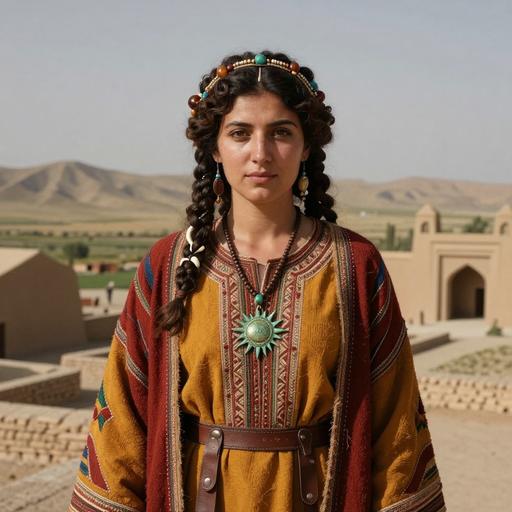
Portrait of ancient individual I11521 from Uzbekistan, dated 1600 BCE - 1300 BCE
I11521
Uzbekistan Bronze Age Bustan 1600 BCE - 1300 BCE Bustan Culture R1b1 Direct
Portrait of ancient individual I3864 from Kazakhstan, dated 1729 BCE - 1538 BCE
I3864
Kazakhstan Mid-Late Bronze Solyanka 1729 BCE - 1538 BCE Solyanka Culture R1b1 Direct
Chapter VI

Carrier Distribution Map

Geographic distribution of 42 ancient DNA samples (direct and subclade carriers of R1B1)

Direct carrier Subclade carrier
Time Period Filter
All Time Periods
Showing all samples
Chapter VII

Temporal Distribution

Distribution of carriers across archaeological periods

Chapter VIII

Geographic Distribution

Distribution by country of origin (direct and subclade carriers shown by default)

Chapter IX

Country × Era Distribution

Cross-tabulation of carrier countries and archaeological periods (direct and subclade carriers shown by default)

Data

Data & Provenance

Source information and data quality

Last Updated 2026-02-16
Confidence Score 50/100
Coverage Low
Data Source

We use the latest phylotree for MTDNA haplogroup classification and data.