The Story
The journey of Y-DNA haplogroup I2A1A2
Origins and Evolution
Y-DNA haplogroup I2A1A2 sits as a downstream branch of I2A1A and is best understood as a regional continuation of the deeply rooted I2 presence in postglacial southeastern Europe. Based on its phylogenetic position and the distribution of related lineages, I2A1A2 most likely coalesced in the Balkans during the early Holocene (roughly around 9 kya), after the Last Glacial Maximum. This timing and location are consistent with a scenario in which Mesolithic hunter-gatherer male lineages in the Dinaric/Balkan refugium persisted locally and gave rise to differentiated subclades during the early Holocene demographic expansions.
Ancient DNA evidence (including the 77 aDNA occurrences recorded in regional databases) shows I2A1A2 in multiple archaeological contexts across the Balkans and nearby regions, supporting a long-term local presence with later demographic events producing higher frequencies in particular valleys, mountain ranges and coastal islands.
Subclades
I2A1A2 contains internal branches characterized by geographically restricted founder effects rather than a single rapid continenteal expansion. Some subbranches show signatures of local bottlenecks and high regional frequency (for example in Dinaric highlands or on Mediterranean islands), while other subbranches are rarer and more widely scattered, reflecting limited male-mediated gene flow into neighboring Central and parts of Western Europe. Fine-scale SNP-defined subclades within I2A1A2 recorded in modern and ancient samples are useful for tracing micro-regional demographic histories (local expansions, island founder events, and persistence through the Neolithic and Bronze Age).
Geographical Distribution
The highest frequencies of I2A1A2 occur in the Western Balkans and Dinaric populations (Bosnia, Croatia, Montenegro) with appreciable presence across Southeast Europe (Serbia, North Macedonia, Albania). Secondary concentrations are seen in nearby Central European populations (Slovenia, parts of Austria, northern Croatia). Small but notable island occurrences (e.g., Sardinia and other Mediterranean island pockets) reflect island founder effects and/or retention of older lineages. Low-frequency occurrences appear across parts of Western and Northern Europe (the British Isles, France) and scattered parts of Eastern Europe (Romania, western Ukraine, parts of Poland), typically representing later gene flow rather than a primary homeland for the clade.
Historical and Cultural Significance
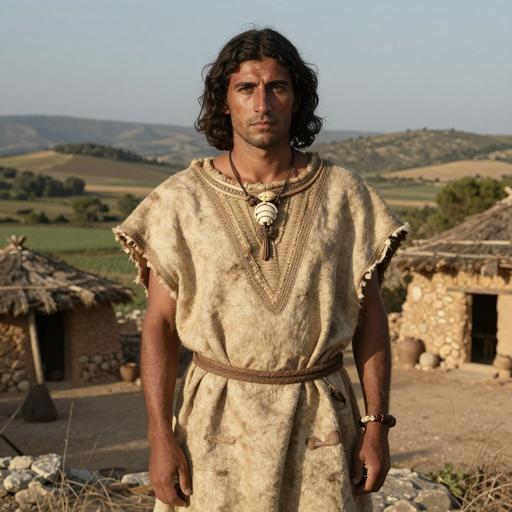
Genetic and archaeological correlations suggest I2A1A2 is predominantly associated with local Mesolithic-to-Neolithic continuity in the Balkans rather than with the large-scale steppe-driven expansions that spread haplogroups like R1a and R1b. In the Neolithic, some I2A1A2 lineages persisted alongside incoming farming groups (Starčevo, Vinca-related networks) and later participated in regionally specific Bronze Age demographic processes. The clade's presence in medieval and modern Dinaric populations points to deep regional continuity that influenced cultural groups historically described in the region (for example, populations labelled in historic sources as Illyrian or Dinaric peoples), although specific cultural labels must be used cautiously in genetic interpretation.
I2A1A2 appears only sporadically in contexts tied to pan-European phenomena like Bell Beaker; when present, it typically represents local admixture or survival of pre-existing male lineages rather than being a driver of those expansions.
Conclusion
I2A1A2 is best interpreted as a regional, postglacial Balkan lineage that exemplifies continuity of Mesolithic male ancestry in southeastern Europe, followed by localized expansions and long-term persistence in the Dinaric/Balkan area with limited dispersal into adjacent regions and island pockets. Its distribution and substructure make it a useful marker for tracing micro-regional demographic histories across the Balkans and nearby Mediterranean and Central European zones.
Key Points
- Origins and Evolution
- Subclades
- Geographical Distribution
- Historical and Cultural Significance
- Conclusion