The Story
The journey of Y-DNA haplogroup Q1A2A1A
Origins and Evolution
Y-DNA haplogroup Q1A2A1A is a subclade of Q1A2A1, itself nested within haplogroup Q, one of the major paternal branches associated with North Eurasian prehistory. Because it is a downstream lineage, Q1A2A1A almost certainly arose after the initial diversification of Q in the late Upper Paleolithic or early Holocene, most likely in a North Eurasian/Siberian refuge zone where related Q lineages diversified.
The exact age of Q1A2A1A is not yet firmly established in the literature, but a reasonable phylogenetic estimate places its origin around the early Holocene. Its emergence likely reflects the continued fragmentation and expansion of small paternal lineages after the last glacial period, when human groups expanded across northern Eurasia and later into the Americas.
Subclades
As an intermediate or relatively specific subclade, Q1A2A1A may have additional downstream branches that are not yet well characterized in public datasets or may be extremely rare. In many Y-DNA phylogenies, such branches represent a small number of related founder lineages that can remain localized or become scattered through later demographic events.
At the broader level, it belongs to the lineage chain Q → Q1 → Q1A → Q1A2 → Q1A2A → Q1A2A1 → Q1A2A1A. This places it close to paternal lineages linked to populations involved in the spread of Beringian and North Eurasian ancestry, and ultimately to lineages found among Indigenous peoples of the Americas.
Geographical Distribution
Q1A2A1A is expected to be rare overall and to occur at low frequencies across a geographically broad but patchy distribution. Its most plausible center of diversity is North Eurasia, with presence or detectability in:
- Siberian indigenous populations, especially groups with deep northern or eastern Eurasian ancestry
- Indigenous peoples of the Americas, through descent from ancient Q-bearing lineages that moved through Beringia
- Central Asian populations, where multiple ancient Eurasian paternal lineages intersect
- Northern European populations, usually as a trace lineage from historical gene flow from Eurasia
- Some West Eurasian and Middle Eastern populations, typically at very low frequencies due to later movements and admixture
Because this is a subclade of Q, its observed distribution may be strongly influenced by sampling depth and the availability of high-resolution Y-chromosome testing.
Historical and Cultural Significance
While Q1A2A1A itself is not strongly tied to a single named archaeological culture, its broader paternal context is relevant to several major prehistoric population processes. Haplogroup Q lineages are important in studies of:
- Upper Paleolithic and early Holocene North Eurasian hunter-gatherers
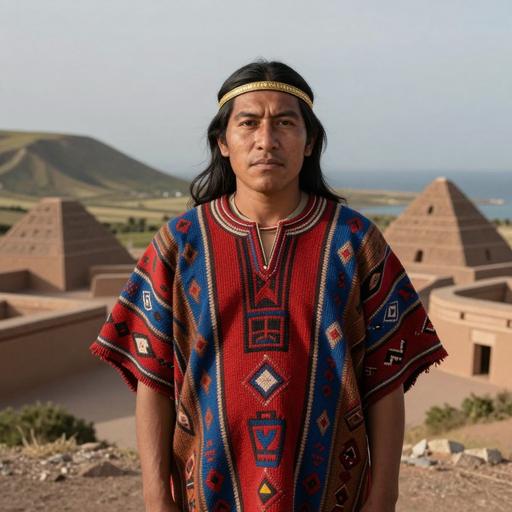
- Beringian populations associated with the peopling of the Americas
- Siberian expansions that shaped the ancestry of many Arctic and sub-Arctic peoples
In cultural-historical terms, descendants of Q lineages are often discussed in relation to Paleo-Siberian, Arctic, and Native American population histories, though the presence of Q1A2A1A in any specific community should not be assumed without direct genetic evidence. The lineage’s significance lies mainly in its value for reconstructing male-line continuity, founder effects, and post-glacial dispersals across northern Eurasia.
Conclusion
Y-DNA haplogroup Q1A2A1A is a rare downstream paternal lineage within haplogroup Q, likely formed in North Eurasia during the early Holocene. Its scientific importance comes from its placement within a broader lineage network that connects Siberian, Beringian, and Indigenous American paternal histories, making it useful for understanding ancient migrations and later regional founder effects.
Key Points
- Origins and Evolution
- Subclades
- Geographical Distribution
- Historical and Cultural Significance
- Conclusion