
Ability to avoid errors
Ability to avoid errors refers to your genetic tendency toward precision, attention to detail, and error avoidance.
What it reveals: A spectrum from lower tendency to avoid errors to higher tendency to avoid errors.


The Traits Catalogue
Each trait is a lens — a way your DNA shows itself in you.
Over 251 genetic windows into who you are.
This page lists all traits included in your Traits Report — each one a reflection of how your DNA may express itself in you.
Think of this as the index of your biological story. Every trait represents a genetic tendency or association — not a destiny, but a possibility. These are whispers from your ancestry, shaped by generations of inheritance and filtered through the unique circumstances of your life.
The traits here span physical expression, sensory perception, behavioral tendencies, and inner well-being. They describe the many facets of human variation — the ways DNA can nudge, influence, and suggest, while never fully determining who you become.
"Think of this as the index of your biological story."
Not predictions. Not certainties. Simply fascinating windows into inherited tendencies.
Search for a trait that speaks to you, or browse by category
Each category is a chapter in your genetic story — explore what resonates with you

Genetic Foundation: These behaviors arise from the dynamic interplay of biology (genetics, brain function), environment (culture, family, community), and individual experiences (learning, memory, values).
Behavior includes all the ways people act, react, and interact, shaped by genetics, environment, and experience.
Ability to avoid errors refers to your genetic tendency toward precision, attention to detail, and error avoidance.
What it reveals: A spectrum from lower tendency to avoid errors to higher tendency to avoid errors.

Cannabis use susceptibility refers to your genetic tendency toward developing patterns of cannabis use.
What it reveals: A spectrum from lower cannabis use susceptibility tendency to higher cannabis use susceptibility tendency.

Falling resistance in older age refers to your genetic tendency toward maintaining balance and stability as you age.
What it reveals: A spectrum from higher falling resistance in older age to lower falling resistance in older age.

Food addiction susceptibility refers to your genetic tendency toward developing compulsive eating behaviors and food addiction.
What it reveals: A spectrum from lower food addiction susceptibility to higher food addiction susceptibility.

Gait speed in older age refers to your genetic tendency toward maintaining walking speed and mobility as you age.
What it reveals: A spectrum from lower gait speed in older age to higher gait speed in older age.

Gambling addiction susceptibility refers to your genetic tendency toward developing problematic gambling behaviors.
What it reveals: A spectrum from lower gambling addiction susceptibility to higher gambling addiction susceptibility.
Heroin addiction resistance refers to your genetic tendency toward avoiding heroin addiction and maintaining healthy brain chemistry.
What it reveals: A spectrum from lower heroin addiction resistance to higher heroin addiction resistance.

Left-handedness refers to your genetic tendency toward preferring to use your left hand for tasks that require precision and skill.
What it reveals: A spectrum from lower left-handedness tendency to higher left-handedness tendency.

Mosquito bite itch susceptibility refers to your genetic tendency toward experiencing intense itching from mosquito bites.
What it reveals: A spectrum from lower mosquito bite itch susceptibility tendency to higher mosquito bite itch susceptibility tendency.

Motion sickness resistance refers to your genetic tendency toward resisting motion sickness symptoms like nausea and ...
What it reveals: A spectrum from lower motion sickness resistance to higher motion sickness resistance.

Narcolepsy susceptibility refers to your genetic tendency toward developing narcolepsy, a sleep disorder characterize...
What it reveals: A spectrum from lower narcolepsy susceptibility tendency to higher narcolepsy susceptibility tendency.

Nicotine addiction resistance refers to your genetic tendency toward avoiding nicotine addiction and maintaining healthy smoking behavior.
What it reveals: A spectrum from lower nicotine addiction resistance to higher nicotine addiction resistance.

Obsessions with washing and cleaning susceptibility refers to your genetic tendency toward developing obsessive-compu...
What it reveals: A spectrum from lower obsessions with washing/cleaning susceptibility tendency to higher obsessions with washing/cleaning susceptibility tendency.

Opioid addiction resistance refers to your genetic tendency toward avoiding opioid addiction and maintaining healthy brain chemistry.
What it reveals: A spectrum from lower opioid addiction resistance to higher opioid addiction resistance.

Regular attendance at a gym or sports club refers to your genetic tendency toward maintaining consistent exercise hab...
What it reveals: A spectrum from lower regular attendance at a gym or sports club tendency to higher regular attendance at a gym or sports club tendency.

Regular attendance at a pub or social club refers to your genetic tendency toward seeking social interactions and participating in group activities.
What it reveals: A spectrum from lower regular attendance at a pub or social club tendency to higher regular attendance at a pub or social club tendency.

Regular attendance at a religious group refers to your genetic tendency toward seeking spiritual community and participating in religious activities.
What it reveals: A spectrum from lower regular attendance at a religious group tendency to higher regular attendance at a religious group tendency.

Restless legs syndrome refers to your genetic tendency toward experiencing an uncontrollable urge to move your legs, especially at night.
What it reveals: A spectrum from lower restless legs syndrome tendency to higher restless legs syndrome tendency.

Risk-taking behavior refers to your genetic tendency toward engaging in or avoiding risky activities and decisions.
What it reveals: A spectrum from lower risk-taking behavior to higher risk-taking behavior.

Smoking addiction susceptibility refers to your genetic tendency toward developing nicotine addiction and difficulty quitting smoking.
What it reveals: A spectrum from lower smoking addiction susceptibility to higher smoking addiction susceptibility.

Smoking behavior refers to your genetic tendency toward smoking initiation, maintenance, and cessation.
What it reveals: A spectrum from lower smoking behavior tendency to higher smoking behavior tendency.

Snacking behavior refers to your genetic tendency toward consuming food between meals and your snacking patterns.
What it reveals: A spectrum from lower snacking behavior tendency to higher snacking behavior tendency.

Speeding propensity susceptibility refers to your genetic tendency toward engaging in speeding behavior while driving.
What it reveals: A spectrum from lower speeding propensity susceptibility to higher speeding propensity susceptibility.

Core Function: Proper hydration and dietary fiber also support digestion, immune function, and metabolic balance.
Diet includes the types and quantities of food consumed, balancing macronutrients and micronutrients for health and energy.

Artificially sweetened beverage consumption tendency refers to your genetic tendency toward preferring and consuming ...
What it reveals: A spectrum from lower artificially sweetened beverage consumption tendency to higher artificially sweetened beverage consumption tendency.

Bitter alcoholic beverage consumption tendency refers to your genetic tendency toward preferring and consuming bitter...
What it reveals: A spectrum from lower bitter alcoholic beverage consumption tendency to higher bitter alcoholic beverage consumption tendency.

Bitter beverage consumption tendency refers to your genetic tendency toward preferring and consuming bitter drinks li...
What it reveals: A spectrum from lower bitter beverage consumption tendency to higher bitter beverage consumption tendency.
Childhood obesity has become increasingly common, with approximately one-third of children in the United States now classified as overweight or obese.
What it reveals: A spectrum from lower blood glucose in obese children tendency to higher blood glucose in obese children tendency.

Blood pressure is the force exerted by blood against the walls of your arteries as it circulates through your body.
What it reveals: A spectrum from lower blood pressure tendency to higher blood pressure tendency.

Caffeine can trigger your body's "fight or flight" response, creating physiological changes similar to those experienced during stressful situations.
What it reveals: A spectrum from lower caffeine and anxiety tendency to higher caffeine and anxiety tendency.

Carbohydrate tolerance, also known as insulin sensitivity, refers to how efficiently your body processes and utilizes...
What it reveals: A spectrum from lower carbohydrate tolerance to higher carbohydrate tolerance.

Coffee consumption tendency refers to your genetic tendency toward preferring and consuming coffee beverages.
What it reveals: A spectrum from lower coffee consumption tendency to higher coffee consumption tendency.

Cruciferous vegetables include broccoli, cauliflower, Brussels sprouts, kale, cabbage, and other members of the Brassica family.
What it reveals: A spectrum from lower cruciferous vegetable needs tendency to higher cruciferous vegetable needs tendency.

Fat tolerance refers to how your body responds to different types of dietary fats.
What it reveals: A spectrum from lower fat tolerance to higher fat tolerance.

Celiac disease is a complex condition influenced by multiple genes interacting with environmental factors.
What it reveals: A spectrum from lower genetic tendency toward celiac disease to higher genetic tendency toward celiac disease.

Peanut allergy is one of the most common causes of severe allergic reactions.
What it reveals: A spectrum from lower genetic tendency toward peanut allergy to higher genetic tendency toward peanut allergy.
Gluten tolerance refers to your body's ability to digest and process foods containing gluten without experiencing adverse reactions.
What it reveals: A spectrum from lower gluten tolerance to higher gluten tolerance.

Grapefruit juice consumption tendency refers to your genetic tendency toward preferring and consuming grapefruit juice.
What it reveals: A spectrum from lower grapefruit juice consumption tendency to higher grapefruit juice consumption tendency.

Histamine intolerance is a condition where your body becomes overly sensitive to histamine, a compound naturally prod...
What it reveals: A spectrum from lower histamine intolerance to higher histamine intolerance.

Hunger is influenced by several factors including your hypothalamus (a part of your brain), blood sugar levels, the s...
What it reveals: A spectrum from lower hunger response control to higher hunger response control.

Lactose intolerance occurs when your body can't properly digest lactose, the natural sugar found in milk and dairy products.
What it reveals: A spectrum from lower lactose intolerance to higher lactose intolerance.

Pure non-grapefruit juice consumption tendency refers to your genetic tendency toward preferring and consuming 100% f...
What it reveals: A spectrum from lower pure non-grapefruit juice consumption tendency to higher pure non-grapefruit juice consumption tendency.

Most people who are overweight or obese try to lose weight by reducing calories in their diet.
What it reveals: A spectrum from lower response to diet to higher response to diet.

When you exercise or participate in sports, you become more aware of various parts of your body.
What it reveals: A spectrum from lower response to exercise to higher response to exercise.
Salt tolerance refers to a physiological trait present in mammals, including humans, where some people's blood pressu...
What it reveals: A spectrum from lower salt tolerance to higher salt tolerance.

Sugar moderation refers to genetic factors that help your body regulate sugar consumption and metabolism.
What it reveals: A spectrum from lower sugar moderation tendency to higher sugar moderation tendency.

Sugar preference control refers to genetic factors that help regulate your preferences for sweet foods.
What it reveals: A spectrum from lower sugar preference control to higher sugar preference control.

Sugar-sweetened beverage consumption tendency refers to your genetic tendency toward preferring and consuming drinks ...
What it reveals: A spectrum from lower sugar-sweetened beverage consumption tendency to higher sugar-sweetened beverage consumption tendency.

Sweet beverage consumption tendency refers to your genetic tendency toward preferring and consuming sweet drinks like...
What it reveals: A spectrum from lower sweet beverage consumption tendency to higher sweet beverage consumption tendency.

Taste sensitivity refers to the minimum concentration at which you can perceive specific taste qualities, such as sweet, sour, salty, and bitter.
What it reveals: A spectrum from lower taste sensitivity to higher taste sensitivity.

Tea consumption tendency refers to your genetic tendency toward preferring and consuming tea beverages.
What it reveals: A spectrum from lower tea consumption tendency to higher tea consumption tendency.

Weight management refers to genetic factors that help your body maintain a healthy weight and metabolism.
What it reveals: A spectrum from lower weight management ability to higher weight management ability.

Weight stability refers to genetic factors that help your body maintain a stable weight.
What it reveals: A spectrum from lower weight stability to higher weight stability.

Core Function: Psychologically, engaging with music and movement stimulates cognitive functions, elevates mood through endorphin release, and strengthens memory by linking auditory and motor experiences.
Music & Dance are art forms that express human creativity through sound and movement, fostering social connection and emotional expression.

Musical aptitude refers to your genetic tendency toward acquiring musical skills and knowledge.
What it reveals: A spectrum from lower musical aptitude tendency to higher musical aptitude tendency.

Musical beat synchronization refers to your genetic tendency toward perceiving and synchronizing with rhythmic patterns in music.
What it reveals: A spectrum from lower musical beat synchronization tendency to higher musical beat synchronization tendency.
Perfect pitch refers to your genetic tendency toward identifying or reproducing musical notes without a reference tone.
What it reveals: A spectrum from lower perfect pitch tendency to higher perfect pitch tendency.

Environmental Factors: Understanding nutritional principles enables informed food choices, guiding meal planning, supplementation, and lifestyle habits that support lifelong wellbeing..
Nutrition is how the body obtains and uses food for energy, growth, and health.

Beta-carotene levels and vitamin A metabolization refer to your body's ability to process and convert beta-carotene (a plant pigment) into vitamin A.
What it reveals: A spectrum from lower beta-carotene levels and vitamin a metabolization to higher beta-carotene levels and vitamin a metabolization.

Calcium is a mineral that makes up your bones and also exists as a dissolved salt in your blood that helps regulate various bodily functions.
What it reveals: A spectrum from lower calcium levels to higher calcium levels.
High-density lipoprotein (HDL) cholesterol is often called the "good cholesterol." This helpful scavenger travels thr...
What it reveals: A spectrum from lower cholesterol - hdl cholesterol levels to higher cholesterol - hdl cholesterol levels.

Iron is an essential mineral that plays a crucial role in your body.
What it reveals: A spectrum from lower iron levels to higher iron levels.

LDL cholesterol management refers to your body's ability to effectively process and regulate low-density lipoprotein cholesterol levels.
What it reveals: A spectrum from lower ldl cholesterol management ability to higher ldl cholesterol management ability.

Lead is a heavy metal that can be absorbed and stored in your bones, blood, and tissues.
What it reveals: A spectrum from lower lead levels to higher lead levels.

Long-chain omega fatty acid levels refer to your body's ability to maintain healthy levels of important fatty acids like EPA and DHA.
What it reveals: A spectrum from lower long-chain omega fatty acid levels to higher long-chain omega fatty acid levels.

Magnesium is an essential mineral that plays important roles in many bodily functions.
What it reveals: A spectrum from lower magnesium levels to higher magnesium levels.
Omega-3 fatty acid processing refers to your body's ability to efficiently metabolize and utilize alpha-linolenic acid (ALA).
What it reveals: A spectrum from lower omega-3 (ala) processing tendency to higher omega-3 (ala) processing tendency.
Omega-3 fatty acid processing refers to your body's ability to efficiently metabolize and utilize docosahexaenoic acid (DHA).
What it reveals: A spectrum from reduced ability to metabolize omega-3 (dha) to enhanced ability to metabolize omega-3 (dha).
Omega-3 fatty acid processing refers to your body's ability to efficiently metabolize and utilize docosapentaenoic acid (DPA).
What it reveals: A spectrum from lower efficiency in processing omega-3 (dpa) to higher efficiency in processing omega-3 (dpa).
Omega-3 fatty acid processing refers to your body's ability to efficiently metabolize and utilize eicosapentaenoic acid (EPA).
What it reveals: A spectrum from reduced ability to metabolize omega-3 (epa) to enhanced ability to metabolize omega-3 (epa).

Phosphorus is an essential mineral that plays crucial roles in your body.
What it reveals: A spectrum from lower phosphorus levels to higher phosphorus levels.

Polyunsaturated fat processing refers to your body's ability to efficiently metabolize and utilize polyunsaturated fatty acids (PUFAs).
What it reveals: A spectrum from lower polyunsaturated fat processing tendency to higher polyunsaturated fat processing tendency.

Selenium is an essential mineral found naturally in foods and available as a supplement.
What it reveals: A spectrum from lower selenium levels to higher selenium levels.

Triglycerides are a type of fat found in your blood that your body uses for energy.
What it reveals: A spectrum from lower triglyceride levels to higher triglyceride levels.
Triglyceride levels refer to your genetic tendency toward maintaining certain levels of triglycerides, a type of fat found in your blood.
What it reveals: A spectrum from lower triglyceride levels to higher triglyceride levels.
Vitamin A is an essential nutrient for humans that includes retinol, retinal, retinoic acid, and several provitamin A...
What it reveals: A spectrum from lower vitamin a levels to higher vitamin a levels.
Vitamin B12 is one of eight B vitamins that serves as a cofactor in DNA synthesis and in both fatty acid and amino acid metabolism.
What it reveals: A spectrum from lower vitamin b12 levels to higher vitamin b12 levels.
Vitamin B6 serves as a coenzyme in about 100 enzyme reactions involved in amino acid, glucose, and lipid metabolism.
What it reveals: A spectrum from lower vitamin b6 levels to higher vitamin b6 levels.

Vitamin C is an essential nutrient involved in tissue repair and the enzymatic production of certain neurotransmitters.
What it reveals: A spectrum from lower vitamin c levels to higher vitamin c levels.
Vitamin D is a group of fat-soluble secosteroids responsible for increasing intestinal absorption of calcium, magnesi...
What it reveals: A spectrum from lower vitamin d levels to higher vitamin d levels.

Vitamin E helps maintain healthy skin and eyes, and strengthens your body's natural defense against illness and infection.
What it reveals: A spectrum from lower vitamin e levels to higher vitamin e levels.

Zinc is a nutrient found throughout your body that helps your immune system and metabolism function properly.
What it reveals: A spectrum from lower zinc levels to higher zinc levels.

Health Impact: Understanding one’s personality profile can guide personal growth, career choices, and therapeutic approaches, enabling more effective communication, decision‑making, and wellbeing..
Personality encompasses the stable patterns of thoughts, feelings, and behaviors that distinguish individuals from one another.

Aggressive behavior susceptibility refers to your genetic tendency toward developing aggressive behaviors during childhood and adolescence.
What it reveals: A spectrum from lower aggressive behavior susceptibility tendency to higher aggressive behavior susceptibility tendency.

Anger susceptibility refers to your genetic tendency toward experiencing anger and irritability.
What it reveals: A spectrum from lower anger susceptibility tendency to higher anger susceptibility tendency.
Anxiety susceptibility refers to your genetic tendency toward experiencing anxiety and tension.
What it reveals: A spectrum from lower anxiety susceptibility tendency to higher anxiety susceptibility tendency.

Attention Deficit Hyperactivity Disorder (ADHD) refers to your genetic tendency toward developing symptoms of inatten...
What it reveals: A spectrum from lower attention deficit hyperactivity disorder tendency to higher attention deficit hyperactivity disorder tendency.

Autism spectrum disorder refers to your genetic tendency toward developing characteristics associated with autism, in...
What it reveals: A spectrum from lower autism spectrum disorder tendency to higher autism spectrum disorder tendency.

Bipolar disorder refers to your genetic tendency toward developing mood swings that include emotional highs (mania or...
What it reveals: A spectrum from lower bipolar disorder tendency to higher bipolar disorder tendency.

Bulimia nervosa susceptibility refers to your genetic tendency toward developing bulimia nervosa, an eating disorder ...
What it reveals: A spectrum from lower bulimia nervosa susceptibility tendency to higher bulimia nervosa susceptibility tendency.

Conduct disorder refers to your genetic tendency toward developing patterns of disruptive and antisocial behavior.
What it reveals: A spectrum from lower conduct disorder tendency to higher conduct disorder tendency.

Depression susceptibility refers to your genetic tendency toward experiencing depressive symptoms and mood disturbances.
What it reveals: A spectrum from lower depression susceptibility tendency to higher depression susceptibility tendency.

Embarrassment worry susceptibility refers to your genetic tendency toward worrying excessively after embarrassing experiences.
What it reveals: A spectrum from lower embarrassment worry susceptibility tendency to higher embarrassment worry susceptibility tendency.
Fed-up feelings susceptibility refers to your genetic tendency toward experiencing feelings of frustration, exhaustion, and being overwhelmed.
What it reveals: A spectrum from lower fed-up feelings susceptibility tendency to higher fed-up feelings susceptibility tendency.

Guilt feelings susceptibility refers to your genetic tendency toward experiencing excessive or persistent guilt feelings.
What it reveals: A spectrum from lower guilt feelings susceptibility tendency to higher guilt feelings susceptibility tendency.

Help-seeking from a doctor refers to your genetic tendency toward seeking medical help when needed.
What it reveals: A spectrum from lower help-seeking from a doctor tendency to higher help-seeking from a doctor tendency.

Hurt feelings susceptibility refers to your genetic tendency toward experiencing emotional pain and hurt feelings.
What it reveals: A spectrum from lower hurt feelings susceptibility tendency to higher hurt feelings susceptibility tendency.

Irritability susceptibility refers to your genetic tendency toward experiencing irritable moods and frustration.
What it reveals: A spectrum from lower irritability susceptibility tendency to higher irritability susceptibility tendency.

Life satisfaction refers to your genetic tendency toward experiencing overall satisfaction with your life.
What it reveals: A spectrum from lower life satisfaction tendency to higher life satisfaction tendency.

Loneliness susceptibility refers to your genetic tendency toward experiencing feelings of loneliness and social isolation.
What it reveals: A spectrum from lower loneliness susceptibility tendency to higher loneliness susceptibility tendency.

Miserable feelings susceptibility refers to your genetic tendency toward experiencing feelings of misery and unhappiness.
What it reveals: A spectrum from lower miserable feelings susceptibility tendency to higher miserable feelings susceptibility tendency.

Mood swings susceptibility refers to your genetic tendency toward experiencing frequent or intense changes in mood.
What it reveals: A spectrum from lower mood swings susceptibility tendency to higher mood swings susceptibility tendency.

Nervousness susceptibility refers to your genetic tendency toward experiencing nervousness and anxiety in various situations.
What it reveals: A spectrum from lower nervousness susceptibility tendency to higher nervousness susceptibility tendency.

Positive affect refers to your genetic tendency toward experiencing positive emotions and feelings.
What it reveals: A spectrum from lower positive affect tendency to higher positive affect tendency.

Post-traumatic stress disorder refers to your genetic tendency toward developing PTSD after experiencing traumatic events.
What it reveals: A spectrum from lower post-traumatic stress disorder tendency to higher post-traumatic stress disorder tendency.

Resistance to environmental stress and adversity refers to your genetic tendency toward coping well with stressful si...
What it reveals: A spectrum from lower resistance to environmental stress and adversity to higher resistance to environmental stress and adversity.

Tension susceptibility refers to your genetic tendency toward experiencing feelings of tension and stress.
What it reveals: A spectrum from lower tension susceptibility tendency to higher tension susceptibility tendency.

Tourette syndrome refers to your genetic tendency toward developing tics and involuntary movements or vocalizations.
What it reveals: A spectrum from lower tourette syndrome tendency to higher tourette syndrome tendency.
Eudaimonic well-being refers to your genetic tendency toward experiencing happiness through meaning and purpose in life.
What it reveals: A spectrum from lower well-being - eudaimonic tendency to higher well-being - eudaimonic tendency.
Hedonic well-being refers to your genetic tendency toward experiencing happiness through pleasure and enjoyment.
What it reveals: A spectrum from lower well-being - hedonic tendency to higher well-being - hedonic tendency.

Subjective well-being refers to your genetic tendency toward experiencing overall life satisfaction and happiness.
What it reveals: A spectrum from lower well-being - subjective well-being tendency to higher well-being - subjective well-being tendency.
Worry susceptibility refers to your genetic tendency toward experiencing excessive worry and anxiety about various aspects of life.
What it reveals: A spectrum from lower worry susceptibility tendency to higher worry susceptibility tendency.

Genetic Foundation: Features such as skin tone, eye color, hair texture, facial structure, height, and body build emerge from inherited traits but can be modified by nutrition, sun exposure, and physical activity.
Physical appearance is the visible expression of our genetic blueprint influenced by environmental factors and lifestyle choices.

Achilles tendon health refers to your genetic tendency toward maintaining strong and healthy Achilles tendons, the la...
What it reveals: A spectrum from lower achilles tendon health tendency to higher achilles tendon health tendency.

Alcohol sensitivity refers to how your body responds to alcohol consumption, including how quickly you feel its effec...
What it reveals: A spectrum from lower alcohol sensitivity to higher alcohol sensitivity.

Asparagus urine smell detection refers to your ability to detect the distinctive odor that some people produce in their urine after eating asparagus.
What it reveals: A spectrum from lower asparagus urine smell detection tendency to higher asparagus urine smell detection tendency.

Baseline cholesterol levels refer to your body's natural cholesterol production and regulation.
What it reveals: A spectrum from lower baseline cholesterol levels tendency to higher baseline cholesterol levels tendency.
Bitter taste sensitivity refers to how strongly you perceive bitter flavors.
What it reveals: A spectrum from lower bitter taste sensitivity to higher bitter taste sensitivity.

Bunions susceptibility refers to your genetic tendency toward developing bunions, bony bumps that form on the joint at the base of your big toe.
What it reveals: A spectrum from lower bunions susceptibility tendency to higher bunions susceptibility tendency.
Caffeine metabolism rate refers to how quickly your body breaks down and eliminates caffeine.
What it reveals: A spectrum from lower caffeine metabolism rate tendency to higher caffeine metabolism rate tendency.
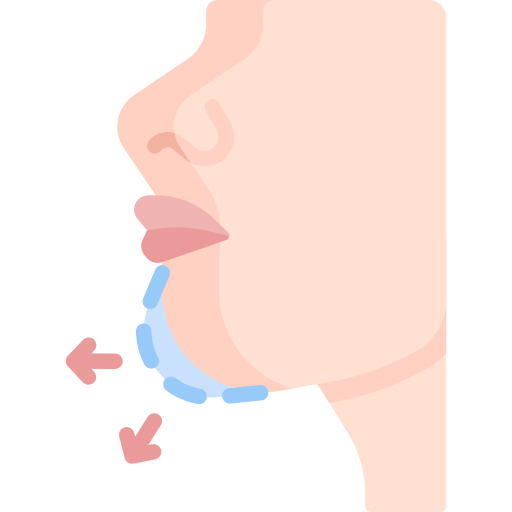
Chin protrusion refers to your genetic tendency toward the forward projection of your lower jaw (mandible).
What it reveals: A spectrum from lower chin protrusion tendency to higher chin protrusion tendency.

Cilantro taste perception refers to how you experience the flavor of cilantro (coriander leaves).
What it reveals: A spectrum from lower cilantro taste perception tendency to higher cilantro taste perception tendency.

Daily coffee consumption tendency refers to your natural inclination toward regular coffee drinking.
What it reveals: A spectrum from lower daily coffee consumption tendency to higher daily coffee consumption tendency.

Distance between eyeballs refers to your genetic tendency toward the spacing between your eyes, also known as interpupillary distance (IPD).
What it reveals: A spectrum from lower distance between eyeballs tendency to higher distance between eyeballs tendency.
Earwax type refers to the consistency and color of the wax your ears naturally produce.
What it reveals: A spectrum from lower earwax type tendency to higher earwax type tendency.

Eruption of permanent teeth refers to your genetic tendency toward the timing and pattern of your permanent teeth development.
What it reveals: A spectrum from lower eruption of permanent teeth tendency to higher eruption of permanent teeth tendency.
Eye distance width refers to your genetic tendency toward the width between your eyes, which affects your facial proportions and appearance.
What it reveals: A spectrum from lower eye distance width tendency to higher eye distance width tendency.

Eyelid width refers to your genetic tendency toward the width of your eyelids, which affects your overall eye appearance and facial proportions.
What it reveals: A spectrum from lower eyelid width tendency to higher eyelid width tendency.

Facial attractiveness refers to your genetic tendency toward facial features that are generally considered attractive.
What it reveals: A spectrum from lower facial attractiveness tendency to higher facial attractiveness tendency.

Finger length ratio refers to the relative lengths of your index and ring fingers, which is influenced by prenatal hormone exposure.
What it reveals: A spectrum from lower finger length ratio tendency to higher finger length ratio tendency.

Frontal fibrosing alopecia susceptibility refers to your genetic tendency toward developing frontal fibrosing alopeci...
What it reveals: A spectrum from lower frontal fibrosing alopecia susceptibility tendency to higher frontal fibrosing alopecia susceptibility tendency.

Frontal nasal height refers to your genetic tendency toward the height of your nose from the bridge to the tip.
What it reveals: A spectrum from lower frontal nasal height tendency to higher frontal nasal height tendency.

Hair curl pattern refers to the natural shape and texture of your hair, ranging from straight to tightly coiled.
What it reveals: A spectrum from lower hair curl pattern tendency to higher hair curl pattern tendency.

IL-6 (Interleukin-6) levels refer to your body's production of this important immune system protein.
What it reveals: A spectrum from lower il-6 levels tendency to higher il-6 levels tendency.

Iris crypts refer to your genetic tendency toward having small openings or lacunae in the anterior border of your iris.
What it reveals: A spectrum from lower iris crypts tendency to higher iris crypts tendency.
Iris nevis refers to your genetic tendency toward having dark spots or pigmented areas on your colored iris.
What it reveals: A spectrum from lower iris nevis tendency to higher iris nevis tendency.

Iris patterns refer to the unique patterns in the colored part of your eyes, including the arrangement of fibers, fur...
What it reveals: A spectrum from lower iris patterns tendency to higher iris patterns tendency.

Iris pigmentation rings refer to your genetic tendency toward having colored rings that encircle your iris.
What it reveals: A spectrum from lower iris pigmentation rings tendency to higher iris pigmentation rings tendency.

Ligament injury resistance refers to your genetic tendency toward maintaining strong and healthy ligaments, the tough...
What it reveals: A spectrum from lower ligament injury resistance to higher ligament injury resistance.

Lower lip height refers to your genetic tendency toward the vertical height of your lower lip.
What it reveals: A spectrum from lower lower lip height tendency to higher lower lip height tendency.

Misophonia is a condition where certain sounds trigger strong emotional or physiological responses.
What it reveals: A spectrum from lower misophonia tendency to higher misophonia tendency.
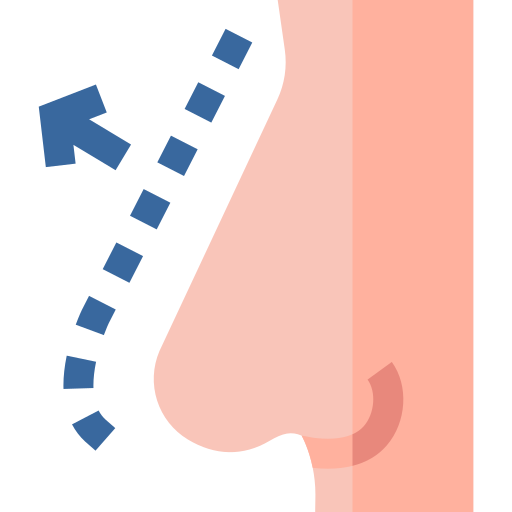
Nasal protrusion refers to your genetic tendency toward how far your nose tip protrudes from your face.
What it reveals: A spectrum from lower nasal protrusion tendency to higher nasal protrusion tendency.
Nasal tip height refers to your genetic tendency toward the height of your nose tip, which affects your overall facial proportions and appearance.
What it reveals: A spectrum from lower nasal tip height to higher nasal tip height.

Nasolabial angle refers to your genetic tendency toward the angle formed between your nose and upper lip.
What it reveals: A spectrum from lower nasolabial angle tendency to higher nasolabial angle tendency.
Nose bridge breadth refers to your genetic tendency toward the width of your nose bridge, which affects your overall ...
What it reveals: A spectrum from lower nose bridge breadth tendency to higher nose bridge breadth tendency.
Nose columella inclination refers to your genetic tendency toward the angle of the columella (the tissue between your...
What it reveals: A spectrum from lower nose columella inclination tendency to higher nose columella inclination tendency.
Nose size refers to your genetic tendency toward the overall size of your nose, including length, width, and projection.
What it reveals: A spectrum from lower nose size to higher nose size.
Nose tip angle refers to your genetic tendency toward the angle of your nose tip, which affects your overall nasal appearance and facial proportions.
What it reveals: A spectrum from lower nose tip angle tendency to higher nose tip angle tendency.
Nose wing breadth refers to your genetic tendency toward the width of your nasal wings (alae), which affects your ove...
What it reveals: A spectrum from lower nose wing breadth tendency to higher nose wing breadth tendency.

Persistent thinness refers to your genetic tendency toward maintaining a naturally thin body composition throughout your life.
What it reveals: A spectrum from lower persistent thinness tendency to higher persistent thinness tendency.

Strabismus susceptibility refers to your genetic tendency toward developing strabismus, commonly known as crossed eyes.
What it reveals: A spectrum from lower strabismus susceptibility tendency to higher strabismus susceptibility tendency.
Sweat tendency refers to your genetic tendency toward how much you sweat in response to heat, exercise, or stress.
What it reveals: A spectrum from lower sweat tendency to higher sweat tendency.

Tooth morphology refers to your genetic tendency toward the shape, size, and structure of your teeth.
What it reveals: A spectrum from lower tooth morphology tendency to higher tooth morphology tendency.

Environmental Factors: Human sensory perception is the process of gathering, organizing, and interpreting sensory information from the environment.
Human sensory perception is the process of gathering, organizing, and interpreting sensory information from the environment.

Astigmatism susceptibility refers to your genetic tendency toward developing astigmatism, a common vision condition that causes blurred vision.
What it reveals: A spectrum from lower astigmatism susceptibility tendency to higher astigmatism susceptibility tendency.

Odor detection refers to your genetic tendency toward your ability to detect and distinguish different smells.
What it reveals: A spectrum from lower odor detection tendency to higher odor detection tendency.

Pain sensitivity refers to your genetic tendency toward how you perceive and respond to pain.
What it reveals: A spectrum from lower pain sensitivity to higher pain sensitivity.

Photic sneeze reflex refers to your genetic tendency toward sneezing when exposed to bright light.
What it reveals: A spectrum from lower photic sneeze reflex tendency to higher photic sneeze reflex tendency.

Smell sensitivity refers to your genetic tendency toward how acutely you can detect and distinguish different odors.
What it reveals: A spectrum from lower smell sensitivity to higher smell sensitivity.
Sweetness detection refers to your genetic tendency toward your ability to detect and perceive sweet tastes.
What it reveals: A spectrum from lower sweetness detection tendency to higher sweetness detection tendency.

High myopia refers to your genetic tendency toward developing severe nearsightedness, where distant objects appear bl...
What it reveals: A spectrum from lower visual - high myopia tendency to higher visual - high myopia tendency.
Genetic Foundation: Environmental factors (sun exposure, humidity), lifestyle habits (skincare, nutrition), and genetics all influence skin health and appearance.
Skin is the body’s largest organ, providing protection, temperature regulation, and a barrier against pathogens.

Acne resistance refers to genetic factors that help protect against the development of acne.
What it reveals: A spectrum from lower acne resistance to higher acne resistance.
Atopic dermatitis susceptibility refers to your genetic tendency toward developing atopic dermatitis, a chronic inflammatory skin condition.
What it reveals: A spectrum from lower atopic dermatitis susceptibility tendency to higher atopic dermatitis susceptibility tendency.

Psoriasis susceptibility refers to your genetic tendency toward developing psoriasis, a chronic skin condition characterized by red, scaly patches.
What it reveals: A spectrum from lower psoriasis susceptibility tendency to higher psoriasis susceptibility tendency.

Rosacea susceptibility refers to your genetic tendency toward developing rosacea, a chronic skin condition characteri...
What it reveals: A spectrum from lower rosacea susceptibility tendency to higher rosacea susceptibility tendency.

Scar healing quality refers to your body's ability to heal wounds and injuries with minimal scarring.
What it reveals: A spectrum from lower scar healing quality tendency to higher scar healing quality tendency.

Skin resistance to sun refers to your genetic tendency toward withstanding sun exposure without adverse effects.
What it reveals: A spectrum from lower skin resistance to sun to higher skin resistance to sun.

Skin youthfulness refers to genetic factors that help maintain youthful skin characteristics such as firmness, elasticity, and radiance.
What it reveals: A spectrum from lower skin youthfulness tendency to higher skin youthfulness tendency.
Sun protection refers to genetic factors that help protect your skin from sun damage.
What it reveals: A spectrum from lower sun protection tendency to higher sun protection tendency.
Varicose veins susceptibility refers to your genetic tendency toward developing varicose veins, which are enlarged, t...
What it reveals: A spectrum from lower varicose veins susceptibility tendency to higher varicose veins susceptibility tendency.
Wrinkle resistance refers to genetic factors that help prevent the formation of fine lines and wrinkles.
What it reveals: A spectrum from lower wrinkle resistance to higher wrinkle resistance.

Environmental Factors: In REM sleep, neural connections solidify memories and support learning.
Sleep is a cyclical state of rest essential for physical recovery, cognitive processing, and emotional regulation.

Chronotype is the natural inclination of your body to sleep at a certain time, or what most people understand as bein...
What it reveals: A spectrum from lower chronotype tendency to higher chronotype tendency.

Daytime sleepiness susceptibility refers to your genetic tendency toward experiencing excessive sleepiness during the day.
What it reveals: A spectrum from lower daytime sleepiness susceptibility tendency to higher daytime sleepiness susceptibility tendency.

Deep sleep refers to the most restorative stage of your sleep cycle, also known as slow-wave sleep.
What it reveals: A spectrum from lower deep sleep tendency to higher deep sleep tendency.

Sleep-related movement disorders are characterized by repeated, periodic movements while tired or asleep.
What it reveals: A spectrum from lower movement during sleep tendency to higher movement during sleep tendency.
Sleep breathing quality refers to your ability to maintain normal breathing patterns during sleep.
What it reveals: A spectrum from lower sleep breathing quality tendency to higher sleep breathing quality tendency.
Slow-wave sleep, often known as deep sleep, is a pivotal sleep cycle that allows healthy brain activity and memory consolidation.
What it reveals: A spectrum from lower sleep depth tendency to higher sleep depth tendency.

Adults need 7 or more hours of sleep per night for the best health and wellbeing.
What it reveals: A spectrum from lower sleep duration tendency to higher sleep duration tendency.
Sleep quality is the measurement of how well you're sleeping—in other words, whether your sleep is restful and restorative.
What it reveals: A spectrum from lower sleep quality tendency to higher sleep quality tendency.

Snoring susceptibility refers to your genetic tendency toward snoring during sleep.
What it reveals: A spectrum from lower snoring susceptibility tendency to higher snoring susceptibility tendency.

Environmental Factors: Together, these elements create a sustainable lifestyle: setting goals, tracking progress, and embracing active rest and self‑care reinforce habits that foster long‑term health, resilience, and vitality..
Sports & Wellness blend physical activity with holistic health practices to enhance fitness, prevent disease, and boost mental wellbeing.
Caffeine is among the most extensively researched substances in the world.
What it reveals: A spectrum from lower caffeine influence in sport performance tendency to higher caffeine influence in sport performance tendency.

When you work out or participate in sports, you become more aware of various parts of your body.
What it reveals: A spectrum from lower exercise response to higher exercise response.
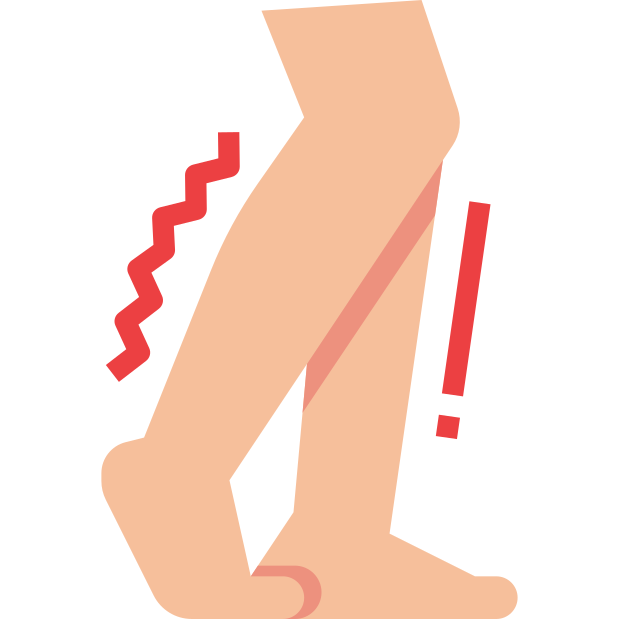
Exercise-induced muscle damage regenerative capacity refers to your body's ability to repair and rebuild muscle tissu...
What it reveals: A spectrum from lower exercise-induced muscle damage (regenerative capacity) tendency to higher exercise-induced muscle damage (regenerative capacity) tendency.
Exercise-induced muscle damage second phase refers to your body's inflammatory response to muscle damage, which is a ...
What it reveals: A spectrum from lower exercise-induced muscle damage (second phase) tendency to higher exercise-induced muscle damage (second phase) tendency.

Exercise-induced muscle damage recovery refers to how quickly and effectively your muscles repair themselves after intense physical activity.
What it reveals: A spectrum from lower exercise-induced muscle damage recovery tendency to higher exercise-induced muscle damage recovery tendency.

The long-term response of heart rate to exercise results in favorable changes in chronotropic function, including dec...
What it reveals: A spectrum from lower heart rate response to exercise to higher heart rate response to exercise.

Genetic factors that contribute to injury resistance and overall health.
What it reveals: A spectrum from lower injury resistance to higher injury resistance.

Ligament injury resistance refers to your genetic tendency toward maintaining strong and healthy ligaments, the tough...
What it reveals: A spectrum from lower ligament injury resistance to higher ligament injury resistance.
Lumbar disc disease resistance refers to your genetic tendency toward maintaining healthy spinal discs in your lower back.
What it reveals: A spectrum from lower lumbar disc disease resistance to higher lumbar disc disease resistance.

Moderate physical activity refers to your genetic tendency toward engaging in moderate-intensity exercise that raises...
What it reveals: A spectrum from lower moderate physical activity tendency to higher moderate physical activity tendency.

Muscle strength refers to your genetic tendency toward developing and maintaining strong muscles.
What it reveals: A spectrum from lower muscle strength tendency to higher muscle strength tendency.

Muscle volume refers to your genetic tendency toward developing muscle mass and size.
What it reveals: A spectrum from lower muscle volume to higher muscle volume.
Muscular endurance refers to your genetic tendency toward maintaining muscle performance over extended periods.
What it reveals: A spectrum from lower muscular endurance tendency to higher muscular endurance tendency.
Muscular power refers to your genetic tendency toward generating explosive force and speed.
What it reveals: A spectrum from lower muscular power tendency to higher muscular power tendency.

Recovery efficiency refers to your body's ability to restore energy, repair tissues, and return to optimal performance after physical activity.
What it reveals: A spectrum from lower recovery efficiency tendency to higher recovery efficiency tendency.
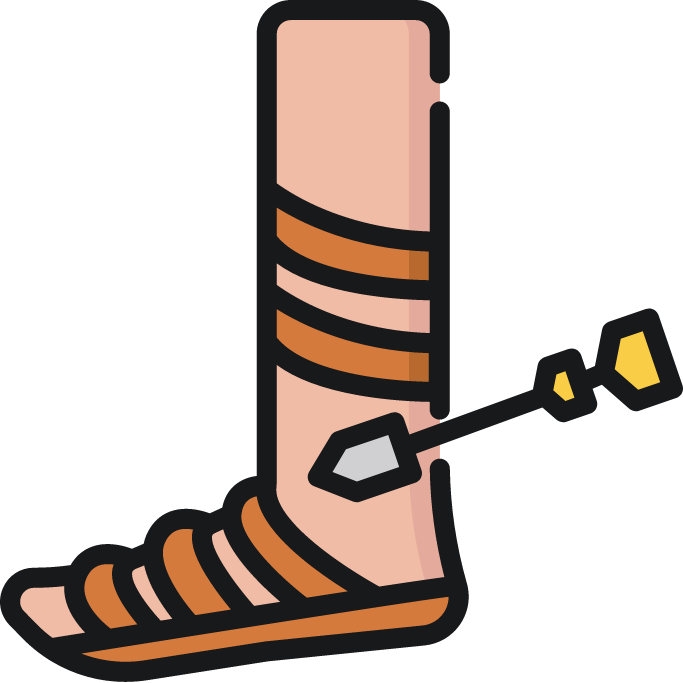
Achilles tendon injury resistance refers to your genetic tendency toward maintaining strong and healthy Achilles tend...
What it reveals: A spectrum from lower resistance of achilles tendon injury to higher resistance of achilles tendon injury.
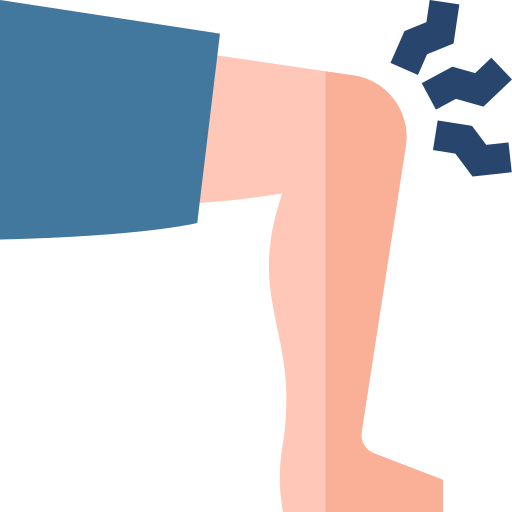
Anterior cruciate ligament rupture resistance refers to your genetic tendency toward maintaining strong and healthy A...
What it reveals: A spectrum from lower resistance of anterior cruciate ligament rupture to higher resistance of anterior cruciate ligament rupture.
Lower extremity tendinopathies refer to your genetic tendency toward maintaining healthy tendons in your legs, includ...
What it reveals: A spectrum from lower tendinopathies in lower extremities (legs) tendency to higher tendinopathies in lower extremities (legs) tendency.

Upper extremity tendinopathies refer to your genetic tendency toward maintaining healthy tendons in your arms, includ...
What it reveals: A spectrum from lower tendinopathies in upper extremities (arms) tendency to higher tendinopathies in upper extremities (arms) tendency.

Water retention refers to your body's ability to maintain proper fluid balance and hydration levels.
What it reveals: A spectrum from lower water retention tendency to higher water retention tendency.

Key Process: Key traits include hard work (dedicated effort toward goals), determination (steadfast pursuit despite obstacles), and adaptability (flexible response to change).
Success traits are personal qualities like hard work, determination, and adaptability that drive achievement and resilience.

Attention function performance refers to your genetic tendency toward maintaining focus and concentration on tasks.
What it reveals: A spectrum from lower attention function performance tendency to higher attention function performance tendency.

Cognitive function performance refers to your genetic tendency toward overall mental abilities including thinking, learning, and memory.
What it reveals: A spectrum from lower cognitive function performance tendency to higher cognitive function performance tendency.

Creativity performance refers to your genetic tendency toward creative thinking and problem-solving abilities.
What it reveals: A spectrum from lower creativity performance tendency to higher creativity performance tendency.

Educational attainment refers to your genetic tendency toward academic achievement and educational success.
What it reveals: A spectrum from lower educational attainment performance tendency to higher educational attainment performance tendency.

Emotional quotient (EQ) performance refers to your genetic tendency toward emotional intelligence, including the abil...
What it reveals: A spectrum from lower emotional quotient (eq) performance tendency to higher emotional quotient (eq) performance tendency.

Household income capacity refers to your genetic tendency toward achieving higher income levels.
What it reveals: A spectrum from lower household income capacity tendency to higher household income capacity tendency.

Information processing power refers to your genetic tendency toward how quickly and efficiently your brain can process and analyze information.
What it reveals: A spectrum from lower information processing power performance tendency to higher information processing power performance tendency.

Information processing speed performance refers to your genetic tendency toward quickly processing and responding to information.
What it reveals: A spectrum from lower information processing speed performance to higher information processing speed performance.

Intelligence refers to your genetic tendency toward cognitive abilities including learning, reasoning, problem-solvin...
What it reveals: A spectrum from lower intelligence tendency to higher intelligence tendency.
Intelligence quotient (IQ) refers to your genetic tendency toward general cognitive abilities, including reasoning, p...
What it reveals: A spectrum from lower intelligence quotient (iq) performance tendency to higher intelligence quotient (iq) performance tendency.

Language ability refers to your genetic tendency toward language learning, comprehension, and communication skills.
What it reveals: A spectrum from lower language ability performance tendency to higher language ability performance tendency.

Mathematical skills refer to your genetic tendency toward mathematical thinking, problem-solving, and numerical abilities.
What it reveals: A spectrum from lower mathematical skills performance tendency to higher mathematical skills performance tendency.

Memory performance refers to your genetic tendency toward encoding, storing, and retrieving information effectively.
What it reveals: A spectrum from lower memory performance tendency to higher memory performance tendency.

Memory skills refer to your genetic tendency toward memory capacity, retention, and recall abilities.
What it reveals: A spectrum from lower memory skills performance tendency to higher memory skills performance tendency.

Phoneme awareness performance refers to your genetic tendency toward recognizing and manipulating individual sounds in spoken words.
What it reveals: A spectrum from lower phoneme awareness performance tendency to higher phoneme awareness performance tendency.

Preschool internalizing problems refer to your genetic tendency toward experiencing internalizing behaviors during ea...
What it reveals: A spectrum from lower preschool internalizing problems tendency to higher preschool internalizing problems tendency.

Rapid automised naming of digits performance refers to your genetic tendency toward quickly and accurately naming numbers.
What it reveals: A spectrum from lower rapid automised naming of digits performance tendency to higher rapid automised naming of digits performance tendency.

Rapid automised naming of letters performance refers to your genetic tendency toward quickly and accurately naming letters.
What it reveals: A spectrum from lower rapid automised naming of letters performance tendency to higher rapid automised naming of letters performance tendency.

Rapid automised naming of pictures performance refers to your genetic tendency toward quickly and accurately naming visual objects.
What it reveals: A spectrum from lower rapid automised naming of pictures performance tendency to higher rapid automised naming of pictures performance tendency.

Reasoning performance refers to your genetic tendency toward logical thinking and problem-solving abilities.
What it reveals: A spectrum from lower reasoning performance tendency to higher reasoning performance tendency.

Social communication problems refer to your genetic tendency toward experiencing difficulties in social communication and interaction.
What it reveals: A spectrum from lower social communication problems tendency to higher social communication problems tendency.

Thrill-seeking tendency refers to your genetic tendency toward seeking excitement, adventure, and novel experiences.
What it reveals: A spectrum from lower thrill-seeking tendency to higher thrill-seeking tendency.
Verbal declarative memory refers to your ability to consciously recall facts, events, and information that can be verbally expressed.
What it reveals: A spectrum from lower verbal declarative memory tendency to higher verbal declarative memory tendency.
Verbal declarative memory refers to your genetic tendency toward remembering and recalling verbal information such as facts, events, and experiences.
What it reveals: A spectrum from lower verbal declarative memory tendency to higher verbal declarative memory tendency.
Verbal memory performance refers to your genetic tendency toward remembering and recalling verbal information such as...
What it reveals: A spectrum from lower verbal memory performance tendency to higher verbal memory performance tendency.

Visual memory performance refers to your genetic tendency toward remembering and recalling visual information such as...
What it reveals: A spectrum from lower visual memory performance tendency to higher visual memory performance tendency.

Working memory performance refers to your genetic tendency toward holding and manipulating information in your mind over short periods.
What it reveals: A spectrum from lower working memory performance tendency to higher working memory performance tendency.

Worrier or warrior tendency refers to your genetic tendency toward how you respond to stress and challenges.
What it reveals: A spectrum from lower worrier or warrior tendency to higher worrier or warrior tendency.

Health Impact: Well‑Being is a holistic state encompassing physical health, mental resilience, emotional balance, and social connectedness.
Well-Being is a holistic state encompassing physical health, mental resilience, emotional balance, and social connectedness.

Biological youthfulness refers to genetic factors that help maintain youthful biological characteristics and slow down the aging process.
What it reveals: A spectrum from lower biological youthfulness tendency to higher biological youthfulness tendency.

Bone density, or bone mineral density, is the amount of bone mineral in bone tissue.
What it reveals: A spectrum from lower bone mineral density to higher bone mineral density.

Bone strength refers to genetic factors that contribute to strong, healthy bones.
What it reveals: A spectrum from lower bone strength tendency to higher bone strength tendency.

Food intake control refers to your ability to consciously regulate your eating behavior.
What it reveals: A spectrum from lower food intake control to higher food intake control.
Inflammation control refers to your body's ability to regulate inflammatory responses effectively.
What it reveals: A spectrum from lower inflammation control to higher inflammation control.

Metabolic syndrome resistance refers to genetic factors that help protect against the development of metabolic syndro...
What it reveals: A spectrum from lower metabolic syndrome resistance to higher metabolic syndrome resistance.
Mosquito repellency refers to natural genetic factors that make individuals less attractive to mosquitoes.
What it reveals: A spectrum from lower mosquito repellency tendency to higher mosquito repellency tendency.

Your resting metabolic rate (RMR) represents the total calories your body expends while you are completely at rest.
What it reveals: A spectrum from lower resting metabolic rate tendency to higher resting metabolic rate tendency.
Understanding genetic traits requires a thoughtful perspective. Here's what to keep in mind as you explore.
Each trait represents a statistical tendency based on genetic research — not a guarantee. Your genes suggest possibilities; they don't write certainties.
Lifestyle, nutrition, experiences, and choices all influence how genetic tendencies manifest. DNA provides the canvas; life paints the picture.
A trait in this list doesn't define you — it describes a possibility. Think of it as one thread in the rich tapestry of who you are.
These traits reflect the incredible diversity of human expression. Every combination is unique, and there's no "better" or "worse" — just different.
"Each trait is a window — not a definition — of who you are."
Every trait in this catalogue is grounded in peer-reviewed scientific research, connecting genetic markers to observable characteristics.
Researchers analyze genetic variants (SNPs) across large populations, identifying statistical associations between specific DNA sequences and observable traits. These genome-wide association studies (GWAS) form the scientific backbone of trait analysis.
Each trait reflects a statistical tendency — meaning that people with certain genetic variants are more or less likely to express a trait. This is probability, not prophecy.
Our trait associations cite published research with sample sizes, publication dates, and evidence strength. You can explore the science behind any trait.
"This list explains influence — not prediction."
A genetic trait is an observable characteristic that has some basis in your DNA. This includes physical features (like eye color), behavioral tendencies (like being a morning person), and biological processes (like how you metabolize caffeine). Traits are influenced by genetic variations, but most are also shaped by environment and lifestyle.
No. Traits represent genetic tendencies and statistical associations — not predictions or guarantees. Your actual experience is shaped by the complex interplay of genetics, environment, lifestyle, and life experiences. Think of traits as possibilities informed by your DNA, not fixed outcomes.
Each trait is based on genome-wide association studies (GWAS) and other peer-reviewed research. Scientists analyze genetic data from large populations to identify statistical links between specific genetic variants and observable traits. We cite the research behind each trait so you can explore the science yourself.
We only include traits with sufficient scientific evidence. Some characteristics you might expect to see may not yet have robust genetic research supporting them, or the genetic influence may be too small or complex to report meaningfully. We prioritize quality and accuracy over quantity.
Yes! This catalogue shows all available traits. To see your personal genetic results for each trait, you'll need to upload your DNA data and access your Traits Report. Your report will show how your specific genetic profile relates to each of these traits.
Discover what your DNA reveals about you
Complete DNA analysis including all traits
Focus on traits analysis only
Your genetic story is waiting to be explored. Discover the traits that make you uniquely you.